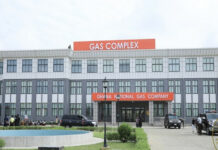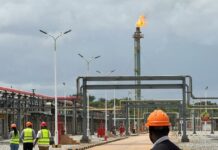

The Africa Centre for Energy Security (ASEC) is urging the government to keep the planned Ghana Gas Processing Plant Two (GPP Train 2) under state ownership, arguing that doing otherwise would contradict commitments made in the 2026 Budget Statement.
In a statement dated July 16, ASEC recalled that the 2026 Budget presented by the Minister for Finance identified the expansion of Ghana’s gas processing infrastructure as a key priority to support the country’s energy needs.
According to the Budget, government has constituted a Project Implementation Committee to accelerate the deployment of a second gas processing plant to process additional gas from the Jubilee partners for power generation.
ASEC said the Budget announcement demonstrated government’s confidence in Ghana Gas as the strategic national institution to undertake the project. The group, however, expressed concern over reports suggesting that GPP Train 2 could be handed over to a private company, describing such a move as a departure from the commitment made to Parliament and Ghanaians.
It argued that reversing the decision would undermine public confidence in government policy and create uncertainty over future strategic infrastructure projects.
“When Government announced the establishment of a Project Implementation Committee to
accelerate the deployment of Ghana Gas Processing Plant Two, the expectation was clear, the
State would lead the development of this strategic national infrastructure through Ghana Gas.
Reversing this position by transferring the project to private ownership would undermine
public confidence in government’s commitments and create uncertainty about future national
infrastructure projects. The people of Ghana deserve consistency between what is promised in
the Budget and what is eventually implemented”.
The energy policy think tank further noted that the Finance Minister justified the project on the grounds that it would strengthen Ghana’s energy security, reduce dependence on costly alternatives and increase the supply of locally produced natural gas for electricity generation.
ASEC maintained that because government itself has acknowledged the strategic importance of the project, ownership and control should remain with the State through Ghana Gas.
ASEC also pointed to the Budget’s projection that the new gas processing plant could save Ghana nearly US$500 million every two years, arguing that these savings would generate significant long-term benefits for the country.
According to the group, transferring the project to private ownership could result in much of the economic value from Ghana’s natural gas resources accruing to private investors rather than Ghanaians.
“The issue is not whether Ghana needs GPP Train 2 because government has already answered
that question in the 2026 Budget. The main issue now is whether Government will implement
the project in a manner consistent with the commitment it made before Parliament and the
people of Ghana. A strategic national project of this magnitude must continue to work for the benefit of all Ghanaians, not for private interests,” ASEC said.