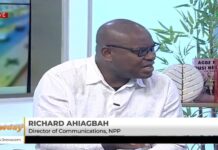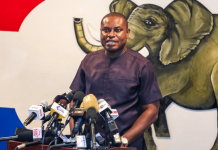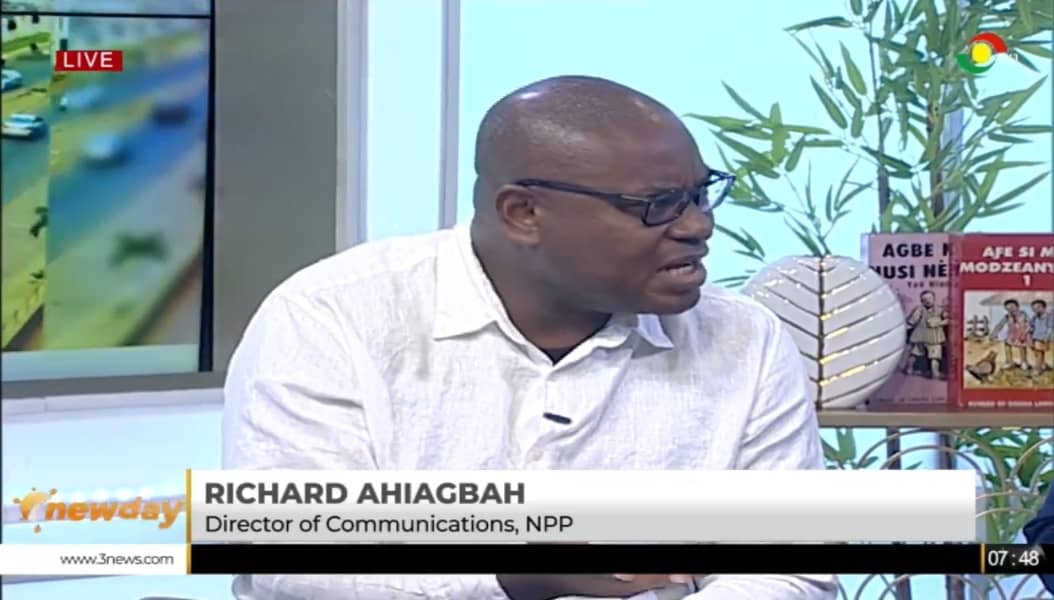

The Director of Communications of the New Patriotic Party (NPP), Richard Ahiagbah has challenged the government’s assessment of Ghana’s economy, arguing that the reported economic growth and macroeconomic stability have not translated into improved living conditions for ordinary Ghanaians.
Speaking on the KeyPoints with Alfred Ocansey, Mr Ahiagbah, described the country’s reported 6.4 percent economic growth as “jobless growth,” insisting that it is neither broad-based nor creating meaningful employment opportunities.
“Largely, the 6.4 growth that you’re reporting, it’s a jobless growth. Inherent, it’s a jobless growth. If you do that, you are not building the economy and that’s why a lot of people are suffering today,” he said.
Ahiagbah argued that government cannot describe the growth as broad-based when sectors such as illegal mining continue to drive parts of the economy.
According to him, incomes generated from illegal activities cannot be used as evidence of sustainable economic expansion.
“The growth generally is not broad-based. If it were broad-based, what jobs are being created? When you look at the unemployment situation in the country, it tells the story.”
The NPP spokesperson also questioned government’s claim that it has achieved macroeconomic stability, pointing to recent increases in inflation.
He noted that while headline inflation remains relatively low, food and services inflation are rising, increasing the cost of living for households.
“The stability narrative they are pushing is beginning to crack.”
He added that rising services inflation has translated into higher transportation costs, while food inflation has also increased, placing additional pressure on consumers.
“The kinds of things Ghanaians deal with on a daily basis are going up. That’s why I say there’s a great disconnect.”
Ahiagbah maintained that official economic indicators do not reflect what people are experiencing across the country.
He said the true measure of the economy should be the experiences of households, traders and businesses rather than statistics presented by government.
“There’s daylight between what government is representing to us on paper versus what we are experiencing in our homes. There is no relationship at all.”
According to him, voters ultimately judge governments based on their personal economic experiences.
“At the end of the day, what carries is the people’s experiences. People go to the polls to vote on the balance of their experiences.”
Referencing a television report featuring traders at Makola Market, Ahiagbah said the struggles of market women provide a more accurate picture of the economy than official figures.
He said declining sales and reduced purchasing power among consumers demonstrate the hardships facing many businesses.
“People are not selling. People are not buying because they don’t have money. Market women are desperate. They are losing money. Their businesses are collapsing. That is the reality of the economy.”
He argued that such accounts should be considered alongside government data when assessing the country’s economic performance.
“Let’s always judge every narrative by what ordinary people are telling us. That is the real account of what is happening in Ghana.”
By Christabel Success Treve