
The Supreme Court has ruled that all members of a political party are eligible to vote in selecting presidential and parliamentary candidates for general elections.
It has declared the existing delegate-based electoral college systems used by political parties as unconstitutional, specifically ruling that all members of a party have the right to decide who leads them in a constituency.
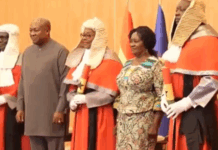
A seven-member panel, presided over by the Chief Justice, Paul Kwadwo Baffoe-Bonnie, by a 5-2 majority on Wednesday, July 29, 2026, held that confining the vote to a narrow group of executives, officeholders and delegates, to the exclusion of the broader membership, breaches Article 55(5) of the 1992 Constitution.
The apex court further held that the Electoral Commission has a statutory duty to ensure that the internal activities of political parties conform with Article 55(5) of the Constitution.
The suit was filed by Prof. Kwabena Frimpong-Boateng, Dr. Nyaho Nyaho-Tamakloe, and former Lands and Forestry Minister Dr. Christine Amoako-Nuamah.
The plaintiffs argued that the delegate system, where only selected delegates vote in party primaries, is unconstitutional. They sought a declaration that all registered party members should be entitled to vote in internal elections.
The Attorney-General’s office supported the plaintiffs, arguing that allowing all members to vote would strengthen Ghana’s democracy.
Meanwhile, the court has clarified that all decisions, appointments and votes made in good faith before the judgement remain valid and will not be invalidated solely because of the ruling. Full reasons for the judgement are to be filed by August 5, 2026.
Justice Samuel Kwame Adibu-Asiedu and Justice Ernest Yao Gaewu dissented.