
The Ghana Tertiary Education Commission (GTEC) has clarified that it has not banned university entrance examinations but has directed tertiary institutions to conduct them only after the release of the West African Senior School Certificate Examination (WASSCE) results.
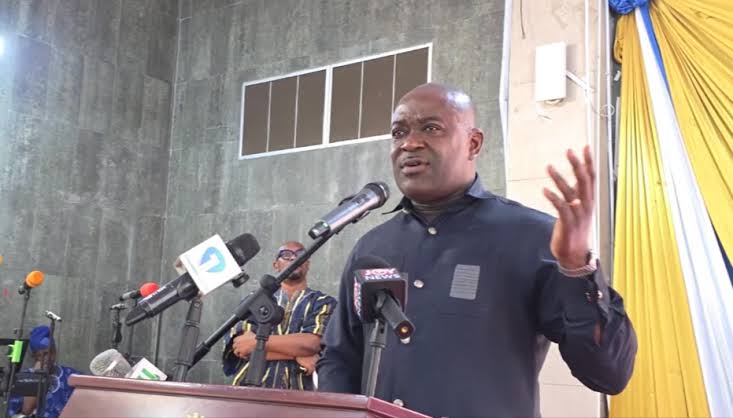
Speaking in an interview with 3news on August 3, GTEC Director-General, Prof. Ahmed Jinapor, explained that the Commission’s recent communiqué was intended to remind institutions of the approved admission requirements for tertiary education and not to prohibit entrance examinations altogether.
According to him, entrance examinations remain acceptable as an additional screening tool for highly competitive programmes such as Medicine and Nursing, where the number of qualified applicants exceed available spaces.
“We have no qualms with institutions using entrance examinations as an addition to screening students into programmes that are highly competitive,” he said. “Our concern is when the entrance examination is conducted before the release of WASSCE results.”
Prof. Jinapor noted that asking students to sit entrance examinations before knowing whether they meet the minimum academic requirements is unfair and places unnecessary financial and emotional burdens on applicants.
He explained that a student could pay to write an entrance examination for a programme such as Nursing, only to later discover that his or her WASSCE results do not meet the university’s admission requirements.
“If the results are released and there is the need to further screen qualified applicants because of limited space, then institutions can introduce another layer of assessment,” he said.
The GTEC Director-General also expressed concern over computer-based entrance examinations and the fees charged by some institutions.
He argued that students from rural and underserved communities may be disadvantaged because they lack access to computers and reliable internet services. He also questioned the fairness of charging applicants as much as GH¢350 to sit entrance examinations, especially at a time when government is implementing policies to reduce the cost of tertiary education for first-year students.
Prof. Jinapor disclosed that GTEC had received reports that the University of Ghana proceeded with an entrance examination despite the Commission’s communiqué.
He said the Commission had engaged the University’s management, which explained that arrangements for the examination had been completed before the communiqué was issued.
According to him, the University has assured GTEC that it will comply with the Commission’s position in future admission exercises.
“We are giving the institutions the benefit of the doubt this year because some had already begun preparations before our communiqué,” he said.
However, Prof. Jinapor warned that beginning next year, GTEC would strictly enforce the policy.
He cautioned that any institution that conducts entrance examinations before the release of WASSCE results could face regulatory sanctions, including the revocation of accreditation for the affected programme.
“If an institution decides to conduct entrance examinations before the release of WASSCE results, the accreditation of that programme will be revoked,” he said.
He explained that such sanctions could affect students’ eligibility for government support initiatives and national service.
The directive, he stressed, applies to all public and private tertiary institutions regulated by GTEC.
Responding to concerns that the practice of conducting entrance examinations before WASSCE results has existed for years, Prof. Jinapor acknowledged that GTEC only became aware this year that some institutions were holding the examinations before the release of results.
He said universities had argued that the limited time between the release of WASSCE results and the start of the academic calendar necessitated early entrance examinations to speed up admissions.
Despite those explanations, he maintained that GTEC’s position remains unchanged.
“Our policy decision is that moving forward, no institution should conduct entrance examinations before the general WASSCE results are released,” he said.
Prof. Jinapor added that GTEC will continue engaging tertiary institutions to ensure admissions remain fair, transparent and accessible, while maintaining quality standards across Ghana’s higher education sector.
By Evelyn Tengmaa