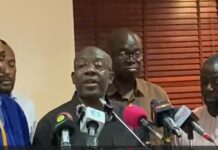

Member of Parliament for Ofoase Ayirebi, Kojo Oppong Nkrumah, has called on the government to brief Parliament on Ghana’s proposed International Monetary Fund (IMF) Policy Coordination Instrument (PCI).
According to the Ranking Member on Economic and Development, although the IMF’s PCI may not require parliamentary approval because it does not involve new financial support, the government still has a constitutional and democratic obligation to inform Parliament and the Ghanaian public about the programme.
The lawmaker in a post on X, August 4 insisted that the terms of the PCI does not diminish the need for transparency and accountability.
Oppong Nkrumah said Parliament must be fully briefed on the policy commitments, implementation roadmap, and the likely implications of the programme for the country’s economy.
“The IMF’s policy Coordination Instrument (PCI) may not require parliamentary approval because it comes without new financing, but that is no excuse to sideline Parliament or the Ghanaian people.
“The government has a constitutional and democratic responsibility to brief Parliament on the programme’s policy commitments, implementation roadmap, and implications for the economy,” he wrote on X.
He stressed that particular attention should be paid to the programme’s impact on economic growth and job creation, describing them as the key issues that matter most to Ghanaians.
The MP argued that citizens have a right to know the reforms being implemented for their sake and to hold the government accountable for the outcomes.
He maintained that transparency and accountability should extend beyond the minimum legal requirements, insisting that government must engage Parliament openly on all major economic policy decisions.
“Ghanaians deserve to know the reforms being undertaken in their name and to hold give accountable for the outcomes. Transparency and accountability must not end where legal requirements begin,” he added.
On Monday, July 27, the Executive Board of the International Monetary Fund (IMF) approved the final review of Ghana’s US$3 billion Extended Credit Facility (ECF) programme.
This brings the bailout programme, which began in May 2023 following the 2022 economic crisis, to a successful conclusion.
The approval also unlocks a final disbursement of approximately US$371 million to the Bank of Ghana, bringing total disbursements under the programme to US$3 billion.
A statement issued by the Finance Ministry on Monday, July 27 said that the successful completion of the programme reflects the significant progress Ghana has made in ensuring economic stability. Government has maintained fiscal discipline, reduced inflation, strengthened external buffers, and implemented key reforms that have laid the foundation for sustained economic growth.
“Government expresses its sincere appreciation to the people of Ghana for their resilience, patience, and unwavering support throughout the reform programme.
“Government also thanks the IMF Executive Board, IMF Management and Staff, development partners, civil society, and the private sector for their continued support,” the statement said.
The government said it remains committed to protecting the gains achieved so far and implementing ongoing reforms to build a stronger, more resilient, and more prosperous economy for all Ghanaians.
Earlier, the government explained that the PCI was a form of Technical Assistance engagement with the IMF.