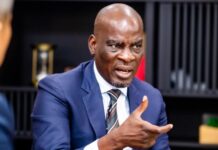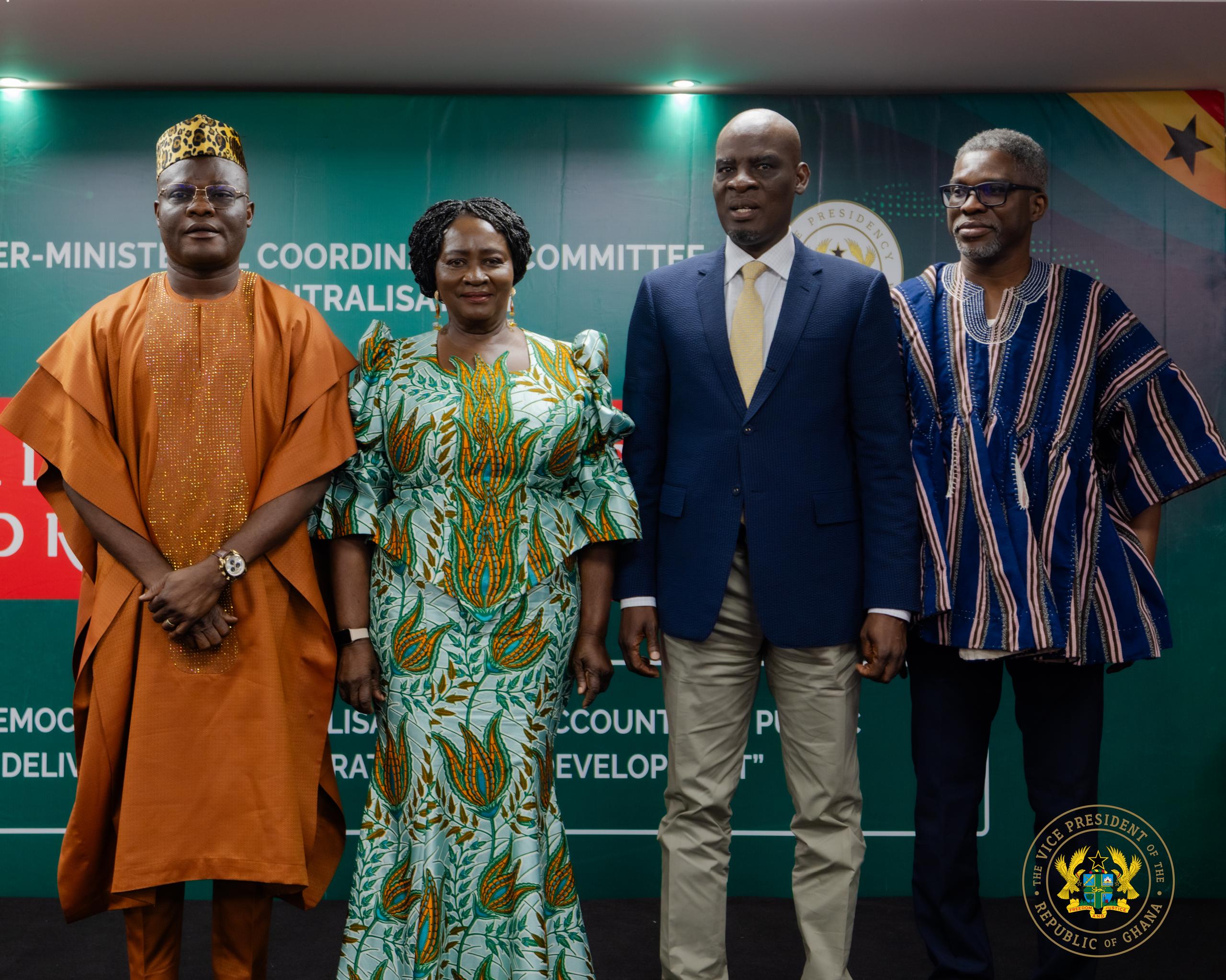

The Education Minister, Haruna Iddrisu has called for a major overhaul of Ghana’s decentralisation system, insisting that Metropolitan, Municipal and District Chief Executives (MMDCs) must be elected if the country is serious about deepening democracy at the local level.
According to him, the current system where the President appoints MMDCEs limits citizens’ participation and weakens accountability at the grassroots.
Speaking at the Second National Dialogue on Decentralisation in Accra, on Monday, August 10, 2026, Iddrisu said the country must move beyond the existing framework and embrace competitive elections for local government executives.
“The only thing we can do to elevate decentralisation to a higher height is to make elections of the MMDCEs elective and move away from the appointed principle into a competitive, democratic election open to the Ghanaian public,” he said.
End the “pretence” of non-partisan local elections
Haruna Iddrisu also challenged the country’s continued description of local government elections as non-partisan. He argued that although the system is officially non-partisan, political parties already play significant roles in local elections, making the current arrangement unrealistic.
“We come there as assemblymen, and then in Ghana we pretend that it is non-partisan. The pretence has to stop,” he declared.
He said the country must also resolve whether elected MMDCs should contest as individuals or on political party tickets as part of any reform process.
The Minister recounted how former President John Agyekum Kufuor attempted to amend the Constitution to make DCEs elective.
He said the proposal focused on Article 243(1), but failed to address other constitutional provisions, particularly those dealing with the President’s power to remove DCEs.
Mr Iddrisu said the experience demonstrated that any future attempt to make MMDCs elective must be supported by comprehensive constitutional amendments.
He cautioned the current government against repeating the mistakes of the past.
Mr Iddrisu further put pressure on the Ministry of Finance to increase the District Assemblies Common Fund (DACF) from five per cent to 7.5 per cent.
He said the increase is part of the NDC’s manifesto commitment and could be implemented gradually, with one percentage point added in 2027 and another in 2028.
The Minister said increased funding would be critical to the successful devolution of health and education services to local assemblies.
Under the proposed arrangement, one additional percentage point could support health decentralisation, enabling assemblies to recruit doctors, nurses and other health professionals.
Another allocation would support the decentralisation of education.
“Five per cent plus one plus one” would therefore provide a seven per cent allocation, he explained, with the broader goal of eventually reaching 7.5 per cent.
Mr Iddrisu also disclosed plans for a government-backed initiative to construct 50,000 housing units for teachers across Ghana.
He said President John Dramani Mahama had asked the Administrator of the District Assemblies Common Fund to lead the initiative in collaboration with the Ministries of Education, Finance, and Works and Housing.
The proposed scheme would give teachers an opportunity to own the houses through long-term salary deductions.
Mr Iddrisu said the pension system could be used as collateral to secure financing, while teachers could repay the cost of the houses over periods of up to 20 or 25 years.
He proposed an initial financing arrangement involving GH¢500 million from the state through the relevant sectors and another GH¢500 million from the District Assemblies Common Fund, with pension-backed financing providing an additional GH¢500 million.
That, he said, could create an initial GH¢1.5 billion financing pool for the project.
“No money, no effective decentralisation”
The Education Minister stressed that ambitious plans to decentralise education and health services would fail without reliable funding for local assemblies.
He warned that assemblies could not be expected to take on greater responsibilities while continuing to depend heavily on releases from the central government.
“I am all committed and ready for democratic decentralisation of education, but subject to the availability of funding made available to the decentralised structures at the local government level,” he said.
He also urged regional ministers and local government authorities to intensify efforts to tackle sanitation challenges, saying more needed to be done to improve sanitary conditions across the country.
The Tamale South MP reaffirmed his support for a decentralisation system that is competitive, elective, adequately funded and accountable to citizens.
Martin Adjei-Mensah Korsah criticises govt’s proposed MMDCE election modalities