
Upper East Regional Minister, Akamugri Donatus Atanga, has warned that climate change is increasingly becoming a humanitarian, migration and security challenge rather than simply an environmental issue.
He said the effects are contributing to growing population movements into the region.
“Climate change is no longer simply an environmental concern; it is increasingly a development, humanitarian, migration and security concern,” he noted.
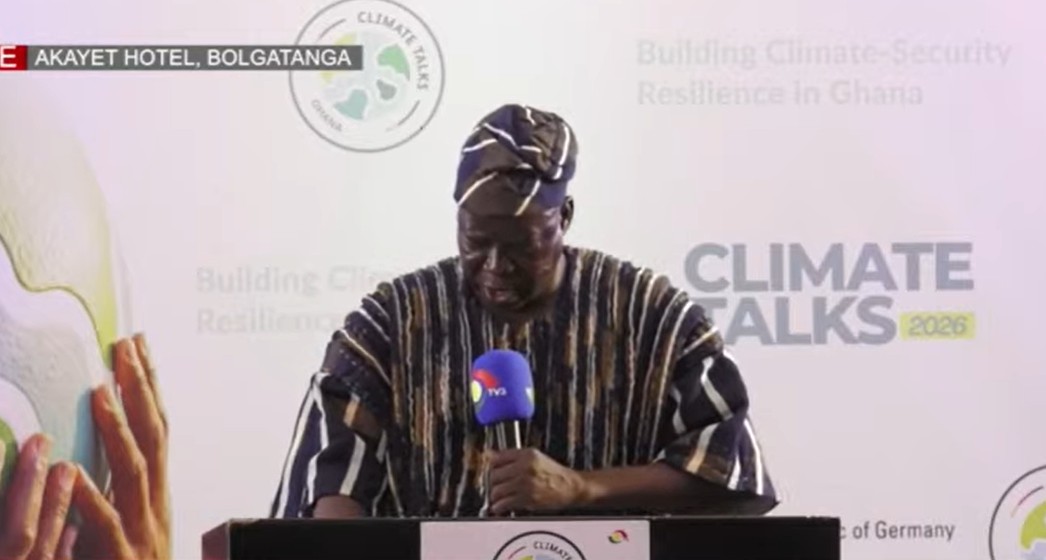
Speaking at the Climate Talks 2026 in Bolgatanga on Wednesday, August 12, 2026, Mr Atanga said the Upper East Region’s strategic location along Ghana’s northern frontier, sharing a border with Burkina Faso and lying close to Togo, exposed it to significant transboundary challenges.
The event under the theme: “Building climate-security resilience in Ghana” is organised by Media General in collaboration with the German Embassy. It took place at the Akayet Hotel in Bolgatanga in the Upper East Region.
The Minister said the theme of the event: “Climate-Driven Migration and Its Security Impacts in the Upper East Region,” reflects a reality government can no longer ignore.
He noted that the region’s location had historically supported trade, cultural exchange and regional integration but had now placed it at the intersection of emerging climate, migration and security pressures.
According to the Regional Minister, drought, erratic rainfall, land degradation and declining agricultural productivity across the Sahel were putting increasing pressure on livelihoods.
He explained that for families whose survival depended heavily on agriculture and natural resources, climate shocks could result in the loss of homes, livelihoods and their ability to provide for their families.
Mr Atanga said the situation was further worsened by insecurity and violent extremist activities in parts of the Sahel, forcing increasing numbers of displaced people to move towards relatively stable neighbouring countries, including Ghana.
He said the Upper East Region is experiencing increased movements of migrants and displaced populations.
While stressing Ghana’s commitment to its humanitarian obligations and its long-standing tradition of hospitality, the Regional Minister said the growing influx also created pressure on host communities and already limited public resources.
He therefore called for a coordinated approach to addressing the interconnected effects of climate change, displacement, migration and insecurity, particularly in vulnerable communities along Ghana’s northern frontier.
“Your Excellency, Ladies and Gentlemen, no country, government or institution can address these challenges alone. We need a whole-of-government and whole-of-society response, bringing together national institutions, security agencies, traditional authorities, local communities, development partners, research institutions, civil society and the private sector,” he stated.