
Director-General of the Ghana AIDS Commission (GAC), Dr. Kharmacelle Prosper Akanbong, has urged journalists to take a more deliberate role in Ghana’s HIV response by promoting accurate information, challenging stigma and helping the public understand the importance of early testing and treatment.
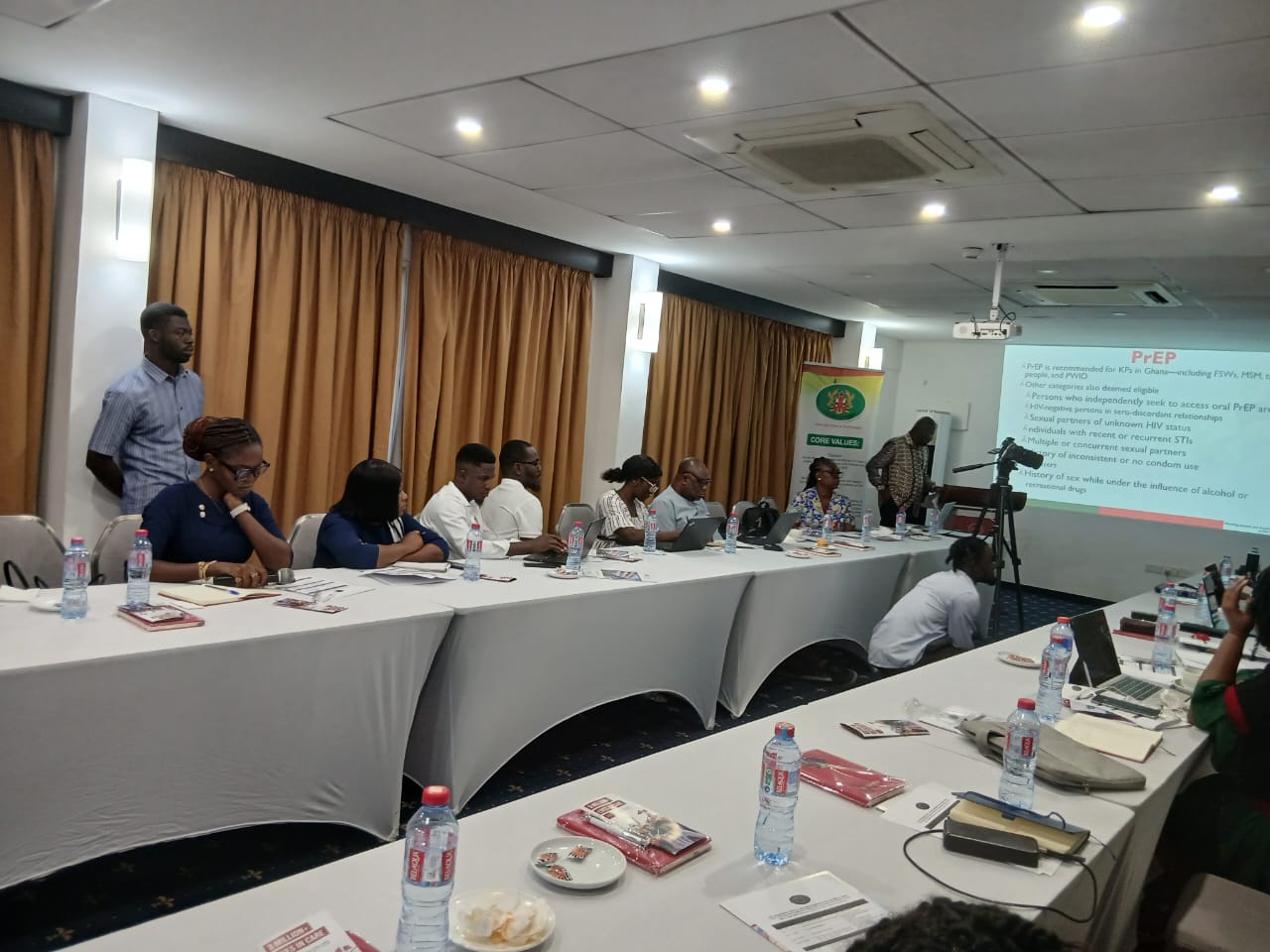
Speaking at a Media Capacity Building Session for journalists on HIV reporting in Ghana, Dr Akanbong said the media must move beyond reporting statistics and events to producing stories that educate the public, challenge misinformation and identify barriers preventing people from accessing HIV services.
He called for closer collaboration between the GAC, the media and other stakeholders to ensure that HIV-related reportage is accurate, balanced and does not stigmatise people living with HIV.
Dr Akanbong cautioned journalists against language that reinforces stigma, specifically urging them not to use the expression “AIDS victims.”
He as well as other officials of the Commission who took turns to address participants encouraged reporters to use people-centred language and tell stories that humanise rather than stigmatise people living with HIV.
“You can contribute directly to the HIV response by identifying and reporting on barriers that prevent people from accessing testing, prevention and treatment, examine issues such as stigma, misinformation, service accessibility and other factors that discourage people from seeking care.
“I encourage you all to go beyond simply reporting national HIV figures. Use national and sub-national data to ask questions about whether resources, programmes and interventions are reaching the communities that need them most. As our partners we encourage you to use your platforms to attract sponsorship and support for HIV programmes in areas with high prevalence.”
According to him, consistent use of antiretroviral (ARV) medication can enable people living with HIV to live longer and healthier lives, making it important for journalists to communicate treatment as an effective means of managing HIV rather than portraying the condition primarily through death and fear.
He urged journalists to use their platforms to encourage Ghanaians to test, know their HIV status and, where a test is reactive, seek treatment promptly challenging the media to focus more strongly on men in HIV testing and prevention.
“Women test for HIV more frequently than men, meaning that increased testing among men is necessary to provide a more representative picture of the epidemic and identify people who may otherwise remain undiagnosed. the largest burden of new HIV infections is in the general population and greater attention needs to be placed on men as part of prevention efforts,’’ he noted.
The emphasis on men is significant for Ghana’s HIV response because closing the testing and treatment gap among men can help reduce onward transmission and improve overall control of the epidemic.
Ghana’s National HIV and AIDS Strategic Plan (NSP) 2026–2030 has set an ambitious target of reducing annual new HIV infections from 13,951 in 2025 to 2,200 by 2030.
The country’s HIV prevention roadmap to 2030 places emphasis on key interventions including condom programming, pre-exposure prophylaxis (PrEP) and post-exposure prophylaxis (PEP).
Participants were drawn from across the media landscape in Ghana.
NGO takes campaign against spread of HIV/AIDS to the beach; urges domestic funding