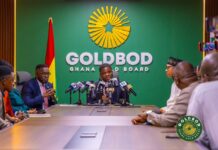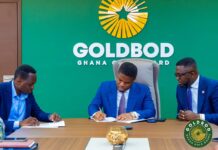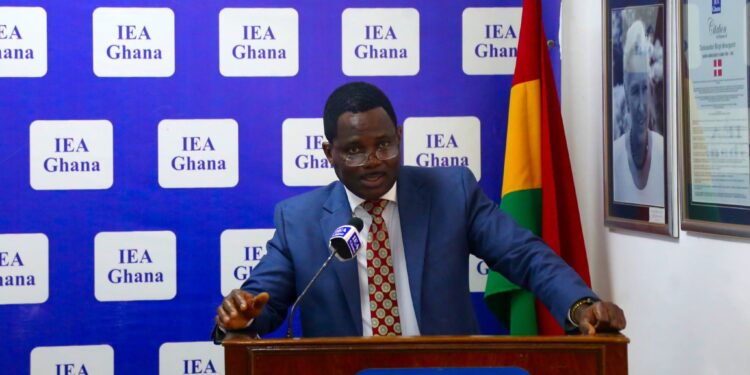

The reported $1.7 billion loss linked to the Bank of Ghana’s Domestic Gold Purchase Programme is not an actual loss to the Ghana Gold Board (GoldBod), the Institute of Economic Affairs (IEA) has said.
The IEA says the figure is largely made up of service fees and foreign-exchange valuation differences recorded in the Bank of Ghana’s books.
Director of Research at the IEA, Prof Alexander Bilson Darku, said this when the Institute assessed the 2026 mid-year budget review on Wednesday, August 26, 2026.
According to him, the amount comprised service and assaying fees paid by the Bank of Ghana (BoG) to GoldBod for services rendered, and differences arising from converting gold proceeds from dollars to cedis.
He said the fees constituted revenue to GoldBod and could not be described as a loss. “I don’t understand why somebody would call revenue a loss,” Prof Darku said.
He explained that about 90 per cent of the $1.7 billion was an exchange-rate valuation issue.
GoldBod, he said, purchased gold on behalf of the BoG, with proceeds converted from US dollars into cedis using the Central Bank’s reference rate, and the difference between rates at purchase and valuation could appear as a loss in the BoG’s books without depleting national wealth.
“It is merely a book accounting issue, and not a significant loss to the nation,” he said.
Prof Darku said from a broader government perspective, what is a cost to the BoG is revenue to GoldBod and could wash out at the consolidated level.
“To the Government, its monetary authority, which is the Central Bank, has made that loss. To the Government, its Gold Board has made that gain,” he said.
He, however, said GoldBod’s operations still require scrutiny as it transitions from BoG financing to private sector funding, a move which he said could deepen the capital market if managed transparently.
While acknowledging GoldBod’s contribution to gold exports, foreign-exchange inflows and cedi stability, he cautioned against over-reliance on gold for reserve accumulation and exchange-rate stability.
He urged the Government to pursue export promotion, import substitution, foreign-exchange market regulation and increased local ownership.
He also called for stronger agricultural investment, employment-led growth, increased local processing of resources and reforms to transform GoldBod from a gold trader into a strategic asset manager.
Prof Darku further urged stronger enforcement powers for the Fiscal Council and measures to ensure cuts in the monetary policy rate translate into lower lending rates.
GoldBod orders local refining effective September 1 as Ghana moves to gain value from gold trade