
The National Chairman of the National Democratic Congress (NDC), Johnson Asiedu Nketiah has said that the character of a government is often formed before a single minister is appointed and before voters cast a ballot.
He was contributing to discussions on “why are some administrations ready to govern while others spend valuable time learning the responsibilities they fought to acquire?”
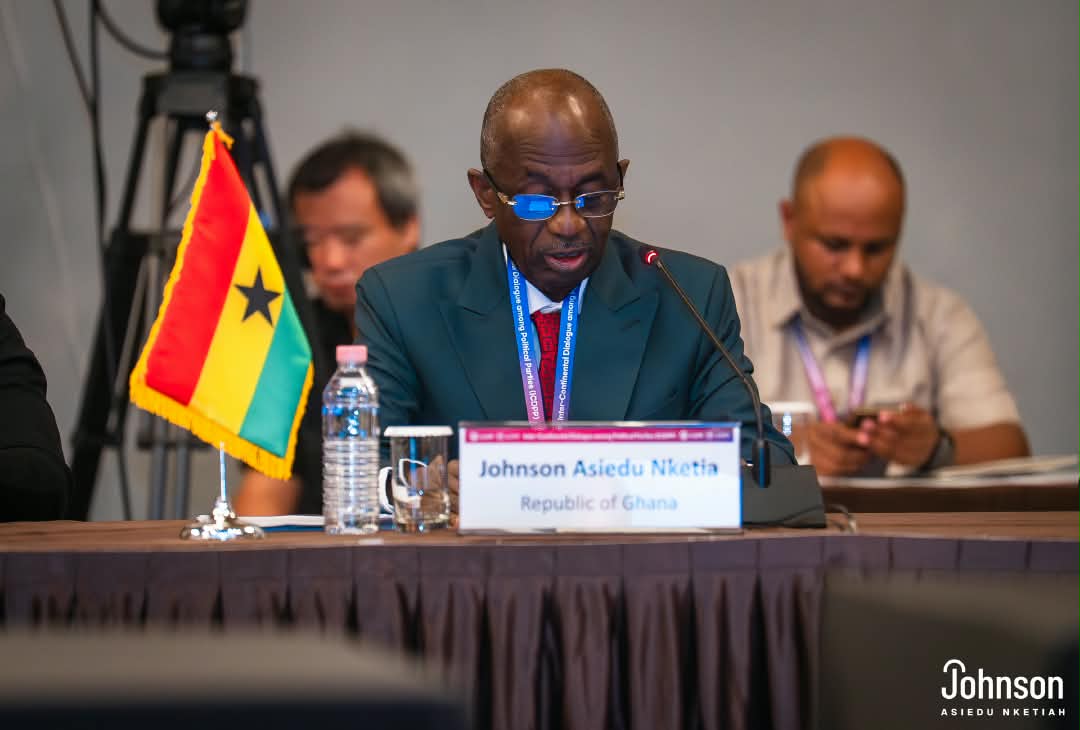
Addressing the inaugural Inter-Continental Dialogue on Political Parties in Seoul on September 7, Asiedu Nketiah said elections decide who receives authority, but they do not manufacture judgement, competence or discipline overnight.
“By the time a party wins power, it has already spent years making choices about the people it trusts, the qualities it rewards, the conduct it tolerates and the seriousness with which it treats policy. Those choices may appear internal while a party is in opposition or on the campaign trail, but once power is won they become part of the country’s governing reality,” he said.
Mr Nketiah spoke on behalf of political parties participating in the African Political Parties Initiative (APPI), established by the Africa Governance Centre (AGC).
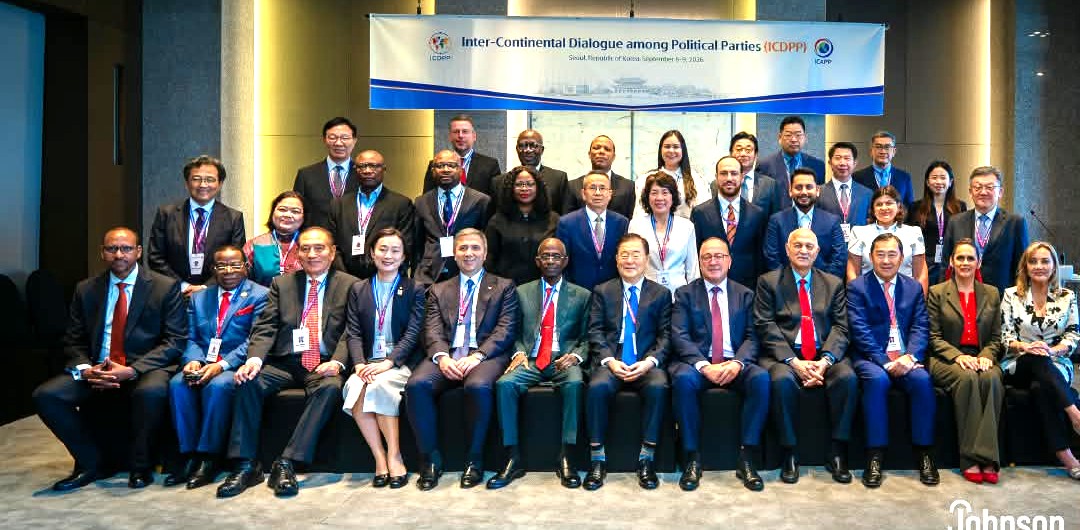
The Dialogue also brought together the International Conference of Asian Political Parties (ICAPP) and the Permanent Conference of Political Parties of Latin America and the Caribbean (COPPPAL), opening a new channel of engagement among political institutions from Africa, Asia, Latin America and the Caribbean.
Asiedu Nketiah’s central argument was that countries cannot continue to speak about the quality of government as though it begins on inauguration day. Public institutions are eventually led by people whose political formation took place elsewhere.
Ministers, legislators and senior political appointees usually arrive in office carrying habits of judgement, attitudes to dissent, ideas about authority and standards of responsibility that were developed over time. Political parties are among the places where those habits are tested, encouraged or ignored.
He told delegates that this is why the internal life of a political party is not merely an internal matter.
“A party deciding whom to promote is also, in time, helping to decide who may govern. A party deciding whether competence matters is helping to determine the competence available to the state. A party deciding whether disagreement can be tolerated is helping to shape the political culture that may later enter public institutions. The distance between party headquarters and the machinery of government can therefore be much shorter than it appears,” he emphasised.
“A country pays a heavy price when its political parties become highly effective at winning elections but insufficiently serious about preparing people to govern,” Asiedu Nketiah told the gathering.
The distinction he drew was not between politics and government, but between two different demands placed on political leadership.
“Campaigning rewards speed, instinct, organisation, persuasion and the ability to hold together a political coalition. Governing requires those skills, but it also exposes leaders to problems that cannot be resolved by applause, slogans or electoral arithmetic. Budgets force choices. Institutions impose limits. Policies create consequences beyond the constituencies that supported the governing party. Decisions taken in one ministry can alter the prospects of families, businesses and communities that may never know who made them,” noted.
For that reason, he argued, the transition from opposition to government should never be treated as the point at which preparation begins.
“A political party that waits until victory to discover who understands the economy, public administration, education, health, infrastructure or institutional reform has already lost time. The most consequential period of preparation may be the years when no appointment is imminent and no office is guaranteed, because that is when political institutions can develop people without the urgency and pressure that accompany power,” the NDC’s National Chairman emphasised.
Asiedu Nketiah also drew attention to a question that parties often avoid because it is more uncomfortable than writing manifestos: what kind of person does the organisation make it easiest to succeed?
He noted that, “every political institution has an informal curriculum. Its members observe who rises, what conduct is rewarded, what forms of loyalty are valued and whether competence can survive alongside ambition. Over time, those signals become part of the institution’s culture. When a party enters government, that culture does not disappear at the gates of the state.
The implication is demanding. If political organisations consistently reward visibility without substance, loyalty without judgement or aggression without restraint, they may eventually reproduce those qualities in public office. If they instead make room for people who can think, listen, disagree responsibly and carry difficult assignments, they strengthen the pool from which future governments will be drawn. The difference may take years to become visible, but when it does, it is the public that lives with the result.”
His intervention also challenged the tendency to reduce leadership development to the search for a single presidential or prime ministerial candidate. Governments are never carried by one person. Their effectiveness depends on the depth of leadership beneath the most visible office: ministers who understand their portfolios, legislators capable of serious scrutiny, advisers who can distinguish political convenience from public interest, and people across the governing system who can exercise judgement when instructions are incomplete and circumstances are difficult.
A political party may therefore look strong because it has recognisable leaders and a formidable electoral machine, while remaining fragile in the one area that becomes most important after victory: depth. Asiedu Nketiah argued that the stronger institution is the one able to keep producing capable people, rather than one forced to return repeatedly to the same small circle whenever responsibility arises.
That idea gave his remarks a significance beyond party organisation. The quality of political recruitment eventually becomes a question of national capacity. Countries frequently attempt to strengthen public institutions through laws, reforms and new administrative systems, but institutions remain dependent on the judgement of the people placed in charge of them. A sound legal framework cannot fully compensate for weak leadership, just as talented individuals cannot indefinitely compensate for institutions that fail to prepare successors.
Asiedu Nketiah said this was one reason the Inter-Continental Dialogue could be useful if participating parties were willing to move beyond formal exchanges. Different political traditions have developed different ways of identifying candidates, training political leaders, developing policy and exposing younger members to responsibility. None can simply be transplanted into another society. But they can help parties see their own practices more clearly, particularly where familiarity has made weaknesses difficult to recognise.
He acknowledged the Africa Governance Centre for establishing APPI and creating a structured platform through which African political parties could take part in that wider exchange. The significance of the new Dialogue, he suggested, would be measured not by the number of speeches delivered but by whether political institutions left with better questions about themselves and greater seriousness about the responsibilities that precede public office.
The address ultimately returned to a simple proposition: the consequences of political preparation are delayed, but they are rarely avoided. A poor choice made inside a party may not look important when it is made. Years later, the same choice may sit behind a cabinet desk, influence a budget, shape a law or determine how a public institution responds at a moment of national difficulty. Political organisations therefore exercise a form of public responsibility even before the public has entrusted them with government.
That is why Asiedu Nketiah urged parties to judge themselves by more than whether they can assemble enough votes to win. Electoral victory can answer the question of who governs next. It cannot answer whether those who govern will be ready for the weight of the office they have received.
The deeper test, he argued, lies in what a political institution has been doing in the years when nobody was watching closely: whom it was preparing, what standards it was protecting, what ideas it was developing and whether it was building enough depth to serve a country rather than merely inherit its offices.
By the time election night arrives, much of that work has already been done — or left undone.
The inaugural Inter-Continental Dialogue on Political Parties was held in Seoul, South Korea, on 7 September 2026.
Source: PR team of Chairman of National Democratic Congress (NDC)