
The National Chairman of the National Democratic Congress (NDC), Johnson Asiedu Nketiah, has urged leaders of political parties to look more closely at the quality of leadership they produce.
He also tasked them to address the seriousness with which they prepare for government and the extent to which their politics remains connected to the everyday experience of citizens.
Mr Nketiah said this when he addressed the inaugural Inter-Continental Dialogue on Political Parties in South Korea on September 7.
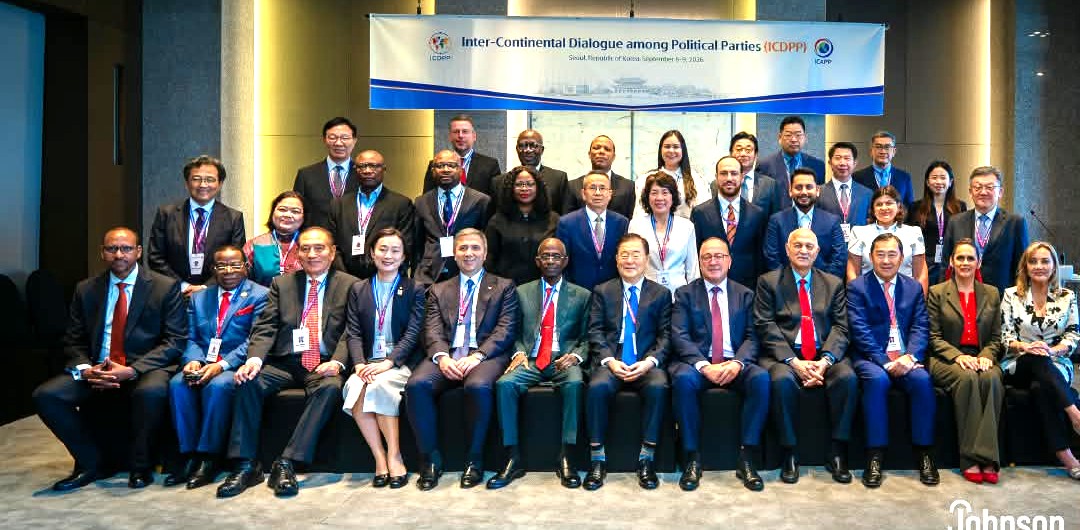
Representatives of political parties from across the world are participating in the African Political Parties Initiative (APPI). The gathering brought together the Africa Governance Centre (AGC) through APPI, the International Conference of Asian Political Parties (ICAPP) and the Permanent Conference of Political Parties of Latin America and the Caribbean (COPPPAL).
Asiedu Nketiah recognised the Africa Governance Centre for establishing APPI and developing a more structured avenue through which African political parties can engage one another and their counterparts in other regions, before turning his attention to the larger political questions confronting parties across different systems.
A major theme of his intervention was the changing nature of public loyalty. Political parties that were once sustained by strong historical identities, ideological traditions or generational attachments are increasingly operating in societies where citizens are less willing to inherit political allegiance unquestioningly. Asiedu Nketiah argued that a party’s history may explain the place it occupies in national life, but cannot guarantee its future. Each generation encounters politics under different economic and social conditions and will ultimately decide for itself whether the institutions it inherits remain relevant to the life it hopes to build.
That judgement, he said, is becoming more exacting. Younger citizens are entering politics with wider access to information, greater exposure to developments outside their own countries and fewer assumptions about the permanence of established political institutions. At the same time, many are confronting unemployment, economic insecurity, rising living costs and uncertainty about whether education and hard work still provide a reliable route to advancement. Political parties that fail to recognise the depth of this change risk continuing to speak with confidence while the public relationship on which that confidence rests quietly weakens.
Asiedu Nketiah argued that the consequences become particularly serious when citizens feel they have fulfilled their side of the social bargain but cannot see a reasonable path to a better life. Where people work, obey the law, raise families and make sacrifices for their children but still feel that a decent standard of living is moving far beyond their reach, frustration can gradually shift from dissatisfaction with particular policies to a deeper scepticism about political institutions themselves. His argument was that political leaders should regard that moment as an institutional warning rather than dismiss it as temporary discontent.
The address also linked public confidence to the way political parties prepare people for leadership. Drawing on his experience in grassroots politics, Parliament, government and national political organisation, Asiedu Nketiah maintained that much of the character of a future government is already being formed inside a political party before an election takes place. Decisions about who advances, which qualities are rewarded, how seriously policy is developed and what forms of conduct are tolerated eventually influence the character of public administration once power is won.
He cautioned against treating electoral competence as proof of readiness to govern. An organisation may understand mobilisation, campaigning and electoral strategy exceptionally well while remaining less developed in the policy, institutional and leadership capacities required once it assumes responsibility for government. The difference may not always be visible during a campaign, but it becomes much harder to conceal when a government is confronted by limited resources, competing public demands and decisions carrying long-term consequences.
From that perspective, Asiedu Nketiah argued that political parties should place greater emphasis on preparing leadership before opportunity arrives. Political institutions should possess enough depth that the quality of government does not depend entirely on a narrow group of personalities, and they should be able to renew their leadership without treating every transition as an institutional crisis. A party that cannot produce capable people beyond its current generation of leaders may retain electoral strength for a time, but eventually encounters the limits of its own organisation.
His intervention also addressed the tendency of political institutions to become more preoccupied with explaining their successes than understanding their failures. He told participating parties that electoral defeat, declining membership, public disaffection or a difficult leadership transition should not automatically be treated as episodes to be defended or forgotten. They can reveal weaknesses that prolonged success sometimes conceals. In his view, political institutions that are willing to examine why citizens withdrew their confidence are often better placed to renew themselves than those that interpret every setback solely through the failures of their opponents.
This formed part of his case for the relevance of the new Inter-Continental Dialogue. Parties represented through the platform come from very different political histories and governing traditions, and Asiedu Nketiah argued that those differences provide an opportunity for honest comparative learning. A party that has recently moved from opposition into government may have lessons for one confronting that transition elsewhere; an institution that has successfully renewed its leadership may offer useful experience to another struggling with generational change; and political organisations that have recovered after significant electoral defeats may help others understand how public confidence can be rebuilt.
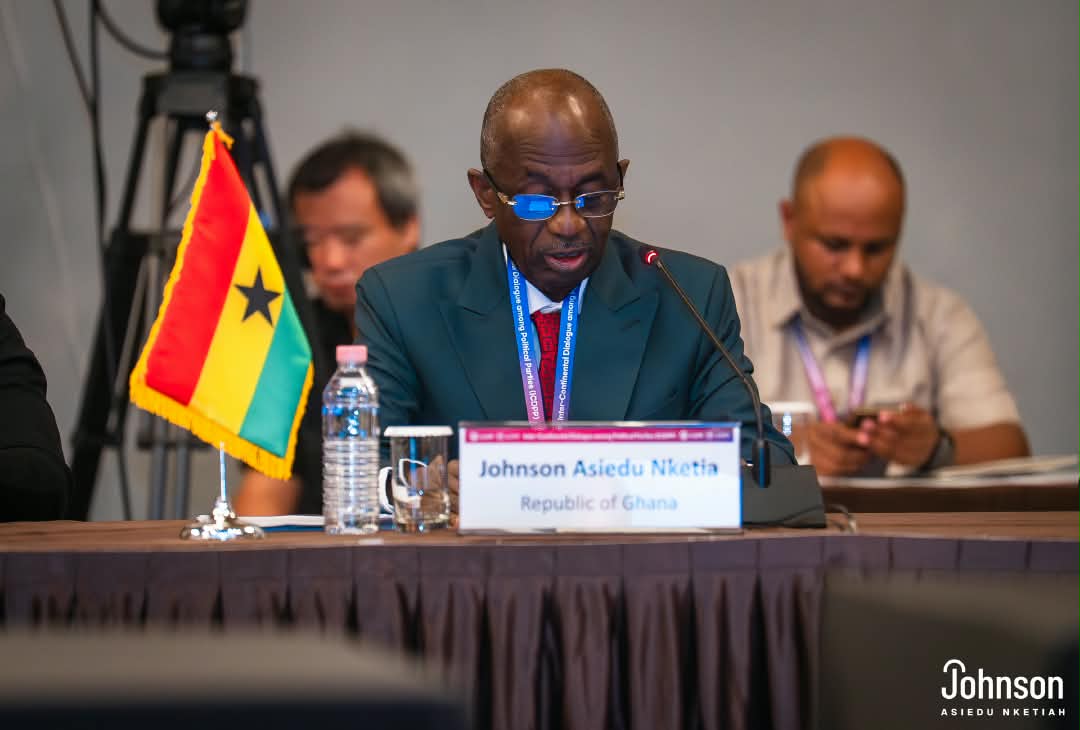
He made clear, however, that international exchange should not become an exercise in importing political models. National politics remains deeply shaped by history, culture, institutions and local conditions. The usefulness of the Dialogue, he argued, lies in exposing political leaders to experiences beyond their own systems and giving them additional perspectives with which to examine the problems they face at home.
A further strand of the address concerned the discipline required of parties when political fortunes change. Asiedu Nketiah argued that opposition should be treated as a period of serious preparation rather than political suspension, while government requires a constant effort to remain connected to citizens after the demands of office begin to dominate political life. Parties that once understood the frustrations of ordinary people can become insulated by the institutions of government, just as opposition parties can become so consumed with criticism that they neglect the harder work of developing credible alternatives.
That cycle between government and opposition, he suggested, makes institutional depth especially important. Political parties need structures and habits that remain useful regardless of whether they currently hold office. Their political relevance cannot depend entirely on the authority of government or on the temporary weakness of an opponent. It has to rest on their ability to produce ideas, leadership and public confidence over time.
The inaugural Dialogue is intended to become a continuing process rather than remain tied to South Korea, with future engagements moving to different locations as relationships among the participating institutions deepen. Asiedu Nketiah argued that the success of the initiative should therefore be judged less by the visibility of individual meetings than by the quality of the relationships that develop between them. Political leaders and governments will change, but a serious institutional relationship should remain useful through those changes and provide channels through which parties can continue exchanging experience.
His broader message was that political parties now face a more demanding public environment than the one in which many of them were originally built. Citizens have more ways to organise outside conventional party structures, greater access to competing ideas and less patience with institutions that appear unable to adjust to changing circumstances. For established parties, the challenge is therefore no longer simply to preserve their organisations, but to demonstrate why those organisations continue to deserve a place in the political future.
Asiedu Nketiah concluded that political leadership should ultimately be assessed over a longer period than the election cycle. Political victories establish who has prevailed at a particular moment, but the more durable judgement rests on the quality of leaders produced, the institutions strengthened and the political culture handed to those who come afterwards. For parties seeking the confidence of citizens, the task is continuous: to remain sufficiently serious, adaptable and connected to society that each generation finds its own reason to believe in them.
The inaugural Inter-Continental Dialogue on Political Parties was held in Seoul, South Korea, on 7 September 2026.
Source: PR team of NDC’s National Chairman