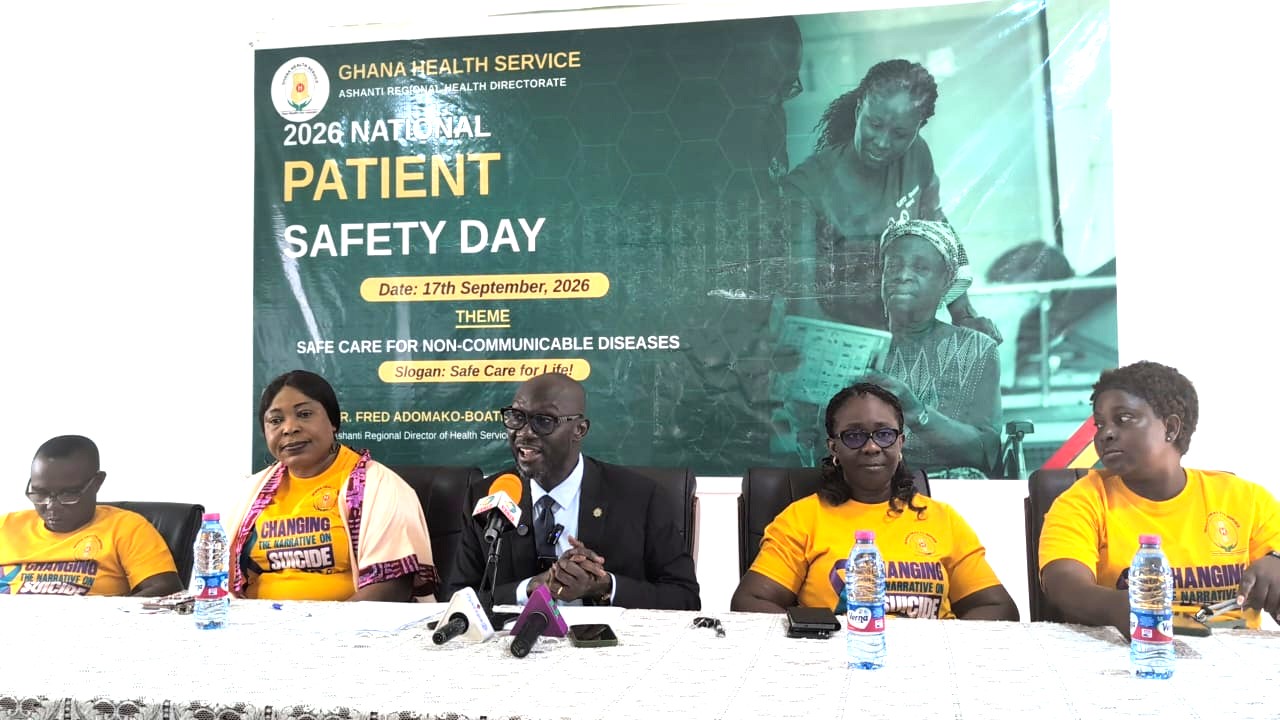

The Ashanti Regional Director of Health Services, Dr Fred Adomako Boateng, has called for stronger systems to ensure people living with non-communicable diseases receive safe, timely and effective care.
He says patient safety must be treated as a fundamental right and a cornerstone of quality healthcare, particularly as diseases such as hypertension, diabetes, cancer and chronic respiratory conditions continue to place a heavy burden on communities.
Addressing the media as part of activities to mark the 2026 National Patient Safety Day, Dr Adomako Boateng said non-communicable diseases account for about 40 percent of all deaths, making early detection and safe management critical.
Under the theme “Safe care for non-communicable diseases”, with the slogan “Safe care for life,” he said delays in diagnosis and treatment often leave patients with complications that are more difficult and costly to manage.
“Safe care for non-communicable diseases means detecting the conditions as early as possible and ensuring patients receive the right treatment at the right time,” he said.
Dr Adomako Boateng also stressed the need to strengthen referral systems, particularly for patients identified at the community and primary healthcare levels.
“Patients diagnosed or identified at health centres and district hospitals must be properly linked to the next level of care instead of being left to navigate the health system on their own,” he said.
The health director further called for stronger emergency response systems to ensure that patients requiring urgent attention are not left behind.
“Providing safe care also requires equipping health workers with the necessary skills and resources while supporting them to deliver compassionate and quality services,” he emphasized.
Beyond hospitals, Dr Adomako Boateng wants communities to become more active in preventing and managing non-communicable diseases.
He urged traditional and religious leaders, civil society organisations and families to promote healthier lifestyles and encourage people to seek care early.
He also called for an end to practices that delay appropriate medical treatment.
“Prevention is better than cure,” he stressed, urging the public to take early warning signs seriously and seek professional medical care.
He said patient safety goes beyond preventing medical errors, describing it as a broader responsibility to protect lives, preserve dignity and sustain hope.
As Ghana marks World Patient Safety Day, Dr Adomako Boateng urged stakeholders to commit to building stronger health systems, empowering health workers and involving communities in the fight against non-communicable diseases.
By Ibrahim Abubakar