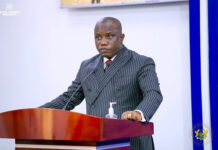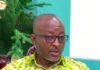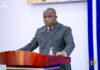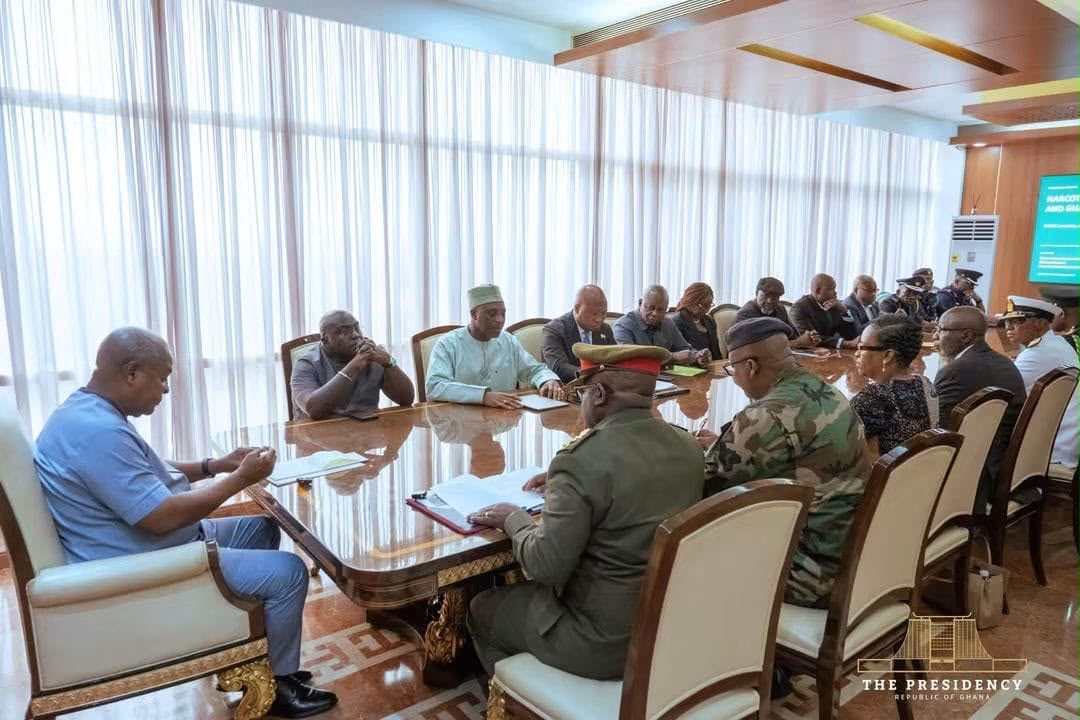

The Chief Executive Officer of the National Petroleum Authority (NPA), Edudzi Tameklo, has given indication that the meeting between President John Mahama and the country’s security chiefs on September 17 was full of tensed moments.
According to him, the President was not happy with the recent incidents of cocaine busts related to Ghana.
“The President’s meeting with the security chiefs, it was fireworks,” he said on The KeyPoints on September 19.
“The President will not allow anyone to destroy his legacy, so the agency heads who are not working know they will soon be on their way out,” Mr Tameklo, who is a leading member of the ruling National Democratic Congress (NDC), intimated.
On September 17, the Presidency convened an emergency high-level meeting on border security and narcotics control, days after the Minority in Parliament accused government of presiding over Ghana’s descent into a major transit hub for international drug cartels.
The meeting, held at the Jubilee House, reviewed Ghana’s vulnerabilities at the country’s ports, airports and land borders.
A letter sighted by 3news, signed by the Secretary to the President, Dr. Callistus Mahama, invited heads of key state institutions and private terminal operators to the meeting.
“The meeting will review existing vulnerabilities, intelligence-sharing arrangements, cargo and passenger screening systems, inter-agency coordination, and the deployment of technology to detect and disrupt narcotics trafficking,” the invitation letter dated Monday, September 14, 2026 stated.
Each institution is to be represented by its head and not more than one relevant technical officer, with participants directed to come prepared to provide a brief assessment of existing security gaps and propose practical measures to improve intelligence sharing, surveillance, screening and joint enforcement operations.
The invitation noted that “given the urgency and national-security implications, your personal attendance is required.”
Among those invited were the Ministers of Finance and Foreign Affairs, the Director-General of the Ghana Ports and Harbours Authority, the Commissioner of the Customs Division of the Ghana Revenue Authority, the Sector Commander of Customs at Tema, the CEOs of Ghana Shippers Authority, Ghana Link Network Services, Meridian Port Services and Ghana Airports Company, the Chief of Naval Staff, the Directors-General of the National Intelligence Bureau and the Narcotics Control Commission, and the Ghana Police Service CID/Interpol, as well as operators of terminal scanners.
The move came on the back of intense pressure from the Minority caucus, which on Sunday, September 13, 2026, demanded a full-scale parliamentary inquiry into a string of seizures it says are collectively worth over $1 billion.
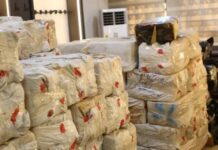
The caucus, led by Ranking Member on Defence and Interior, John Ntim Fordjour, cited the 3.3 tonnes of cocaine seized at Pedu Junction in March 2025, 866 parcels intercepted at Tema Harbour in August 2026, 320kg of methamphetamine seized in Australia linked to Ghana in June, and the most recently 3.9 tonnes of cocaine seized by French customs at Dunkirk on September 10 in a container that departed Ghana.
The Minority also flagged the unresolved MV Sankofa case and questioned why only couriers and freight agents have been prosecuted while financiers remain at large.
Background
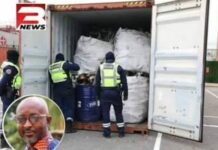
On September 7, French Customs at the Port of Dunkirk intercepted a container of plastic waste that had originated from Ghana and was bound for Antwerp, Belgium. The container was found to contain 167 bales of cocaine weighing 3.9 metric tonnes, with an estimated street value of €225 million (about $261 million).
French authorities said the shipment was uncovered after their judicial police had already been targeting the network behind it. France’s National Jurisdiction against Organized Crime has opened an investigation for organized importation of narcotics and criminal association.
The seizure has been linked by Dutch newspaper De Telegraaf and Belgian newspaper HLN to fugitive Dutch drug lord Jos Leijdekkers, also known as “Bolle Jos.” Leijdekkers, 33, is one of Europe’s most wanted fugitives, sentenced in absentia to 24 years in prison in the Netherlands for trafficking nearly seven tonnes of cocaine. He is believed by Dutch authorities to be hiding in Sierra Leone.
Following the bust, NACOC on September 14 announced the arrest of three suspects in Ghana accused of representing and facilitating Leijdekkers’ network in Ghana. The Commission said they had been on its radar and under surveillance for some time.
In the Netherlands, a man from Dordrecht – where the shipment was reportedly destined for a business address – was also arrested on September 4 in connection with the consignment and has been remanded in custody.
NACOC says intelligence indicates that Bolle Jos himself has not entered Ghana, but maintains that his associates were operating from Ghana.
The Commission says investigations are ongoing and more accomplices will be brought to face the law.