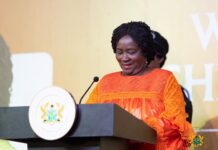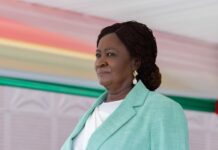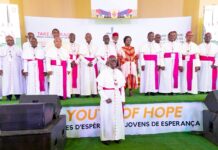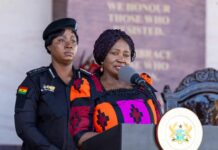

The Speaker of the ECOWAS Parliament, Hadja Memounatou Ibrahimatu, has called for stronger regional action to address the interconnected challenges of climate change, population displacement, insecurity and economic pressures facing West Africa.
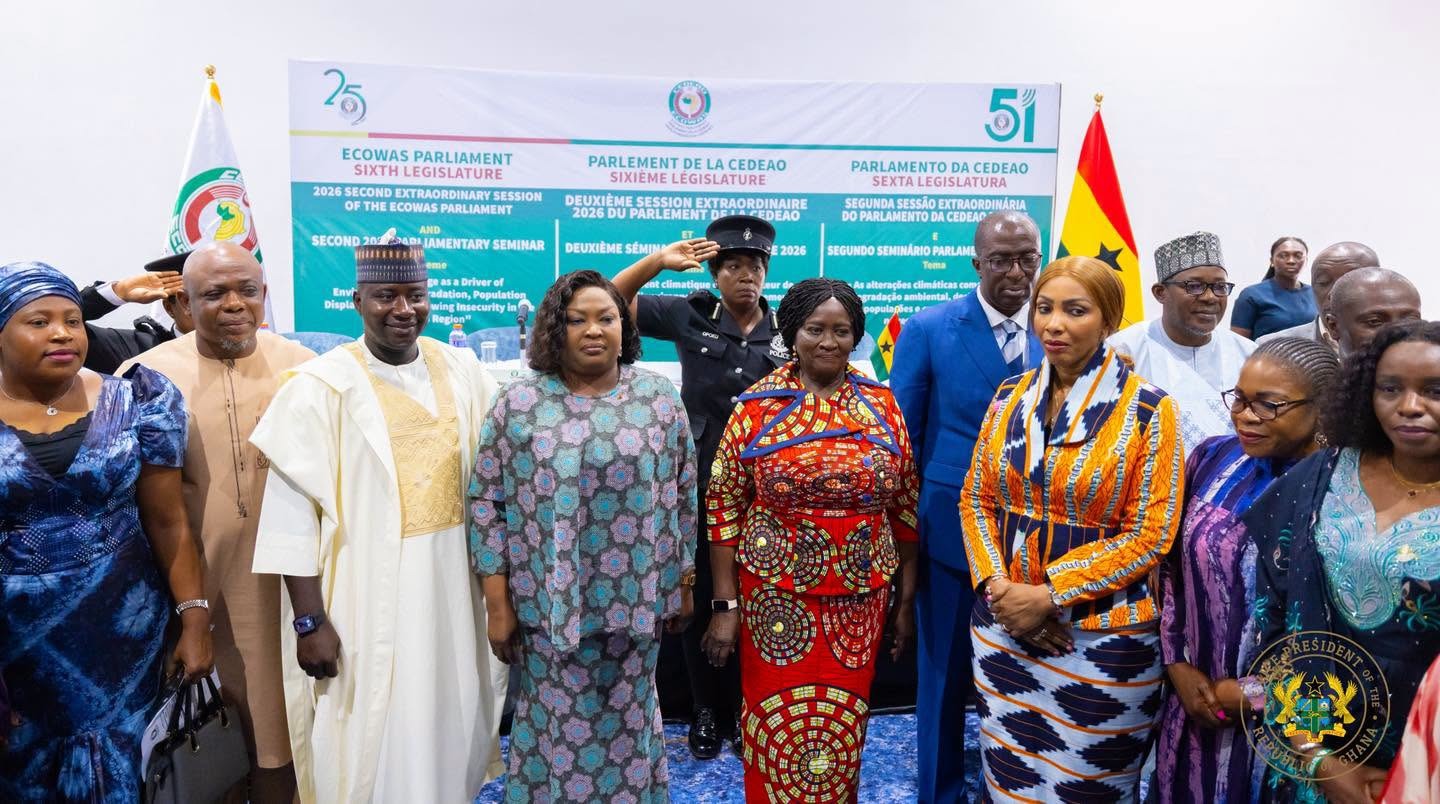
Speaking in Accra at the joint opening of the Second Parliamentary Seminar and Second Extraordinary Session of the ECOWAS Parliament for 2026, the Speaker said climate change had moved beyond an environmental concern to become a major development, humanitarian, migration, peace and security issue for the region.
The parliamentary seminar, taking place from September 21 to 23, is focused on the theme: “Climate Change as a Factor of Environmental Degradation, Population Displacement and Growing Insecurity in the ECOWAS Region.”
According to the Speaker, climate disruption is affecting livelihoods, increasing pressure on natural resources, driving population displacement and contributing to tensions within communities.
She urged parliamentarians to ensure that international and regional climate commitments are translated into practical national legislation, funded policies and measurable results.
“It is our duty to ensure that the commitments made by our States become funded policies, effective legislation and results that our populations can see,” she said.
She also called for greater parliamentary oversight of public policies and budgets dedicated to climate resilience, stressing that responses to climate change should take into account their humanitarian, economic, social, migratory and security dimensions.
The Speaker pointed to recent flooding along the West African coastline as evidence of the multidimensional nature of the challenge, saying such events demonstrate the links between climate change, humanitarian concerns, security, urban planning and regional cooperation.
She expressed hope that the seminar would produce concrete recommendations linking climate adaptation with conflict prevention and the protection of vulnerable populations.
Opening the proceedings on September 21, the Speaker also paid tribute to Ghana’s first President, Dr Kwame Nkrumah, whose birthday is commemorated on the same date.
She described Nkrumah’s advocacy for African unity, independence and Pan-Africanism as a continuing source of inspiration for the continent.
She thanked the Government and Parliament of Ghana for hosting the ECOWAS proceedings and acknowledged President John Dramani Mahama and Speaker Alban Kingsford Bagbin for their support and preparations for the meeting.
The Speaker also highlighted Ghana’s recent diplomatic initiatives, including its role in supporting a United Nations General Assembly resolution concerning the transatlantic slave trade and reparations.
The Accra session is the first ECOWAS Parliament gathering since the renewal of the Community’s leadership.
The Speaker congratulated Senegalese President Bassirou Diomaye Diakhar Faye on assuming the chairmanship of the ECOWAS Authority of Heads of State and Government.
She also congratulated General Birame Diop, the new President of the ECOWAS Commission, and other newly appointed statutory officials.
She assured the new leadership of the Parliament’s readiness to strengthen institutional cooperation and contribute to the regional integration process.
The Second Extraordinary Session will focus largely on the consideration and adoption of the ECOWAS Parliament’s proposed 2027 budget and its annual programme of activities.
The Speaker described the budget process as an exercise in prioritisation, action and institutional credibility, particularly at a time of macroeconomic pressure and calls for budgetary discipline.
She urged members to ensure that requested resources correspond to clearly established priorities and support programmes capable of producing tangible results for regional integration and West African populations.
The Parliament will also consider reports arising from activities carried out under its annual programme.
Members are expected to participate in activities of the ECOWAS Network of Women Parliamentarians (ECOFEPA), with the Speaker commending the network’s work on women’s empowerment.
The Speaker said the region’s security, climate, economic and institutional challenges require sustained collective and coordinated action.
She said the ECOWAS Parliament should remain both a forum for dialogue and an institution capable of contributing practical recommendations to regional challenges.
She urged delegates to approach the Accra deliberations with “clarity, candour and pragmatism”, while emphasising trust and shared responsibility in the search for lasting solutions.
By Evelyn Tengmaa