
The Minister for Energy and Green Transition, Dr John Abdulai Jinapor, has announced that Ghana is expected to sign at least six new petroleum agreements with international oil companies by the first quarter of 2027.
This forms part of efforts to attract fresh investment and reverse the decline in the country’s oil production.
He said negotiations with major industry players, including Eni, Vitol, Shell, Chevron, Petrobras and ExxonMobil, were progressing and would help reposition Ghana as a preferred destination for petroleum investment.
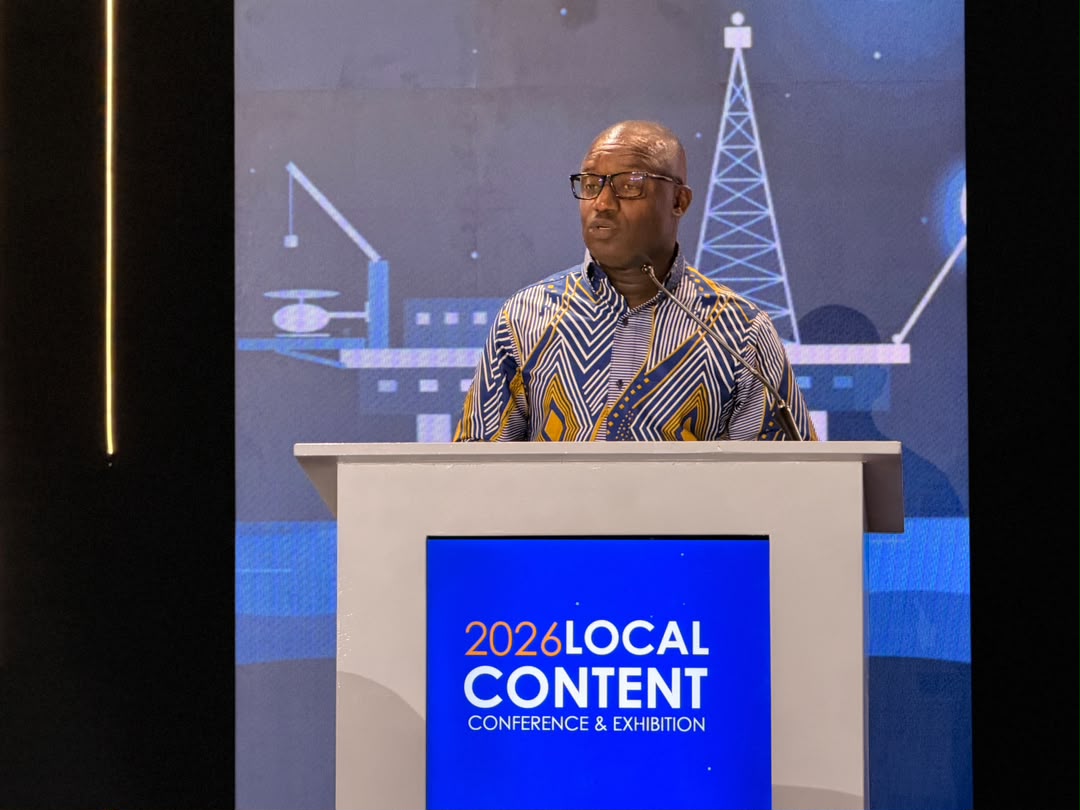
Speaking at the Petroleum Commission’s 2026 Local Content Conference and Exhibition in Takoradi on Wednesday, November 10, 2026, Dr Jinapor said government was pursuing an aggressive programme to revitalise the upstream petroleum sector and create more opportunities for indigenous companies.
The conference, which marks the 15th anniversary of the Petroleum Commission, is being held under the theme: “Enriching Local Content for Sustainable Growth: Building a Resilient Upstream Sector Through Reform and Partnership to Spur Competitiveness and Investment.”
Dr Jinapor said local content was not merely a regulatory requirement or a percentage to be achieved but an essential tool for economic transformation, technology transfer, job creation and the development of internationally competitive Ghanaian businesses.
He disclosed that Ghanaians currently constitute approximately 90 per cent of the upstream petroleum workforce, while the value of local content had increased from about $227 million in 2024 to $450 million.
He described the growth as commendable but stressed that the country needed to sustain the momentum by expanding exploration activities and increasing production.
The Minister observed that Ghana’s crude oil production had experienced a consistent decline since 2020, falling from a peak of approximately 71 million barrels annually to about 37 million barrels.
He said the situation had negatively affected economic activities in Takoradi, which had previously enjoyed significant business opportunities from the petroleum industry.
According to him, President John Dramani Mahama’s administration had introduced measures to restore investor confidence through policy certainty, predictability and an improved regulatory environment.
He announced that, for the first time in six years, Ghana was recording a reversal of the declining production trend, with daily crude oil production increasing from approximately 90,000 barrels to about 122,000 barrels.
Dr Jinapor, however, said government was not satisfied with merely arresting the decline but was working towards sustainable production growth, reserve replacement and long-term investment.
He identified the Ebano-Afoma field, the Pecan field and the deepwater Keta prospects among the commercially viable discoveries being prioritised for development.
He also expressed government’s support for the Ghana National Petroleum Corporation’s proposed development of the Haimenber project and efforts to bring marginal fields into production.
The Minister identified natural gas as a critical component of Ghana’s energy security, industrialisation and transition towards a cleaner energy future.
He said government was working with upstream industry players, including Tullow Oil and Eni, to increase domestic gas production, which had risen to approximately 400 million standard cubic feet per day.
Dr Jinapor disclosed that increased gas availability had enabled Ghana to reduce its annual imports of light crude oil from six cargoes to two.
He expressed government’s intention to eliminate the imports entirely by next year, saying the move could generate annual savings of approximately $500 million through import substitution.
He added that greater reliance on domestic gas would also improve the operational lifespan of power plants and support Ghana’s environmental commitments.
The Minister further announced that government was working with its partners to commence construction of a third gas processing plant in Ghana, with plans to undertake the groundbreaking ceremony the following month.
He also welcomed a Memorandum of Understanding signed between the Ghana National Petroleum Corporation (GNPC) and Eni, describing the associated gas sales agreement as an important development for the country’s energy sector.
Dr Jinapor said Ghana was competing with other African petroleum-producing countries for increasingly limited global exploration capital and could no longer rely solely on its petroleum potential to attract investors.
He said government was therefore intensifying engagements with international oil companies and reviewing the Petroleum Exploration and Production Act, 2016 (Act 919), to make the country’s investment framework more attractive and competitive.
He emphasised the need for flexibility in negotiations with investors, arguing that government should consider the overall value of investments and potential returns rather than focus exclusively on percentage participation.
According to him, attracting larger investments could generate greater national benefits, even where the state’s percentage share was comparatively smaller.
He stressed, however, that signing petroleum agreements alone would not constitute success, adding that the real measure would be actual exploration, discoveries, field development and job creation.
The Minister also announced that the GNPC and ExploCore had completed the process of awarding a drilling contract for exploration activities in the Voltaian Basin, with drilling expected to commence within the coming weeks and months.
He described the development as an important milestone in Ghana’s efforts to diversify petroleum exploration beyond offshore resources and explore the country’s onshore potential.
Dr Jinapor expressed optimism about the prospects of the Voltaian Basin, saying successful discoveries could open a new chapter in Ghana’s petroleum industry.
The Minister cautioned international oil companies against pursuing investments without ensuring meaningful participation by Ghanaian businesses and communities.
He said local content was not only about economic value addition but also about protecting the security and sustainability of petroleum investments by ensuring that citizens benefited from the country’s natural resources.
He explained that when communities felt included in the exploitation of natural resources and experienced tangible benefits, they were more likely to support industry operations.
Dr Jinapor commended President Mahama for directing that petroleum revenues be channelled into the government’s Big Push infrastructure programme, saying the approach would make the utilisation of oil revenues more visible to Ghanaians.
He urged industry stakeholders to use the opportunities presented by increased production, fresh exploration investments, domestic gas development and the commercialisation of discoveries to build a resilient petroleum sector.
He said government’s objective was to create an industry where investment generated opportunities, those opportunities developed Ghanaian capabilities, and local expertise contributed to lasting national prosperity.
Dr Jinapor congratulated the Petroleum Commission on its 15th anniversary and reaffirmed government’s commitment to creating an enabling environment for investment, strengthening indigenous participation and ensuring that Ghana’s petroleum resources deliver sustainable benefits to the population.
By Ebenezer Atiemo