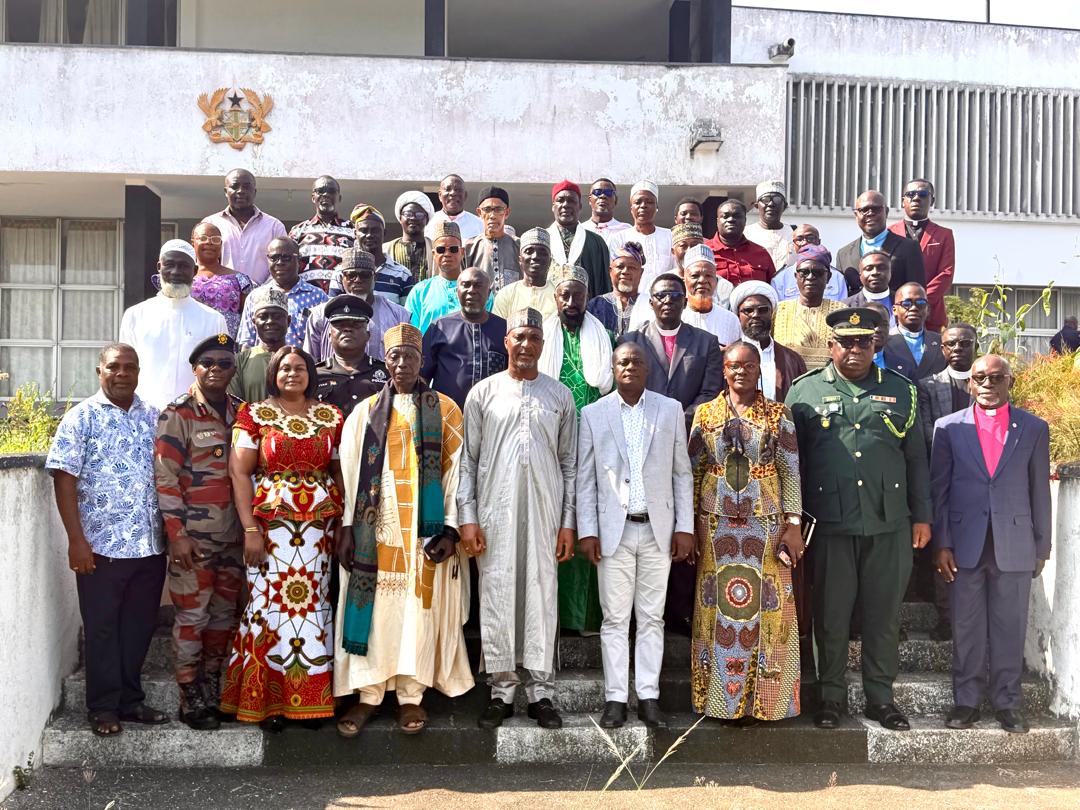

The Interior Minister, Muntaka Mohammed-Mubarak, has disclosed that Ghana has 571 identified security hotspots across the country, including 47 in the Western Region.
He warned that the relative peace the country enjoys could easily be lost if citizens fail to guard it jealously.
He cautioned Ghanaians against taking the country’s stability for granted, pointing to the devastating consequences of insecurity in some neighbouring countries, where governments have lost control of significant portions of their territories, leaving millions displaced and communities destabilised.
“In some neigbouring countries the government has lost 60 to 70 percent of its territories, while some 2.6 million people have been internally displaced. So, we need to learn lessons and commit ourselves to processes that will not make us go the way other countries have gone. If you look at these conflict – prone countries, hitherto they were peaceful but perhaps it was their inability to engender peace and co-existence that made them slip into chaos. So we don’t have to take ours for granted.”
According to him, Ghana’s ability to contain emerging security threats before they escalate is a significant achievement that requires continuous investment in dialogue, tolerance and collaboration among traditional authorities, religious leaders, security agencies and local communities.
The Minister was speaking during an engagement with religious leaders and Muslim clerics in the Western Region, as part of a three-day working visit to assess the region’s security situation and strengthen collaboration with key stakeholders.
Providing an update on the country’s security situation, Mr Muntaka disclosed that the number of communities under curfew had reduced from 11 in 2025 to four. He cited Bawku, which had recorded 173 days without gunshots, as an indication of progress, adding that restrictions on movement had gradually been eased, with discussions far advanced towards reviewing the remaining restrictions.
“For five years no one could ride a motorbike in Bawku. Now people can ride from 6am to 6pm. Now, the curfew is from 10pm to 4am. We have pushed back therefore there is no issue in Bawku, in Narelugu…
He attributed these gains to sustained engagements with traditional authorities, religious leaders, security agencies and affected communities, emphasising that peacebuilding requires continuous dialogue and the collective commitment of all citizens. He urged religious leaders to use their influence to promote tolerance and peaceful coexistence, warning that Ghana has nowhere else to turn should the country descend into widespread instability.
Earlier, the Minister paid a courtesy call on the Western Regional Minister, Joseph Nelson, acknowledged that although the Western Region remains relatively peaceful, its natural resource endowment and extensive coastline present security challenges, including chieftaincy disputes, illegal mining, maritime security threats and drug-related activities among sections of the youth.
He expressed confidence that the Minister’s engagements with security agencies, traditional authorities, religious bodies, MMDCEs and his planned visit to the Elubo border would strengthen existing interventions and enhance the region’s security management.
The Interior Minister subsequently paid a courtesy call on the President of the Western Regional House of Chiefs and Omanhene of the Essikado Traditional Area, Nana Kobina Nketsiah V.
The Omanhen proposed the establishment of a national register of chiefs to help address recurring chieftaincy disputes. “I also want to see a collective approach to tackling illegal small-scale mining, stressing that effective collaboration among government institutions, traditional authorities and other stakeholders was essential to addressing the country’s security challenges.”
The three-day working visit will also include engagements with security agencies, religious groups, MMDCEs and a visit to the Elubo border. The engagements are expected to provide first-hand insights into the region’s security concerns and inform strategies to strengthen coordination, improve security management and consolidate peace and stability in the Western Region and Ghana as a whole.