
I am not a Finance person. I am not here to criticise for the sake of criticising. But as an intellectual, critiquing a national budget presented by a Finance Minister is a fundamental civic and intellectual duty.
A budget is not just numbers on paper. It is a statement of priorities, power, and promises. An intellectual must scrutinise the numbers, the assumptions, and the power dynamics behind the fiscal plan to ensure public resources serve the broader society, rather than narrow political or economic interests.
That is why regular review of financial information matters. It allows for timely detection of deviations from the budget. It enables management, and citizens, to take corrective action if necessary.
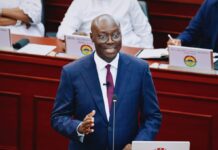
On Thursday, November 12, 2026, the Finance Minister, Honourable Dr Cassiel Ato Forson, presented the 2027 Budget Statement and Economic Policy to Parliament under the theme: “The New Economy, New Ghana, Jobs and Prosperity.” The headline figures are ambitious:
– Total expenditure of GH¢389.2 billion, or 21.6% of GDP
– Revenue and grants projected at GH¢323.4 billion, or 17.9% of GDP
– No new taxes in 2027
– Growth target of at least 5.2%, and end-2027 inflation target of 8%
– A four-year US$10 billion New Economy Programme from 2027 to 2030, with GH¢30 billion invested in 2027 alone.
The proposals are ambitious. But beyond the new commitments lies another important conversation: the status of existing obligations, unresolved financial liabilities, and promises made in previous years. A budget must be judged not only by what it promises for tomorrow, but by what it did with what it promised yesterday.
The Author- Prince Adjei
*1. The Women’s Development Bank: A Promise Rolled Over Three Times*
A prominent promise first introduced in the 2025 Budget and repeatedly rolled over into the 2026 Budget and now the 2027 Budget Statement is the establishment and operationalisation of the Women’s Development Bank. In the 2026 Budget, the government announced an allocation of GH¢401 million for the initiative, stating that the bank would provide affordable financing for small businesses and entrepreneurs.
In June 2026, Dr Ato Forson revealed that GH¢400 million had been deposited into an escrow account with the Bank of Ghana as initial capitalisation. In the 2027 presentation, he told Parliament: “I am happy to report that we have successfully capitalised the Women’s Development Bank, and the bank will be operational beginning early next year.”
That is welcome news for market women, traders, and women-led cooperatives who have waited for years for affordable credit. But the intellectual question remains: Why has a promise made in 2025 taken three budgets to reach operationalisation? And why did the Minority Leader, Alexander Afenyo-Markin, after the presentation, argue that the bank was not even mentioned in the 2027 statement, saying:
“In the 2025 Budget, they said they were going to establish a Women’s Bank. In 2026, they said the same thing. But in 2027, they were quiet.”? Whether that is a matter of speech versus full document, or a matter of communication, it points to a deeper problem: Ghanaians are no longer sure what is promise, what is progress, and what is postponement. A bank that exists on paper, in escrow, or in a committee report is not yet a bank that gives a market woman a loan in Makola, Kejetia, or Tamale.
Until the Bank of Ghana licence is granted and the first loans are disbursed, the Women’s Development Bank remains a promise to be tracked, not a delivery to be celebrated.
2. Agenda 111: From 10 Hospitals To 35 Hospitals
In Ghana’s 2026 Budget, the government stated plans to complete ten abandoned Agenda 111 hospital projects. The Finance Minister said: “In 2026, the government will complete ten (10) of the abandoned Agenda 111 hospital projects.” The allocation for that promise was GH¢100 million. Critics later argued that amount “does not even complete one fully, let alone ten,” given that each hospital was estimated at about GH¢170 million.
With seven weeks left in 2026, reports indicated that none of the ten hospitals had been reported as completed. Now, the 2027 Budget has increased the allocation to GH¢1 billion, with a target of completing 35 district hospitals. The question an intellectual must ask is simple and fair: If we could not open 10 in 2026, why should Ghanaians believe 35 in 2027? This is not cynicism. It is accountability.
The same question has been asked in Parliament: “If you couldn’t open 10 in 2026, why should Ghanaians believe 35 in 2027?” The government says it has adopted a phased approach, prioritising 35 projects that have reached at least 70% completion. But the budget documents do not provide a detailed list of the 35 hospitals or confirm when all facilities are expected to become operational. Ghanaians do not need a bigger number.
They need names, locations, completion percentages, timelines, and opening dates. A hospital is not complete when money is allocated. It is complete when a mother can deliver there safely, when a child can be treated there, when a nurse can work there.
3. The “New Economy”: Transformation or Recycling?
The centrepiece of the 2027 Budget is the New Economy Programme. The government will spend US$10 billion over four years across eight pillars: commercial agriculture ($3 billion), energy infrastructure ($2 billion), critical minerals value addition ($1.5 billion), tourism, culture and creative arts ($1 billion), textiles and garments ($1 billion), pharmaceuticals and biomanufacturing ($1 billion), the technology economy ($300 million), and macroeconomic stability.
On paper, this is a shift from stabilisation to transformation, from recovery to production and jobs. But here lies the risk: The “New Economy” framework risks recycling unfulfilled past promises rather than providing immediate tangible relief. Ghanaians have heard of the 24-Hour Economy. That programme was mentioned 27 times in the 2026 Budget but only three times in the mid-year review, raising questions over whether it has been absorbed into the new strategy or quietly abandoned. Now, we have a New Economy.
The Minority has asked: “What is the difference between the New Economy and the so-called 24-Hour Economy? How many economies will be unveiled in Ghana within four years?” The former Finance Minister, Dr Mohammed Amin Adam, has also argued that the US$10 billion plan is just a rehash, questioning how government will finance it when it could not finance the old one. The intellectual does not dismiss the New Economy outright. Agriculture, energy, textiles, pharmaceuticals, and technology are the right sectors.
But a new name does not equal a new result. If the 24-Hour Economy promised US$4 billion and US$5.5 billion through MoUs but allocated only GH¢110 million in the 2026 Budget, then Ghanaians have a right to ask: How much of the US$10 billion will actually be available in 2027, for which projects, and with what verifiable results? A budget that promises transformation in 2030 must show transformation in 2027.
4. The Gap Between Stability and Suffering
The government can point to genuine improvements. Inflation declined from 23.8% in December 2024 to 5.2% in September 2026. Growth reached 6.2% in the first half of 2026. Provisional public debt stood at 47.5% of GDP at end-October 2026. These are not small achievements. After the Domestic Debt Exchange Programme and the IMF programme, stability matters.
But stability on paper is not yet relief in the pocket. Analysts have argued that improvements in macroeconomic indicators have yet to translate into noticeable and sustained relief in the cost of living or significant job creation, particularly for young people.
The government announced GH¢29 billion in the Sinking Fund to pay DDEP bondholders whose bonds mature in February 2027. That is good for credibility. But the same citizens ask: Where is the money to pay teachers, nurses, and to recruit? Where are the jobs? The 2026 Budget promised more than 800,000 jobs, but the government has provided no concrete update.
This is the central tension of the 2027 Budget: It is fiscally disciplined, but socially impatient. Ghanaians are not asking for miracles. They are asking for evidence that stability is becoming jobs, food prices are falling, and hospitals are opening.
5. What an Intellectual Critique Demands
Critiquing the budget is not opposition. It is patriotism. An intellectual critique of the 2027 Budget demands five things:
i. A Delivery Tracker, Not Just A Promise List
Every major promise from 2025 and 2026 — Women’s Development Bank, Agenda 111, 24-Hour Economy, Big Push — should have a public status report: promised, funded, released, started, completed, operational.
ii. Names, Places, and Dates*
For the 35 Agenda 111 hospitals, publish the list. For the New Economy, publish the 2027 project pipeline. For the Women’s Development Bank, publish the licence status and first disbursement date.
iii. Reconciliation of Old Liabilities
The budget must clearly state what is owed from previous years — arrears, DDEP obligations, unpaid contractors, stalled projects — and how they will be cleared. New spending cannot hide old debt.
iv. Jobs with Evidence
Not jobs announced, but jobs verified. How many young people were employed? In which sectors? With what pay? The youth do not need slogans. They need payslips.
v. Continuity Beyond Politics
Agenda 111 was started by a previous government. The Women’s Development Bank was promised by this government. Ghana cannot afford to abandon projects because of who started them. Completion is more patriotic than commencement.
Conclusion: From New Economy to New Accountability
Hon. Ato Forson’s 2027 Budget is bold. A GH¢389.2 billion plan with no new taxes, a US$10 billion transformation programme, and a promise to move from stabilisation to production is a vision Ghanaians can understand. But vision without verification becomes repetition.
If the Women’s Development Bank opens in early 2027 and gives real loans to real women, it will be a landmark. If the 35 Agenda 111 hospitals open and treat real patients, it will be a legacy. If the New Economy creates real jobs in agriculture, textiles, and pharmaceuticals, it will be transformation.
If not, then 2027 will be remembered not as the year of the New Economy, but as the year Ghana recycled old promises under a new name. As intellectuals, as citizens, as Ghanaians, our duty is not to clap for the budget. Our duty is to follow the money, follow the promise, and follow the delivery — until the budget becomes bread, jobs, hospitals, and hope for the ordinary Ghanaian. That is not criticism. That is citizenship.
By: Prince Adjei