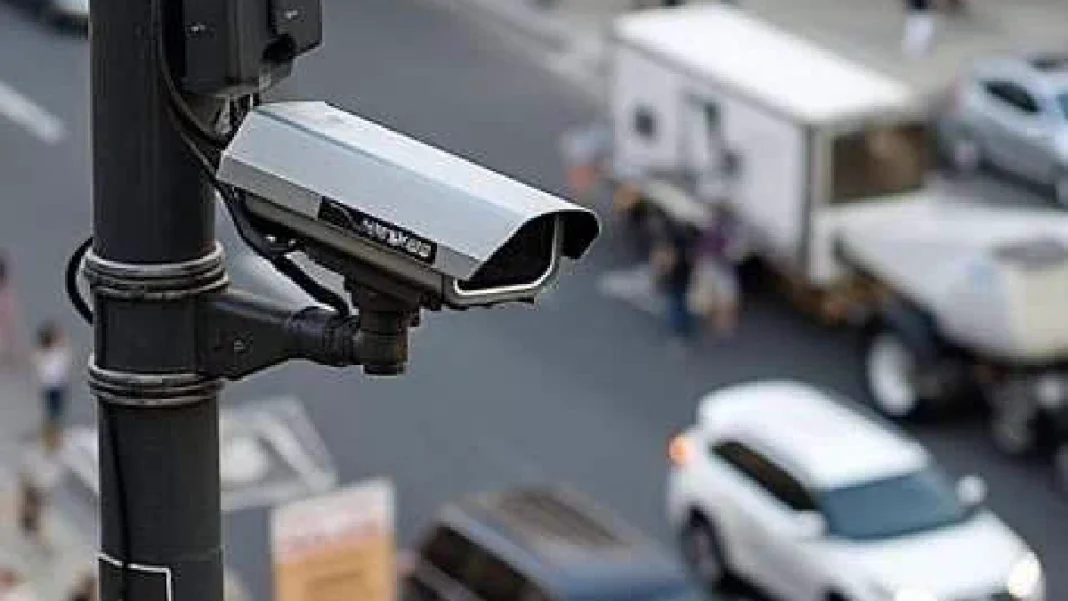

The Minister of the Interior, Muntaka Mohammed Mubarak, has disclosed that the first week of implementing the TraffiTech-GH automated enforcement system generated an estimated GH¢4 million from 13,699 recorded road traffic offences.
Contributing to debate on the 2027 Budget in Parliament on November 25, the Minister said the introduction of the system has also contributed to a reduction in road traffic crashes.
“We have just introduced, this month, what we call the Traffictech, just to help reduce the carnage that we see on our roads,” he told the House.
“Mr Speaker, at the end of the first week alone, the traffic infractions were 13,699, meaning that people were fined almost GH¢4 million in just one week. Just one week.”
He said the early results were encouraging.
“But Mr Speaker, just as we have done this, the most instructive thing is that road accidents immediately started declining. If you match them week to week, month to month, to the year, for the first time in November, the first week, we are seeing a decline in the incidence of road crashes.”
Muntaka said the system is being rolled out in phases, starting with only one offence.
“Which tells us that all we need to do is to intensify this Traffictech, because Mr Speaker, with the help of this House, the Traffictech, there are 49 infractions. That is, there are 49 things that when you do under the new law, will attract punishment. We started with only one, Mr Speaker, which is over-speeding. We started with only over-speeding.”
He stressed that enforcement is currently limited to stretches where adequate signage has been provided.
“And even the over-speeding, we are running it on only stretches where we have put adequate signage. So for example, if there is a road, let us say from Parliament to the Ministry of the Interior, that we have not put enough signage on, then my instruction was that no, once we have not put signage, we have not indicated to people, this road is there, do not let it apply. Only on roads with signage.”
“First week alone, from 1st November to the 8th of November, over 13,000 infractions. From just one of the infractions,” he stressed
Background: Why TraffiTech was introduced
TraffiTech-GH, the Ghana Police Service’s camera-based enforcement system, went live nationwide on 1 November 2026.
The system is backed by the Road Traffic (Amendment) Act, 2025 (Act 1153) and the Road Traffic Regulations, 2026 (L.I. 2519), which took effect on November 1, 2026.
Before full enforcement began, police issued more than 70,000 caution notices between September 10 and October 31, 2026. Full enforcement had originally been planned for 1 October, but was pushed back to 1 November to allow more public education.
Under the first phase, cameras mounted in police vehicles and on tripods record vehicles going above the legal speed limit. The limits being enforced are 50 km/h in towns, 90 km/h on highways and 100 km/h on motorways.
The registered owner receives an Electronic Notice of Violation by text from the sender ID GPS-MTTD, and has 14 days to pay or challenge it. Speeding fines start at GH¢240 for exceeding the limit by 5 to 20 km/h, rising to GH¢480 for more than 50 km/h over the limit.
Background: Ghana’s road death crisis
The system was introduced against the background of Ghana’s worst road death toll in 35 years.
In 2025, Ghana recorded 14,743 road traffic crashes, resulting in 2,949 deaths and 16,714 injuries. The National Road Safety Authority (NRSA) recorded 2,949 road deaths in 2025, the highest toll in 35 years and 18 per cent more than in 2024.
The trend continued into 2026. Police figures show 2,151 people died in 10,157 crashes between January and September 2026, about eight deaths every day.
The NRSA itself names speeding, drink-driving, unlicensed driving and unregistered vehicles among the leading causes.
President John Dramani Mahama has said government will compare road crash figures month by month with last year’s to test whether the TraffiTech-GH speed cameras are saving lives.
The MTTD has already reported early gains. ACP Alexander Kwaku Obeng said that during the pilot, when offenders received caution notices rather than fines, crashes fell 9.4% in September 2026 compared with September 2025.
Muntaka told Parliament that if the first week’s decline is sustained, the case for intensifying enforcement is clear.