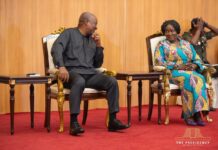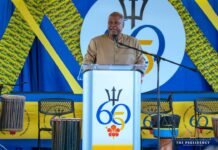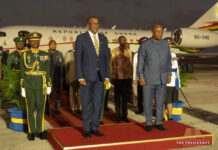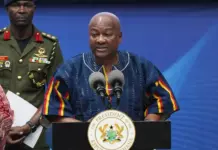


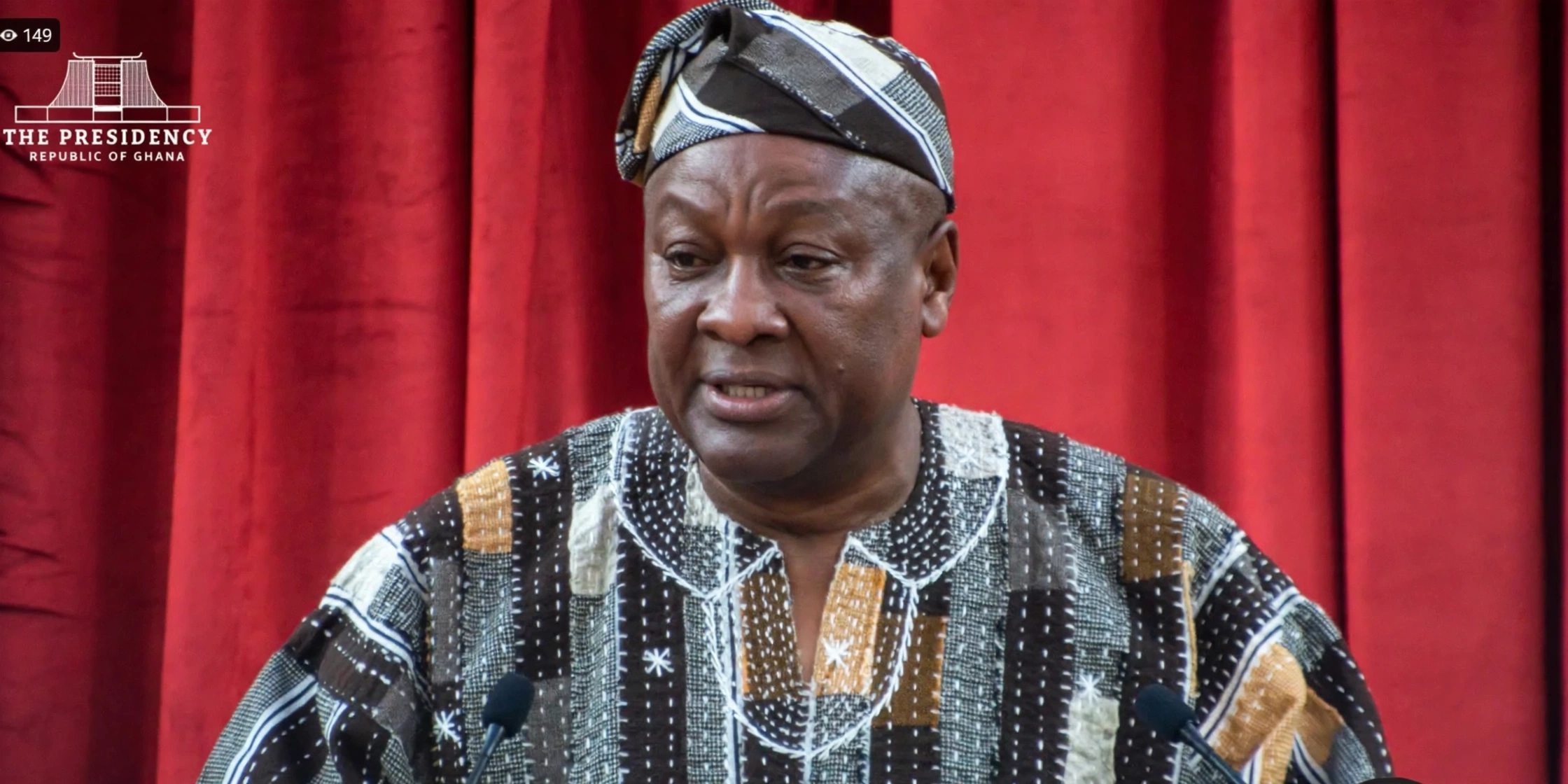

As part of his five-day state visit to Barbados, President John Mahama has addressed the Parliament of the country.
His address was delivered on November 27, 2026.
Please read full speech below:
Address by H.E. John Dramani Mahama, President of the Republic of Ghana at the Joint Sitting of the Parliament of Barbados on the occasion of the State Visit to Barbados.
Your Excellency, The Most Honourable Jeffery Bostic, President of Barbados.
Your Excellency, The Honourable Mia Amor Mottley, S.C., M.P., Prime Minister of Barbados.
Your Honour, Senior the Most Honourable Reginald R. Farley, President of the Senate.
Your Honourable Arthur Holder, S.C., Speaker of the House of the Assembly.
Honourable Ministers.
Honourable Senators and Members of the House of the Assembly.
Your Lordships, the Chief Justices and Members of the Judiciary.
Excellencies, Members of the Diplomatic Corps.
Ladies and Gentlemen.
It is a distinct honour to address this Joint Sitting of Parliament as the second Ghanaian President to do so.
The opportunity for two Ghanaian leaders to address this House reflects the warm and fraternal relations between our countries, rooted in shared heritage.
I wish to express our sincere appreciation for the warm hospitality and courtesies extended to us since our arrival.
Your welcome is deeply familiar and serves as a reminder of the enduring historical, cultural, and personal ties that unite our nations across the Atlantic.
Mr. Speaker,
Permit me to convey to the House, and to the people of Barbados, the warmest greetings and goodwill from Ghana and the wider African continent.
I do so with a deep sense of history, kinship, and Pan-African solidarity.
While the Atlantic Ocean separates us, it cannot diminish the enduring bonds of ancestry, heritage, and identity that unite us.
Barbados will always remain an integral part of our African family and a valued partner in our shared pursuit of prosperity, dignity, and progress.
Mr. Speaker,
As your nation commemorates two defining milestones in its political history, I am reminded of parallels with Ghana and our own history of statehood, republican status, and nation-building.
Political independence was a journey that required the active support of all citizens and strong leadership.
I commend Barbados for its effective governance over the first fifty-five years post-independence and the last five years as a republic.
At the time of Ghana’s independence, our country understood the Pan-African responsibility of being the first sub-Saharan African country to break free of the yoke of colonialism.
Indeed, Dr Kwame Nkrumah understood that the liberation struggle in Accra and the liberation struggle in Bridgetown were two fronts of the same war.
He was supported in his leadership by towering Pan-African intellectuals from the Caribbean, like George Padmore and Cyril L. R. James.
Men like Marcus Garvey inspired him as he shaped Ghana’s independence movement.
Dr Nkrumah strongly advocated for the independence of small states from colonial rule, even as critics questioned the viability of countries like Barbados.
Despite its size and limited resources, the leadership of Prime Minister Errol Walton Barrow and his successors has long since dispelled such doubts.
Barbados proved the sceptics wrong not with rhetoric but with results.
Guided by Barrow’s philosophy of being “friends of all, satellites of none,” Barbados pursued a visionary strategy of human capital development, from primary education to the University of the West Indies, robust public healthcare, and disciplined social partnership among government, labour, and the private sector.
Barbados has transformed itself. You have moved from a mono-crop sugar economy to a diversified, knowledge-based, service-driven society with one of the highest standards of living in the developing world.
Mr. Speaker,
In Ghana, among the Akan people, we have a sacred philosophical concept symbolised by a mythical bird facing forward, its head turned backwards, holding a precious egg in its beak.
We call it Sankofa, which teaches us that “Se wo were fi na wosankofa a yenkyi”, meaning it is not taboo to go back and fetch what you left behind.
As you commemorate the twin milestones of Sixty and Five, let us embrace Sankofa together.
Let us face the future with shared ownership of our ancestry and heritage.
The Atlantic, once a barrier of separation, must now become our bridge to shared prosperity, restored identity, hope, and the renaissance of the global African dream.
Stripped names and identities will be restored. Uprooted roots and connections will be replanted.
The African soul is resilient and endures. It lives in the cadence of the Barbadian dialect, echoing the rhythms of Twi, Ga, and Ewe.
It is present in your culinary heritage, where our kenkey and banku find kinship with your cou-cou, and our roasted plantain and yam nourish both our tables.
It thrives in the communal solidarity of the susu savings system, whose name comes from Akan and Yoruba traditions of collective thrift.
It endures in the rhythms of the tuk band, reverence for elders, and the unquenchable thirst for freedom.
Ghana and Barbados are united by deep historical connections and the indomitable spirit of our ancestors, who refused to surrender their humanity, identity, or hope for a better future.
This spirit will guide us as we shape the future we seek.
Today, we express our gratitude to our ancestors whose bones rest beneath the sugarcane fields of Barbados and the floor of the Atlantic Ocean.
Their endurance forms the foundation upon which this Parliament stands.
This indomitable spirit of courage, resistance, and determination inspired King Cuffie, Bussa, and their compatriots to fight for dignity, and it must continue to guide us.
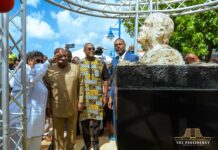
Honouring their memory through the unveiling of King Cuffie’s statue and the solemnisation of the Newton burial grounds is a lasting tribute to the countless men, women, and children of African descent who endured the brutality, indignities, and injustices of transatlantic enslavement.
Their suffering must never be forgotten, their sacrifices must never be diminished, and their courage must remain an enduring source of inspiration in our pursuit of freedom, justice, human dignity, and full recognition of our shared humanity.
Honourable Speaker,
I borrow on this occasion the words of Peter Tosh, who in his 1977 song “African” said: “Don’t care where you come from.
As long as you’re a black man, you’re an African. No Mind your nationality. You have got the identity of an African.”
We are all Africans, and true brotherhood requires the moral courage to continue seeking justice for our ancestors.
As President of Ghana, a nation whose coastline, forts, and castles bear witness to the trafficking of enslaved Africans, I cannot ignore the unfinished business of Reparatory Justice in this Parliament, representing a nation whose people built the wealth of others.
For centuries, the enslavement of Africans extracted wealth, labour, and human potential to fuel the Industrial Revolution and the prosperity of Europe and North America.
When slavery was abolished, the enslaved were not compensated for stolen wages and suffering; instead, enslavers received vast sums from imperial treasuries, with taxpayers repaying these debts into the twenty-first century.
The legacies of that system are not ancient history.
They are evident today in chronic underdevelopment, infrastructure deficits, public health burdens, and global structural inequities.
We must continue to advocate for reparatory justice in response to the enslavement of our people, colonisation of our lands, and exploitation of our resources and cultural heritage.
The adoption of United Nations General Assembly resolution A/RES/80/250, which I had the privilege to lead, declared the trafficking and chattel enslavement of Africans as the gravest crime against humanity.
This marks an important milestone, but it is only the beginning of a long and consequential journey we must continue.
To preserve the integrity of our shared history and honour the millions who perished, including King Cuffie, the 570 forebears at Newton, and countless others worldwide, Africans and people of African descent must continue to speak out and lead in restoring African agency in shaping our collective destiny.
This is about creating a more equitable international order where the historical injustices suffered by our peoples are neither dismissed nor forgotten.
Let there be no misunderstanding: our pursuit is not about retribution nor revisiting old grievances, but about upholding human dignity, affirming historical truth, ensuring accountability, advancing reconciliation and healing, and asserting the rightful place of the African race in the world.
By collaborating with the CARICOM region and our citizens, we can advance the objectives outlined in the United Nations resolution, the CARICOM revised Ten-Point Plan, and the transcontinental goals established in Accra this past June in “The Accra Next Steps Commitments on Reparatory Justice.”
Honourable Speaker,
As we advance our collective wellbeing as Africans and restore our esteemed historical identity, we must address how we relate to one another.
Our shared ancestry and enduring kinship unite us as brothers and sisters. However, prejudice, discrimination, or violence within our community compels us to confront the traumatic histories we carry.
Every African life matters, and every individual deserves dignity and respect.
Incidents such as the tragic death of our young compatriot Javitz Frimpong in the United States remind us that we cannot progress if divisions and intolerance undermine our shared identity.
We cannot demand dignity from the world while denying it to one another.
Our pursuit of reparatory justice must be matched by genuine solidarity, mutual respect, and a firm commitment to protecting one another, ensuring that no African ever feels like a stranger among their own people.
I express Ghana’s profound gratitude to the Government and people of Barbados for their solidarity and support in advancing the international reparatory justice agenda.
Barbados’ longstanding advocacy through successive administrations and regional institutions demonstrates a principled commitment to confronting historical injustice and securing a just future for generations to come.
I also wish to record Ghana’s special appreciation to Prime Minister Mia Amor Mottley for her steadfast leadership and enduring partnership with Ghana.
We deeply value Barbados’ friendship and look forward to continuing our collective efforts in this shared cause.
Honourable Members,
The relationship between Ghana and Barbados has entered a transformative era.
We are moving from words to concrete action, building a shared future of prosperity and peace.
Since 2022, over 380 highly trained Ghanaian nurses have served in Bridgetown at the Queen Elizabeth Hospital and clinics, bringing clinical excellence, compassion, and dedication to the care of Barbadian families.
They were warmly received, exemplifying the spirit of family.
Our two governments recognise that effective twenty-first-century trade and tourism require direct air and maritime connectivity.
After historic charter flights reduced travel between Accra and Bridgetown from 23 hours to just seven, Ghana is finalising bilateral air services agreements with Caribbean partners and reviving our national air carrier to establish permanent direct air links and port-to-port maritime corridors across the Atlantic.
Ghana has welcomed hundreds of members of the African family, including Barbadians, as full citizens.
My administration is streamlining legislation and visa-waiver frameworks so Barbadians and Caribbean citizens can travel, invest, settle, and claim ancestral citizenship in Ghana without unnecessary bureaucratic hurdles.
We are also advancing financial and institutional integration between Africa and the Caribbean.
Through the CARICOM-Africa Summits and the expansion of African Export-Import Bank (Afreximbank) operations in Bridgetown, we are creating African-Caribbean financial instruments to fund infrastructure, development, and prosperity.
Mr. Speaker,
Recognising the importance of a unified African identity for our collective growth, the African Union has designated the African Diaspora as the Sixth Region of Africa.
As Ghana prepares to assume the Chairmanship of the African Union in 2027, I pledge that making the Sixth Region operational and integrating Africa and the Caribbean as a cohesive economic and diplomatic bloc will be a central priority during my tenure.
Our partnership must focus on practical economic transformation and empowering our youth to build our shared future.
To achieve this, we must take several key actions.
First, the African Continental Free Trade Area (AfCFTA) and CARICOM must be linked as one economic space to create broader opportunities for our shared growth and development.
Accra hosts the Secretariat of the African Continental Free Trade Area (AfCFTA), the largest free trade area in the world by number of participating countries, creating a single market of over 1.4 billion people with a combined GDP exceeding US$3.5 trillion.
Under my chairmanship of the African Union, I will work with my peers, Madam Prime Minister, and her colleagues to establish arrangements for expanding the AfCFTA to the CARICOM countries.
Secondly, we must advance the Green and Blue Economies.
Both Barbados and Ghana have abundant sunlight, wind, and ocean resources.
Barbados’ leadership has set a global benchmark for renewable energy transition.
Our universities, engineers, and public and private sectors should collaborate on solar technology, sustainable fisheries, and ocean conservation.
In this way, the ocean that once divided us will become the engine of our shared sustainable prosperity.
Third, our creative and digital economies must empower our youth, who are reshaping global culture.
From Highlife, Hiplife, and Afrobeats in Accra to Soca, Spouge, and Bashment in Bridgetown, African and Caribbean music, fashion, film, and art influence youth culture worldwide.
However, intellectual property, streaming platforms, and royalties are often owned outside our regions.
We should harmonise intellectual property protections, create joint venture funding for young Ghanaian and Barbadian creatives, and build digital infrastructure, including artificial intelligence and fintech platforms rooted in our values and owned by our innovators.
Finally, we must deepen academic and youth exchange programmes to enable the younger generation to immerse themselves in our shared histories.
Let us expand partnerships between our public universities, such as the University of the West Indies at Cave Hill, the University of Ghana, Kwame Nkrumah University of Science and Technology, and the University of Cape Coast, so our students can spend at least a semester in Ghana and Barbados.
Mr. Speaker,
Our shared development challenges stem from an international financial architecture that is increasingly ill-suited to the realities and aspirations of the Global South.
In this context, the Bridgetown Initiative, championed by the Honourable Prime Minister Mia Mottley, has gained profound international significance.
The call for fundamental reform of the global financial architecture resonates deeply with Ghana and countries across Africa.
It complements the vision I have for the Accra Reset Initiative, especially its focus on sovereignty, equitable partnerships, and institutional reform.
Ghana affirms its unwavering support for the Bridgetown Initiative and looks forward to working closely with Barbados to advance a fairer financial system that recognises vulnerability alongside income, responds equitably to climate challenges, and prioritises the development aspirations of our peoples.
Since launching the Accra Reset Initiative in September 2025, we have advanced our goals for health sovereignty and remain committed to a new paradigm of international cooperation and development, especially for the Global South.
This paradigm is anchored in national sovereignty, strong institutions, domestic resource mobilisation, and the ability of countries to determine and finance their own priorities.
We aim to move beyond traditional aid dependency toward mutually beneficial partnerships that strengthen productive capacities, promote regional cooperation, and deliver measurable development outcomes.
The call for a more equitable global governance system, where developing countries have a meaningful voice in shaping their destinies, aligns with the Bridgetown Initiative and the goal of reforming international financial and governance structures.
Our objective must be to move from shared aspirations to coordinated action, and from solidarity in principle to tangible improvements in the lives of our peoples.
Honourable Members,
Having emerged from severe debt distress to macroeconomic stability, Ghana is now transitioning from recovery to economic resilience and structural prosperity.
Through a four-year economic programme called the New Economy, my government is committed to creating a New Ghana, with jobs for our youth and prosperity for all Ghanaians.
Starting next year, we will deploy US$10 billion of our own resources toward eight strategic pillars critical to transforming our economy, ensuring value addition for all our natural resources, and creating new jobs for our youth.
This deliberate shift reflects Barbados’s notable progress: consistent fiscal discipline under the Barbados Economic Recovery and Transformation Framework (BERT) has delivered consecutive years of economic growth, record-low unemployment, strong international reserves covering six months of imports, and a steady decline in public debt.
Just as Barbados has shown that sound fiscal management supports resilient, inclusive growth, Ghana’s 2027 fiscal plan aims to turn stability into broad-based prosperity, laying the foundation for increased trade, investment, and shared economic progress.
Before I conclude, I wish to pay special tribute to the enduring strength of Barbadian democracy.
In a world facing democratic backsliding, polarisation, and institutional erosion, Barbados, like Ghana, stands as a beacon of constitutional stability, the rule of law, and peaceful civic culture.
For sixty years, power has transitioned peacefully through the ballot box. Your courts have upheld the rule of law without fear or favour.
Your Parliament remains a place where robust debate coexists with mutual respect and commitment to the national good.
As a fellow leader, I commend the outstanding leadership of Prime Minister Mia Amor Mottley.
Across Ghana and the African continent, her eloquent voice is respected and admired.
Whether addressing the United Nations General Assembly, advocating at climate summits, or speaking in Accra and Addis Ababa, she has expressed the hopes and frustrations of the Global South with clarity and courage. She demonstrates that small nations can hold significant moral authority.
I also commend every citizen of Barbados: the teachers, nurses working with Ghanaian colleagues, farmers, artisans, fishermen, civil servants, and elders who, through daily dedication, have built a society that inspires pride across the Black world.
Honourable Speaker,
Finally, in the stirring words of your National Anthem:
“We write our names on history’s page with expectations great,
Strict guardians of our heritage,
Firm craftsmen of our fate.”
May Barbados continue to distinguish itself in history.
May the Republic of Ghana and Barbados move forward together in lasting brotherhood.
Long live Barbados!
Long live Ghana
Long live Ghana-Barbados relations!
I thank you, Medaase!