
In a significant move to advance decentralisation and promote equitable development, Ghana’s Ministry of Local Government, Chieftaincy and Religious Affairs has officially received the long-awaited report from the Committee for the Elevation of Districts and Municipalities.
The committee, chaired by Johnson Asiedu Nketia, was constituted just two months ago with a clear mandate to review the status of selected Metropolitan, Municipal and District Assemblies (MMDAs).
It has recommended the elevation of 33 local assemblies as part of the government’s broader effort to strengthen local governance.
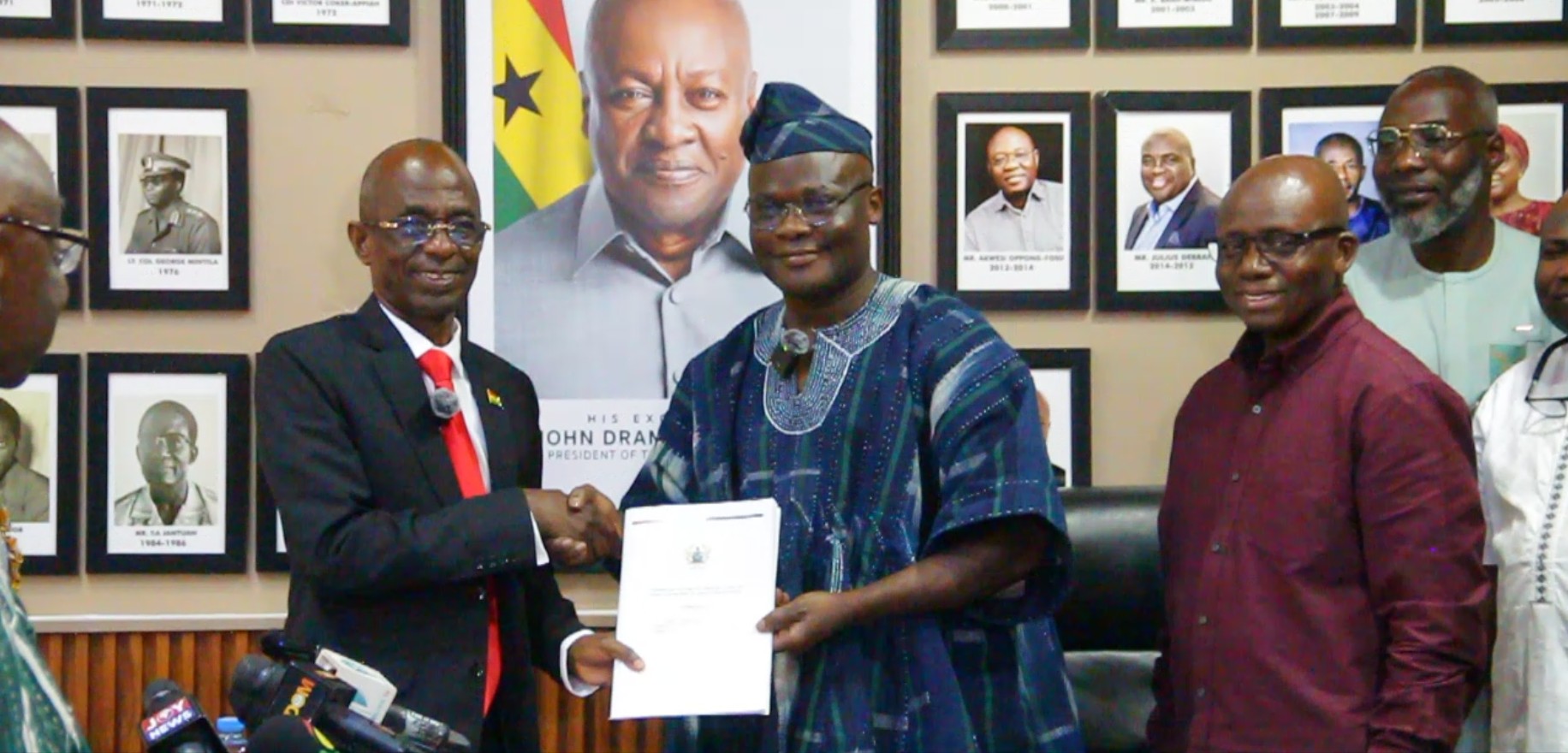
At a brief but impactful ceremony, the committee formally presented its report to the Minister for Local Government, Chieftaincy and Religious Affairs, Ahmed Ibrahim.

According to the committee’s findings, 12 existing municipalities are to be upgraded to metropolitan status, one district is to be elevated directly to metropolitan status, and 20 districts are to be raised to municipal level.
Receiving the report, Minister Ibrahim commended the committee for its dedication and described the document as more than a technical submission.
“This report will guide the Ministry in making informed policy decisions, enhance service delivery, and build the capacity of our local assemblies,” he said. “It will be pivotal in empowering our communities and ensuring that our districts, municipalities and metropolises are better equipped to serve their citizens.”
The Minister noted that the proposed upgrades align with President John Dramani Mahama’s “Resetting Agenda” and the government’s broader vision for socio-economic transformation. He emphasised that the changes would have far-reaching implications for resource allocation, development planning and the overall well-being of communities nationwide.
The elevation of the 33 MMDAs forms a key component of Ghana’s ongoing decentralisation agenda, aimed at bringing governance closer to the people and ensuring a more equitable distribution of resources and decision-making authority across regions. The government believes the upgrades will improve service delivery, address regional disparities and accelerate socio-economic development.
The Ministry will now review the recommendations, after which they are expected to be submitted for final approval by President Mahama. Once approved, the changes are set to mark a pivotal moment in Ghana’s governance framework, strengthening the role of local assemblies in driving development and improving livelihoods.
Minister Ibrahim expressed gratitude to both the committee members and Ministry staff who supported the process.
“Your work will have far-reaching implications for the development of our country. You have laid the groundwork for a more robust and empowered local governance system,” he concluded.
By Joseph Armstrong Gold-Alorgbey