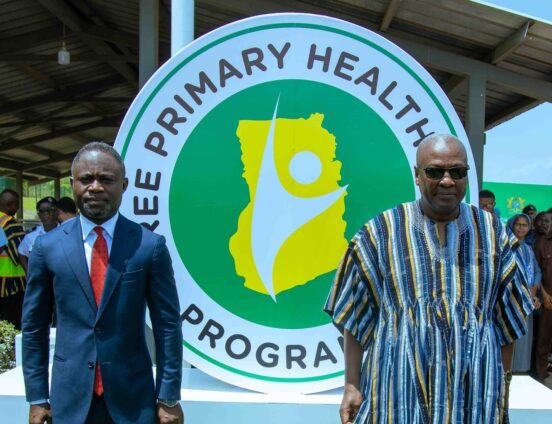

President John Dramani Mahama’s government launched its flagship Free Primary Healthcare Programme on April 15, 2026, starting with 150 underserved districts nationwide.
The programme, estimated to cost GH¢1.2 billion annually, will begin in 150 underserved districts across the country. With 350 kiosks planned nationwide, the project is expected to transform Ghana’s health delivery system.
Health Minister, Kwabena Mintah Akandoh emphasised that the programme is designed to create a comprehensive healthcare system that prioritises early detection, reduces avoidable deaths, and improves overall public health outcomes.
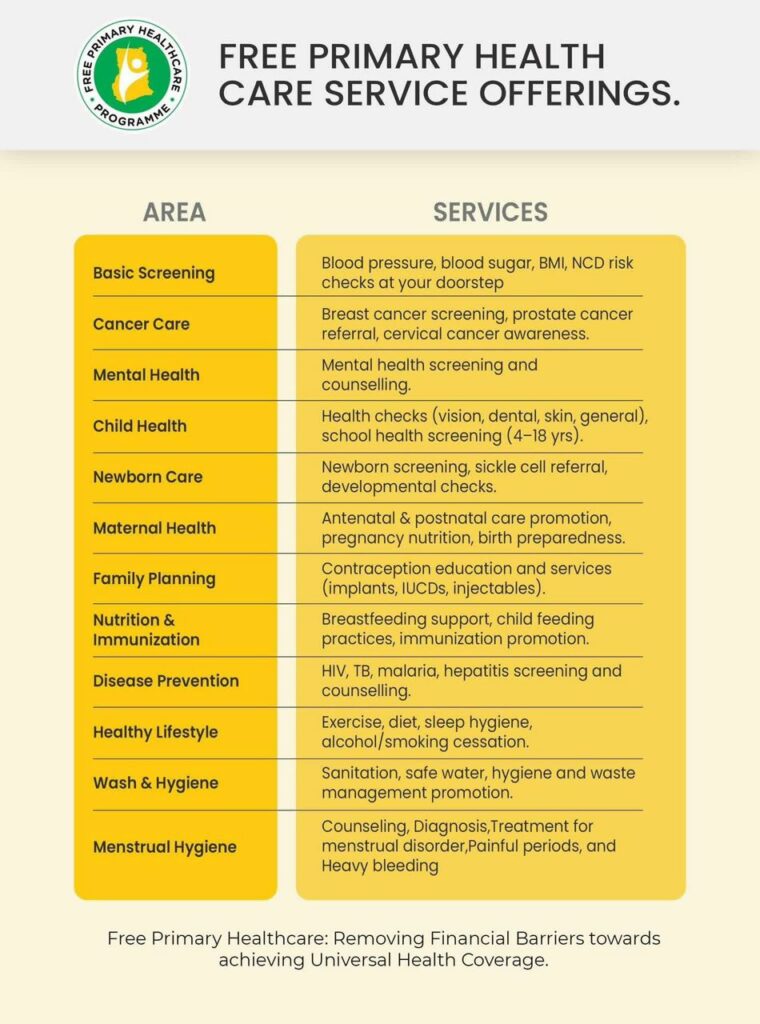
The government has detailed a broad package of services under its Free Primary Healthcare Programme, aimed at removing financial barriers and bringing essential health services closer to communities across the country.
The initiative, which forms part of efforts to achieve Universal Health Coverage, covers a wide range of preventive, diagnostic, and basic treatment services designed to improve overall public health outcomes.
Detailed area and services to be offered under the Free Primary Healthcare Service
Under the programme, Ghanaians will have access to basic health screening services, including checks for blood pressure, blood sugar levels, body mass index (BMI), and risks associated with non-communicable diseases. These services are expected to be delivered at the community level, including doorstep outreach in some cases.
The policy also places significant emphasis on cancer care, with provisions for breast cancer screening, prostate cancer referrals, and cervical cancer awareness campaigns to promote early detection and treatment.
Mental health has also been prioritised, with screening and counselling services included to address growing concerns around psychological wellbeing.
For children and newborns, the programme provides comprehensive health checks, including vision, dental, skin, and general assessments, as well as school health screenings for children aged 4 to 18. Newborns will benefit from screening services, sickle cell referrals, and developmental monitoring.
Maternal health services will include antenatal and postnatal care, pregnancy nutrition education, and birth preparedness support to improve outcomes for mothers and infants.
In addition, the programme incorporates family planning services, offering education and access to contraceptive methods such as implants, intrauterine contraceptive devices (IUCDs), and injectables.
The government is also promoting nutrition and immunisation, with support for breastfeeding, child feeding practices, and vaccination campaigns.
Efforts to prevent diseases will include screening and counselling for conditions such as HIV, tuberculosis, malaria, and hepatitis, alongside broader public education initiatives.
Lifestyle-related interventions are also a key component, with guidance on exercise, diet, sleep hygiene, and substance use, including alcohol and smoking cessation.
The programme further addresses environmental health through sanitation and hygiene promotion, including safe water practices and waste management education.
Special attention has also been given to menstrual health, with counselling, diagnosis, and treatment for menstrual disorders, painful periods, and heavy bleeding.