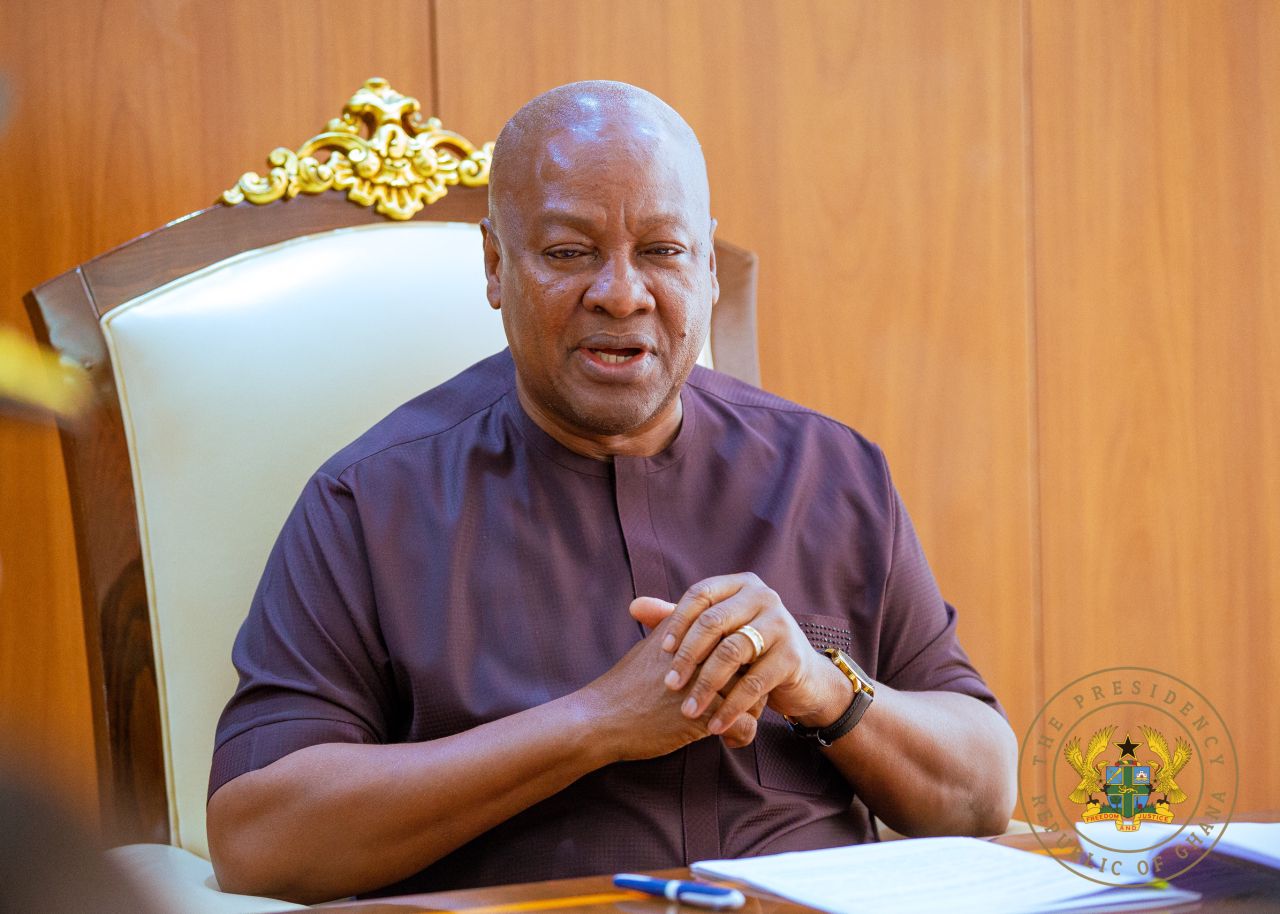

The Young Cocoa Farmers Association has petitioned President John Dramani Mahama to urgently clarify the producer price, financing arrangements and commencement date for Ghana’s 2026/2027 cocoa purchasing season.
In a petition dated August 17, 2026, the Association said uncertainty surrounding the new season is making it difficult for farmers to plan their production, hire labour, purchase inputs and set income targets.
The petition, signed by the Association’s Executive Secretary, Madam Adwoa Mensah, and its Convenor, Martin Adu, said farmers are still struggling with the effects of the 2025/2026 season, during which some Licensed Buying Companies and purchasing clerks reportedly lack sufficient funds to purchase cocoa.
According to the Association, the situation has left some farmers unable to sell their beans promptly or receive the financial support traditionally provided by buyers between the light-crop and main-crop seasons.
“Many young cocoa farmers were unable to achieve their production targets and expected incomes,” the petition stated.
It said the financial difficulties had affected farmers’ ability to meet household expenses, pay school fees, access healthcare and undertake essential farm maintenance.
The Association is therefore asking the government to state whether adequate funds will be available to Licensed Buying Companies throughout the 2026/2027 season and outline measures being taken to prevent another payment and purchasing crisis.
It also wants the government to clarify whether the current producer price will be maintained or reduced, how the policy of paying farmers at least 70 per cent of the cocoa value will be implemented and when the new season will officially begin.
Although Ghana and Côte d’Ivoire reportedly agreed in June to begin the 2026/2027 season on September 1, the Association is seeking formal communication on the operational arrangements for Ghanaian farmers and buyers.
A season of price changes and delayed payments
The concerns follow significant disruptions during the 2025/2026 cocoa season.
The season opened on August 7, 2025, with a producer price of GH¢51,660 per tonne, equivalent to GH¢3,228.75 for a 64-kilogramme bag. The government said this represented 70 per cent of a projected gross Free-on-Board value of US$7,200 per tonne. The price was subsequently increased to GH¢58,000 per tonne in October 2025 following exchange-rate movements and concerns that a higher price in Côte d’Ivoire could encourage cocoa smuggling.
However, a sharp decline in international cocoa prices created difficulties for COCOBOD in selling Ghana’s beans and generating the liquidity required to pay buying companies.
In February 2026, the government reduced the producer price to GH¢41,392 per tonne, or GH¢2,587 per 64-kilogramme bag, for the remainder of the season. COCOBOD said the international market price had fallen from an average of US$7,200 to about US$4,100 per tonne, making Ghana’s cocoa increasingly uncompetitive.
The reduced price was maintained when the 2026 light-crop season opened on June 18.
The financing difficulties also resulted in delayed payments to some farmers. In May, the state-owned Produce Buying Company was reported to owe farmers GH¢24 million for more than 9,000 bags of cocoa already delivered. The company was also said to be carrying total debts of about GH¢673 million and lacked the liquidity to resume large-scale purchases.
Questions over new financing model
COCOBOD has announced plans to introduce a new financing system for the 2026/2027 season, using domestic instruments such as commercial paper and commercial notes instead of relying heavily on the traditional annual syndicated loan.
The regulator says the proposed arrangement will provide more sustainable financing for cocoa purchases and allow periodic producer-price reviews in response to changes in international prices and the exchange rate. A detailed prospectus was expected to be presented to financial institutions and other stakeholders before the season opened.
The farmers’ petition suggests that important details about the amount of funding available, how quickly money will reach the LBCs and how farmers will be protected against payment delays have not been sufficiently communicated.
Farmers demand education on Cocoa Board Bill
The Association is also asking the government to engage cocoa farmers directly on the Ghana Cocoa Board Bill, 2026, and explain its provisions, benefits and implications.
Parliament passed the Bill on July 30, 2026. Among other reforms, it seeks to legally guarantee cocoa farmers at least 70 per cent of the gross Free-on-Board export price received by COCOBOD, establish a new financing model and provide statutory backing for the Producer Price Review Committee.
The 70 per cent guarantee relates to the gross FOB price achieved by COCOBOD and not necessarily the headline cocoa price quoted on international commodity exchanges.
The Bill also provides for a contributory Cocoa Farmers Pension Scheme, an Educational Trust Scheme, stronger cocoa-farm protection, new dispute-resolution structures and increased local processing.
COCOBOD began stakeholder engagements on the legislation in August, but the Young Cocoa Farmers Association wants the exercise expanded to ensure farmers understand their rights and obligations before implementation.
The petition comes as COCOBOD projects that Ghana’s cocoa production could decline by at least 16 per cent during the 2026/2027 season. The regulator has attributed the expected decline to adverse weather, swollen shoot disease, ageing farms, the natural production cycle of cocoa trees and the destruction of farms through illegal mining.
The Association warned that continued uncertainty could discourage young people from investing in cocoa and undermine production.
“Farmers deserve prices that reflect the true cost of production and provide a reasonable return on our investment,” it stated.
The petition was copied to the Chief Executive of COCOBOD, the Speaker of Parliament, the finance minister, the Minister for Food and Agriculture and Parliament’s Select Committee on Food, Agriculture and Cocoa Affairs.
By Wisdom Sarfo