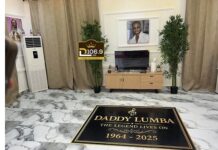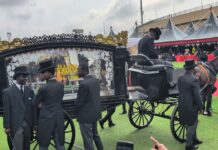

The passing of legendary Ghanaian musician Daddy Lumba has sent shockwaves throughout the nation, leaving fans and fellow artists alike to grapple with the loss of a musical icon.
As the country reflects on his life and legacy, one theme that stands out is his profound philosophy on life and death, which is seen throughout his music. Daddy Lumba throughout his lifetime and career, has been known as a man of many genres.
One fascinating aspect of his career is the numerous death-themed songs that have sparked curiosity among fans and music enthusiasts especially following his passing.
Daddy Lumba’s music catalog features over 12 songs that explore the theme of death, offering a glimpse into his profound understanding of life’s complexities.
Songs like “Ankwanoma” and “Adaketia” showcase his unique perspective on mortality, encouraging listeners to live life to the fullest.
In “Ankwanoma,” Daddy Lumba sings about the inevitability of death, with lyrics that urge listeners to make the most of their time on earth.
The song’s phrase “Midemikra Abo Aforiye” translates to “I have sold my soul as an offering,” and “membre so a nameko” meaning “when it’s my time, I will leave this earth” highlights the artist’s introspective approach to life and death.
Similarly, “Adaketia” features a theme that we all eventually land in a coffin, emphasizing the importance of living life with purpose and intention.
This song, like many others in Daddy Lumba’s discography, reflects his Asanti cultural beliefs, where death is seen as a passage.
‘Makramo’, to wit, I bid you farewell succinctly nails his avowed believe in life and death.
But, why did Daddy Lumba have so many death-themed songs?
Some say, it was partly due to the commercial aspect of his music career.
During his time, funerals were significant social gatherings in Ghana, particularly during the post-revolution period when the city came alive mostly during the day.
His death-themed songs resonated with audiences, potentially driving their popularity.
However, it’s also clear that Daddy Lumba’s music was driven by a deeper purpose.
His songs covered various aspects of human experience, including sorrow, joy, worship, and mourning.
Death was a natural theme, given its universality.
And while his music offered solace, comfort, and reflection, helping listeners navigate life’s complexities, his death-themed songs were more about embracing the inevitability of death and encouraging listeners to live life fully.
As we mourn the loss of Daddy Lumba, his music serves as a testament to the human experience, where death is not an end, but a transition to what lies beyond.