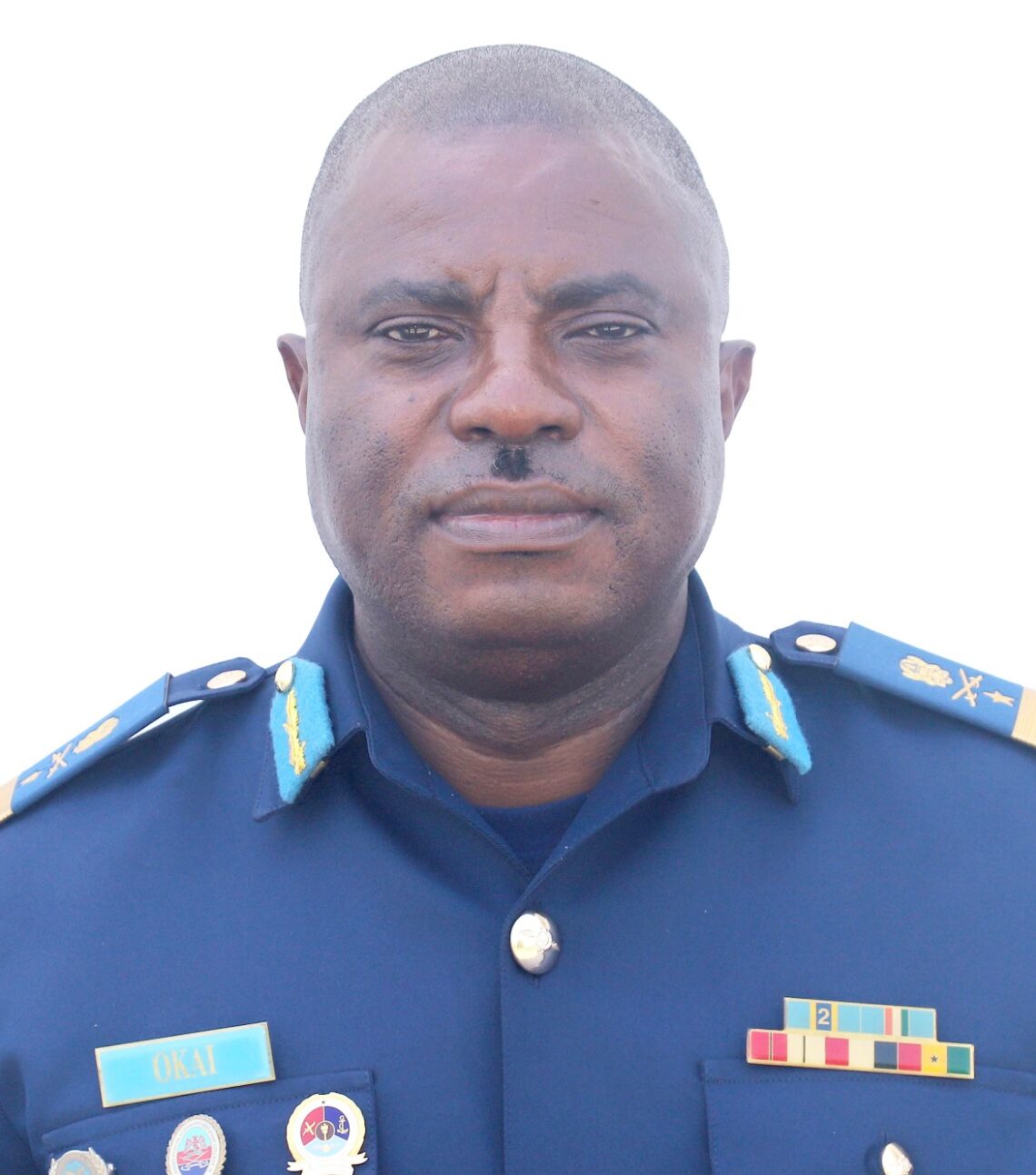

Air Commodore Thomas Niifio Okai, representing the Chief of the Defence Staff, of the Ghana Armed Forces has stressed that strong governance, accountability and integrity are essential to achieving sustainable security outcomes in West Africa amid growing regional security threats.
Speaking at the launch of the Government Defence Integrity Index (GDI) 2025 for Sub-Saharan Africa, on Wednesday June 17, 2026, Air Commodore Okai said the discussion on defence governance could not have come at a more critical time as countries across the region grapple with increasingly complex security challenges.
He cited the spread of violent extremism in the Sahel, organized criminal networks, illicit trafficking, maritime insecurity and intensifying geopolitical competition as threats that continue to test the resilience of states and institutions across West Africa.
“These challenges do not stop at national borders. They affect the collective security, prosperity and stability of the entire region,” he said.
According to him, many countries are responding by expanding their security responsibilities and increasing investments in defence. However, he cautioned that stronger security outcomes cannot be achieved through financial resources alone.
“They depend equally on the quality of the institutions that manage these resources,” he noted.
Air Commodore Okai emphasized that discussions about defence governance should occupy a central place in conversations on peace and security, arguing that governance and security are often wrongly treated as separate issues.
“In reality, they are deeply interconnected,” he said.
He explained that the effectiveness of any armed force depends not only on operational capabilities but also on the strength of systems that support decision-making, resource management, oversight and accountability.
According to him, professionalism, integrity and public trust are strategic assets that contribute directly to operational readiness, institutional legitimacy and national resilience.
The senior military officer commended Transparency International Defence and Security and Transparency International Ghana for convening the dialogue and for their continued efforts to strengthen accountability and integrity within the defence sector across Africa and beyond.
He described the Government Defence Integrity Index as an important tool for promoting reform and improving governance within defence institutions.
“The value of the index lies not simply in measuring risk. Its greatest strength is its ability to stimulate informed dialogue and provide a practical basis for reform,” he said.
Air Commodore Okai noted that by examining the policies, institutions and safeguards that underpin defence sectors, the index encourages governments and stakeholders to reflect on how defence institutions can become more resilient, accountable and effective.
He stressed that the questions raised by the index are relevant to all countries regardless of their current governance performance.
Turning to Ghana’s democratic credentials, Air Commodore Okai said the country occupies a unique position within the West African sub-region at a time when democratic institutions in some neighbouring states are facing significant challenges.
He highlighted Ghana’s record of constitutional governance, peaceful political transitions and strong national institutions as achievements that should not be taken for granted.
The Air Commodore called for continued commitment to strengthening institutions that support transparency, accountability and integrity within the security sector, noting that these principles remain fundamental to maintaining public confidence and enhancing national security.
The Government Defence Integrity Index assesses corruption risks and governance standards within defence institutions and is intended to help governments and stakeholders identify areas for improvement and reform.
By Evelyn Tengmaa