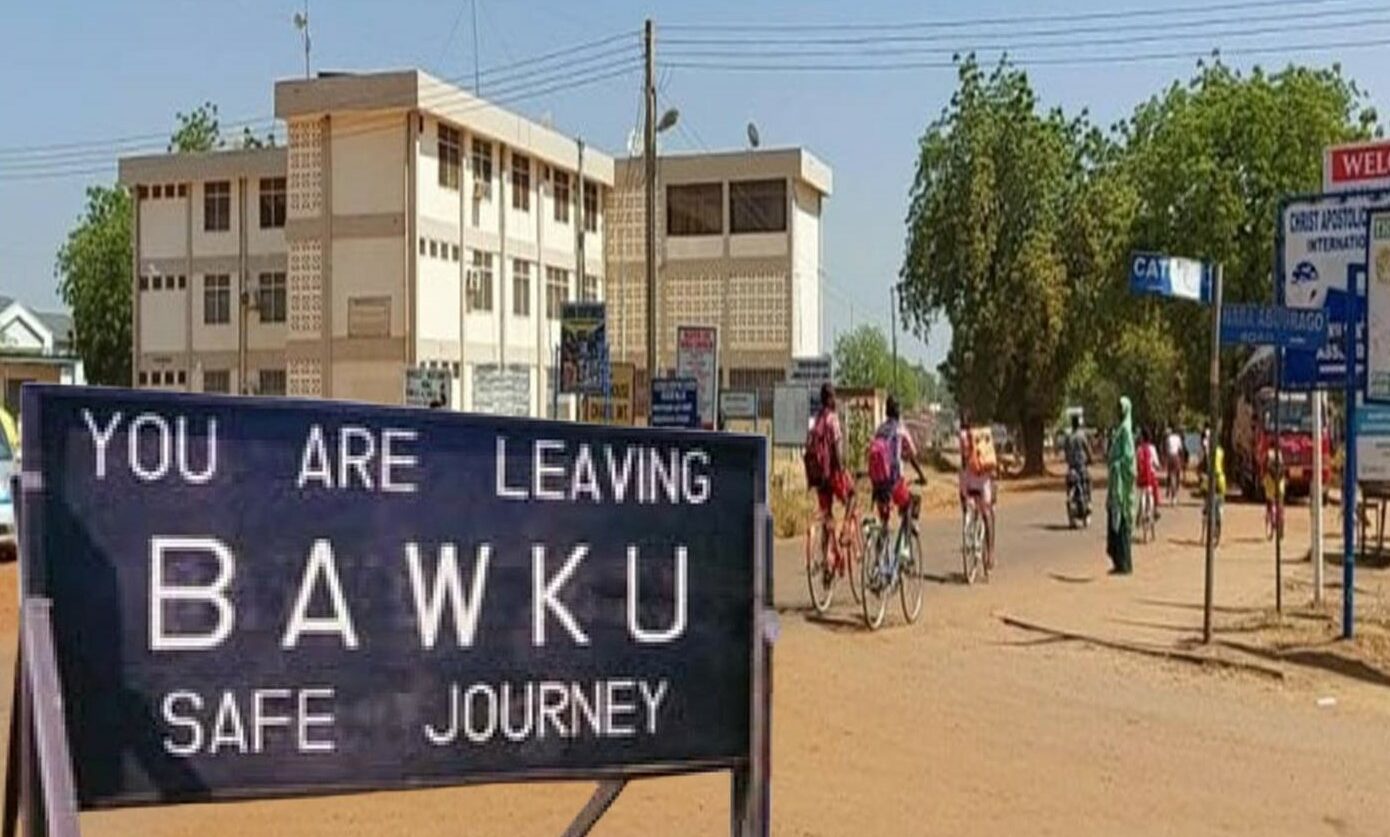

Bawku sits in a shallow valley in Ghana’s Upper East Region, a place that once brought traders and farmers together at the intersection of Ghana Burkina Faso and Togo. The name Bawku is an anglicisation of the Kusasi word Bok (although this contested by the Mamprusi), meaning “valley.”
Today, that valley has become a fault line, not only between communities, but between competing ideas of history, power and belonging. What is often described as an “ethnic conflict” between the Mamprusi and the Kusasi, I suggest, is better understood as something deeper and more troubling: a struggle against internal colonisation, or more accurately, attempts at internal re-colonisation.
This distinction matters. Language shapes how conflicts are diagnosed, and how – or whether – they are resolved. To call Bawku an ethnic clash is to imply symmetry featuring two groups locked in primordial rivalry. But the reality is asymmetrical. One group (Kusasi) is seeking to govern itself in its indigenous homeland; the other (Mamprusi), though a minority within Bawku, draws power from a larger, historically dominant kingdom (Mamprugu) which aims to assert political control over the area, pointing to historical reasons.
That is the hallmark of internal colonisation.
Colonisation from within
We usually associate colonisation with foreign conquest where distant powers impose their rule across oceans. Internal colonisation, by contrast, occurs when domination is exercised from within a state, when a powerful group treats a local community as a peripheral territory to be ruled or controlled, rather than as a people entitled to self-government.
This describes the political condition that has shaped Bawku for over a century.
Anthropological and historical records consistently show that the Kusasi were the earliest settlers in the Bawku area. They migrated from what is now Burkina Faso, established farming communities and governed themselves through an acephalous political system. Similar to the Igbo of Nigeria, for instance, this was a non-chieftaincy political order centred on the tindaana, which literally means “owner of the land”, who oversaw land rituals and spiritual stewardship, with community elders collectively deliberating on important matters rather than authority resting in a single figurehead.
The Mamprusi, descendants of Na Gbewaa, established the Mamprugu Kingdom southwest of Bawku, with its capital at Nalerigu, where their king, the Nayiri, still reigns today. Mamprusi political authority in Bawku developed through the gradual expansion of the Mamprugu kingdom rather than a single moment of conquest. At some point in the sixteenth century, a section of the Mamprusi were sent to Bawku upon the request of the Kusasi for assistance against rival ethnic groups like the Bisa. This group eventually settled in Bawku, and this enabled the Nayiri to install his son, Ali Atabia, as Bawku Naba around 1721. In this way, Bawku was incorporated into Mamprugu’s centralised chieftaincy system.
At first, Mamprusi authority in Bawku was narrow in scope. The chief’s authority extended primarily over Mamprusi settlers, and Kusasi communities did not view this as a direct challenge to their own autonomy. However, that distinction eroded over time with colonial indirect rule ultimately transforming what was originally Mamprusi community leadership into the officially recognised chief of Bawku. Mamprusi chiefs were empowered to collect taxes and administer justice. Colonial governance did not invent the hierarchy, but it institutionalised it.
National independence and contested decolonisation in Bawku
When British colonial rule extended the authority of the Mamprusi chief beyond the Mamprusi community and over Bawku as a whole, it generated deep resentment among the Kusasi, who had neither been governed through chieftaincy nor accepted rule by outsiders. Independence in 1957 therefore opened not only a national decolonisation moment but an internal one. Like Ghana’s political elites, who inherited and repurposed the colonial state rather than dismantling it, Kusasi leaders sought to decolonise internally, not by abolishing chieftaincy, but by installing their own chief within the system that colonialism had made unavoidable.
Coincidentally, the death of Naa Wuni Bugri Saa in 1956 enabled the Kusasi leaders to seize the moment and install Naba Abugrago Azoka I in 1957, a move the Mamprusi contested by installing a rival chief, Naa Yirimea. The ensuing struggle prompted the Nkrumah government to establish the Opoku–Afari Commission, which found that chieftaincy had been imposed on Kusasi political structures and recommended that the Kusasi chief be recognised as the legitimate ruler of Bawku on the basis of indigeneity and ownership of the land. The matter, however, did not end there. Courts and successive governments reversed course interchangeably, including restoration of the rulership of the Mamprusi in 1966 and Kusasi in 1983.
One of the most consequential moments in this cycle of reversals was the Alhassan Committee of 1978 which identified ‘first-comership’ as a key determinant for land ownership. Yet rather than resolving the dispute, this position hardened competing claims and pushed the conflict more firmly into the terrain of law and high politics.
As such, even the ruling of Ghana’s apex court affirming the recognition of the Kusasi rulership failed to secure compliance of the competing party. The result was periodic violence in the early 1980s, around 2000, through 2007–09, and again from 2021 onward, underscoring that Bawku’s decolonisation remained inconclusive.
A South African parallel?
In global context, South Africa may offer a useful comparison, not because its political system mirrors the case of Bawku, but because it illustrates the logic of internal colonisation.
Under apartheid, a white minority ruled over a Black majority within the same state. Through laws, homelands and territorial controls, the majority was denied political power in its own land. Apartheid ended not through the expulsion of whites, nor by abandoning the state in favour of separate ethnic homelands, but through the recognition of majority rule within a shared political system.
The lesson for Bawku, then, is that the historical introduction of chieftaincy by the Mamprusi cannot by itself ground a permanent claim to rule when the Indigenous majority has sought, across generations, to reclaim authority over its own land and political life.
The present and way forward
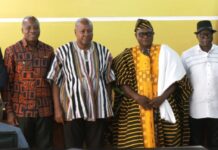
In 2025, the Asantehene led mediation reaffirmed the previous recognition of Kusasi rulership and urged all parties to respect the existing legal order while addressing historical grievances through dialogue.
Going forward, reframing Bawku as a case of internal colonisation does not demonise the Mamprusi, nor does it romanticise the Kusasi. It clarifies the problem and the kind of settlement it demands.
A durable peace requires:
Recognition of Kusasi indigeneity and authority over land and political life, consistent with international norms on internal self-determination.
Protection of Mamprusi cultural rights and authority over their own community, alongside meaningful representation within the Bawku traditional area under the Bawku Naba consistent with previous recommendations on this subject.
Truth-telling and historical acknowledgement, allowing both communities to name past injustices and remedial measures.
Making it clear that the battle for Bawku is not an ethnic conflict frozen in time. It is a struggle over whether colonial-era hierarchies will continue to shape local governance, or whether they will finally be dismantled.
The Mamprusi have a homeland, a king and a capital where their authority is uncontested. The Kusasi have Bawku – their land, their rituals, their history. Insisting on ruling them there reproduces a historical and colonial relationship long after independence, and clings to a past that has become untenable.
Decolonising Bawku does not mean erasing anyone’s identity. It means recognising that no community should be governed as a periphery in its own home.
Only then can the valley become a vibrant crossroad once again between Ghana, Burkina Faso, and Togo – rather than a battleground.
Kofi Bediako writes: Nana Konadu Agyeman-Rawlings: The First Lady who refused to be ceremonial