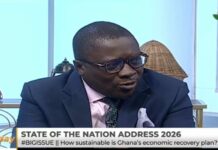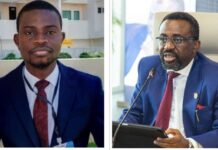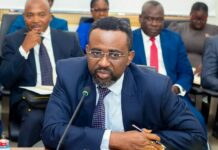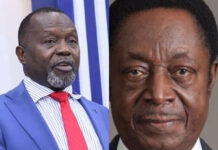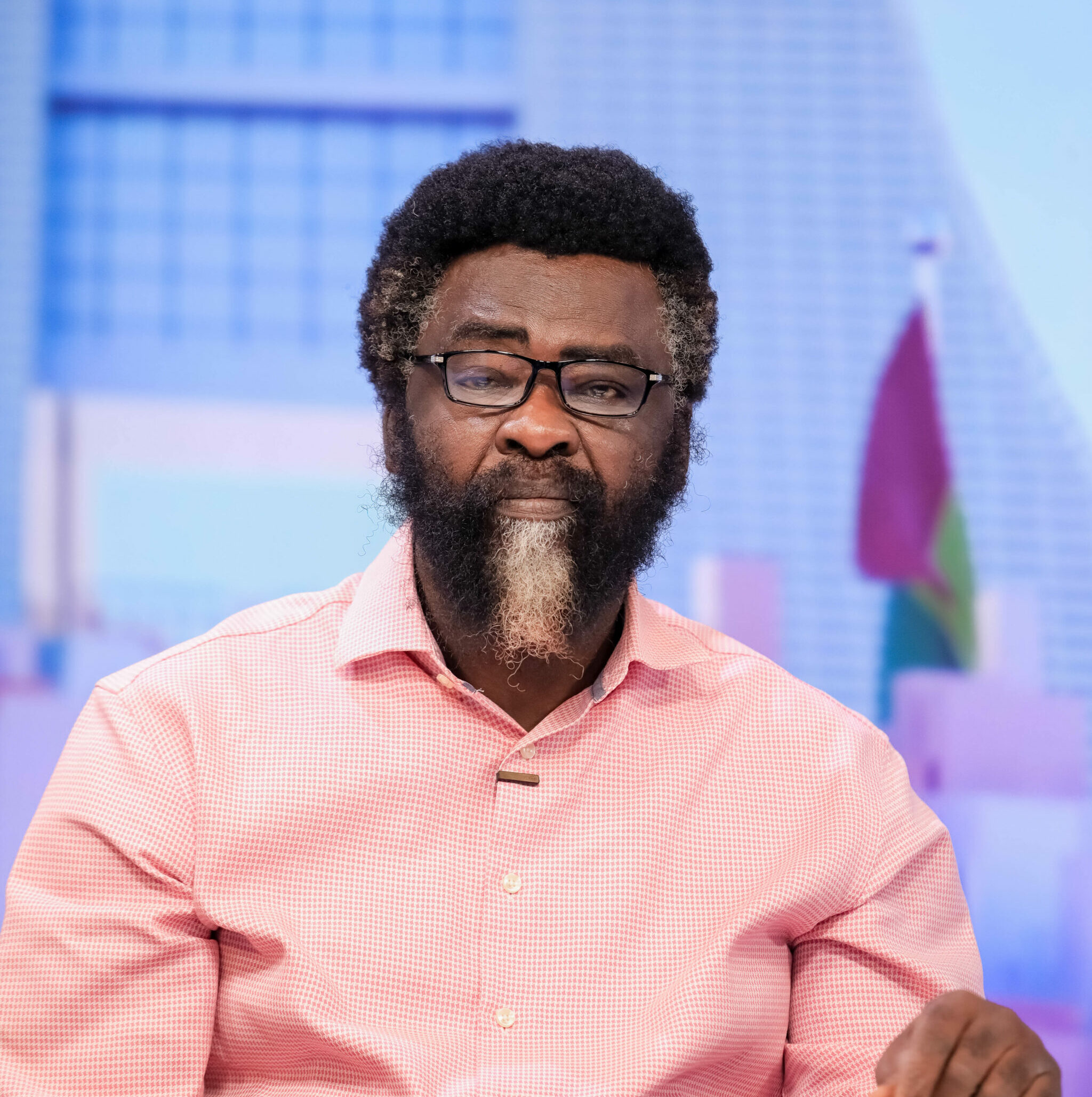

A Political Scientist, Dr Richard Amoako Baah, is in support of the retrieval of the money from the directors of the failed banks, rather than prosecution.
He, however, indicated that each case should be treated on its own merit.
Speaking on the KeyPoints on TV3 Saturday, August 2, in connection with the discontinuation of the case against Unibank directors, he said “How would we have gotten these monies back if the state had decided to jail all the people at the centre of this case?. I, however, agree that each case should be treated on its own merit.”
For his part, the CEO of Dalex Finance, Mr Joe Jackson, said that every effort must be taken to recover the money from the directors of the banks that collapsed during the clean-up.
He indicated that he perfectly understands those who call for the prosecution of the directors of the failed banks because the prosecution will serve as a deterrent.
However, he says that the money must also be retrieved from the directors.
Also speaking in relation to the Unibank matter, on TV3’s Key Points Saturday, August 2, he said, “From where I sit, I will want to recover the money. Did the A-G get the best deal or not? For that, I can’t enter.
“Those who are asking why they are not prosecuting, I can understand it, but we have to recover the money.”
Hr stressed, “I stand firmly with those who believe we should be recovering the monies. But let’s not turn around and make these people role models. They should also be denied appointments.”
A private legal practitioner, Austin Brako-Powers, also said that the state must be interested in punishing persons engaged in corrupt acts rather than just retrieving the money and asking them to escape criminal trials.
Brako-Powers makes the point that the practice of the current Attorney-General, Dr Dominic Ayine, in filing nolle prosequi to discontinue court proceedings will normalise corruption.
“This trajectory of the AG will normalise corrupt practices. This A-G has entered nolle prosequi six months in office more than any A-G I have seen,” he said on the Key Points on TV3 Saturday, August 2.
He further stated that “It should always be in the interest of the government to punish to deter.”
Dr Dominic Ayine, filed a nolle prosequi, to discontinue the criminal trial of the directors of Unibank, one of the failed banks, with the explanation that the directors had paid 60 per cent of the funds expected to be retrieved by the state. A claim which has been challenged by officials at IMANI Africa. But for purposes of this discussion, let us just assume the A-G was right.
The Office of the Attorney-General, on Tuesday, July 22, 2025, announced a significant development in the case of The Republic v. Kwabena Duffuor & 7 Others (Case No. CR/0248/2020).
According to a statement issued and in the possession of 3News.com, the Attorney-General arrived at this decision by leveraging the constitutional discretion vested in him under Article 88(3) of Ghana’s 1992 Constitution.
The statement further indicated that, while the exercise of such prosecutorial discretion does not legally require an explanation, the Attorney-General deemed it appropriate in the spirit of accountability and transparency to provide the public with the rationale behind this move.
“The case in question formed part of a broader set of prosecutions arising out of the financial sector clean-up exercise undertaken by the State. The central objective of these prosecutions has been to ensure accountability for public funds, and more importantly, to recover losses occasioned to the State through various alleged acts of financial impropriety.”
In pursuit of this recovery objective, the Office of the Attorney-General, working collaboratively with other relevant state agencies, established a clear threshold: a 60% recovery of the alleged losses to the State.
This recovery benchmark was set as a condition for reconsidering prosecution in specific cases. The Attorney-General’s statement confirms that, “Following prolonged negotiations and engagements, the accused persons in this case have met this recovery threshold.“

Consequently, and in furtherance of the public interest, the Attorney-General concluded that continuing with the prosecution would not serve any additional public purpose, given the “significant recoveries made for the State.”
The decision to enter a nolle prosequi is presented as a pragmatic step, primarily aligned with the overarching national interest of reclaiming state resources.
The A-G also opined that this decision “does not imply an absence of wrongdoing nor a vindication of any conduct.”
Rather, it is framed as a strategic and practical measure focused on the recovery of public funds.