
Private legal practitioner Justice Abdulai says ordinary Ghanaians do not need political actors or economic reports to tell them how the economy is performing, insisting that daily lived experiences are the truest measure of economic reality.
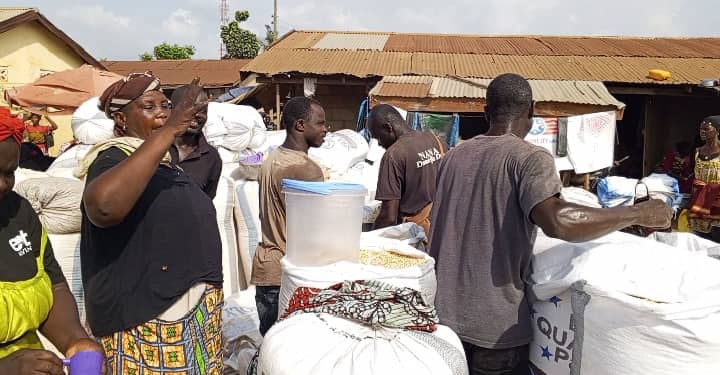
According to him, people feel the economy through the prices they pay at the market, the ease with which they go about their daily activities, and the cost of basic necessities.
“I live in this economy. I know how much I used to buy things and how much I buy them now,” he said, adding that he personally goes to the market and tracks prices for himself rather than relying on economic commentary.
Justice Abdulai noted that for several basic food items, including eggs and other staples, prices have either remained relatively stable or declined compared to previous years.
He argued that such realities are more meaningful to citizens than political narratives from either government or opposition.
He, however, cautioned that while increased agricultural production is often presented as a solution, Ghana continues to struggle with how to manage excess produce.
“We keep offering the same solutions, produce more food, without addressing what happens when there is excess,” he said, pointing out that countries like Brazil convert maize into fuel as a way of managing surplus.
Abdulai also raised concerns about alleged corruption within state institutions set up to purchase excess agricultural produce.
He warned that misuse of public funds by managers of such entities undermines economic recovery and cannot be blamed on government alone if proven.
“If leaders of state companies use millions of cedis for private gain, you cannot expect the economy to work,” he stressed.
Beyond government action, he placed responsibility on citizens, calling for a stronger commitment to consuming locally produced food.
“We all have responsibilities. Eating Ghanaian-made food matters,” he said, criticising the preference for imported rice and other foreign products while local farmers struggle.
He argued that if Ghanaians consistently consumed what is produced locally, debates around government intervention in farming and food support would significantly reduce.