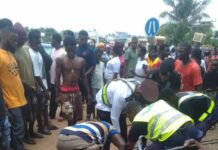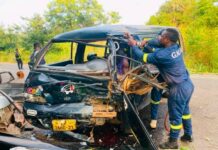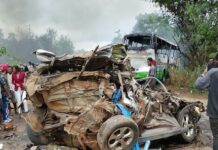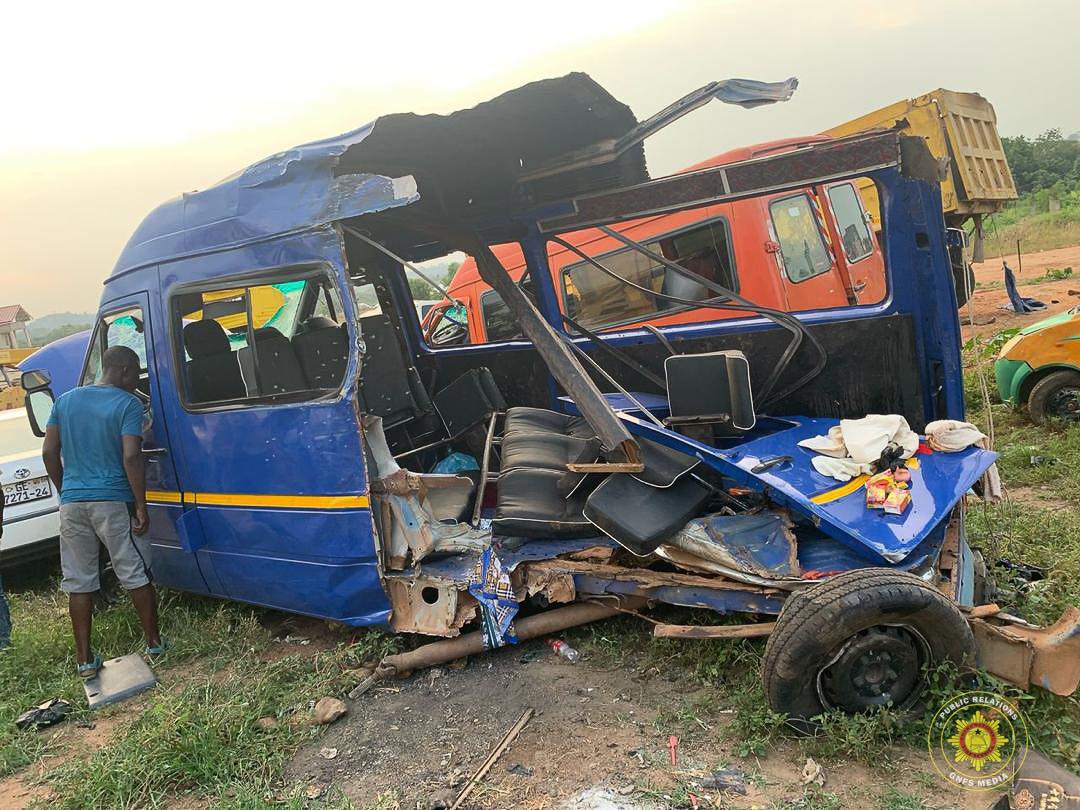

It’s the kind of news that doesn’t just land — it hits. Hard. In the chest. Before your brain even finishes reading the words, your heart has already broken. A heavy silence falls. You picture the scene: twisted metal, shattered glass, clothes, soaked in blood, the kind of chaos where sirens cry louder than the people who can no longer hear.
You imagine who survived. Who didn’t? Who’s still lying there, somewhere between life and death — waiting for help, or a miracle, or for someone to say this was all a mistake. Then, your thoughts wander to the parents, family members, colleagues, friends or loved ones. The ones who waved goodbye that day, not knowing it was the goodbye.
The last hug. The last smile. You think of them, waiting at home, unaware that the meal would grow cold and laughter would vanish. That everything was about to change. And it burns. Because this isn’t a war, a flood or an earthquake. This is a road. A road we all walk, drive, and cross every day. A road that should lead us home and not to the mortuary.
You feel the anger creep in because it keeps happening. We mourn in headlines and forget in silence. Our roads have become killing fields, paved with negligence, reckless driving, weak enforcement, and broken promises. Because someone sped, someone’s tyre was worn, and a warning sign was missing. Or someone just didn’t care enough to wait that one extra second.
Then comes the sorrow — deep and slow. You picture small school shoes that won’t ever be worn again. A backpack that won’t be unpacked. A Sunday pew that will remain empty. And a mother who will scream into the night until her voice gives up, because they told her it’s true. Her baby is gone. This kind of pain never fades. It lingers in prayers whispered at night.
It echoes through family albums. It hangs in the silence of homes that once danced with joy. It is the kind of grief that should shake a nation to its knees. Because this could’ve been anyone. Your child. My niece. Your cousin. A neighbour’s daughter. Just heading to or from church. Worshipping. Laughing. Singing. Full of life. Then — silence. That was what I felt. And maybe I still do inside. When I saw the mass burial held for 16 members of the Saviour Church of Ghana who died in a gory accident on the Kumasi-Accra highway on 28 July 2025.
Because I’ve heard the accident stories too many times. Five dead. Twelve injured. Another pile-up. Another post on social media. Another moment of silence that never leads to change. And so, I ask, haven’t we had enough? Haven’t we grown numb to these occurrences? Sixteen children. Sixteen young lives, full of joy and dreams, gone in a heartbeat. On their way from church. Not from a party. Not from anything reckless. They were doing what every parent hopes their child will do: walking in faith, in purpose, in peace.
Maybe they were still humming hymns; probably tired but fulfilled. Or were making plans for school on Monday. We will never know. All we know is that they are gone. Just like that. Some homes echo with silence. Rooms that won’t be entered again. Dishes that won’t be touched. Classrooms that will feel emptier.
Communities frozen in shock. We’re standing too close to the edge. Too close to accepting the unacceptable. Too close to thinking this is just how things are. This isn’t just about numbers. It’s about names. It’s about futures stolen and families destroyed. It’s about a nation on its knees, bleeding children into potholes and calling it fate.
That wasn’t an isolated incident. The crash occurred on the same notorious Accra–Kumasi highway, a stretch long associated with some of Ghana’s deadliest road disasters. In February 2021, 19 people perished near Asafo-Akyem in a similar head-on collision. In that case, too, reckless overtaking played a central role. Locals have come to describe this route as cursed. With drivers whispering warnings: “Commute ten times on this highway and pray to survive them all.”
The road has become synonymous with high-speed crashes, broken road markings, malfunctioning streetlights, and reckless commercial driving, a lethal combination that continues to claim innocent lives. The Grim Statistics (January–June 2025) in just the first six months of 2025, Data from the National Road Safety Authority indicates that the country’s roads have turned into graveyards: 7,289 crashes — nearly 40 every day 8,364 injured — many with lifelong disabilities 1,504 dead — that’s more than 8 deaths a day,
These are not just numbers. They are dreams extinguished, homes silenced, families shattered. Each death represents a voice gone, a chair left empty, and a community in mourning. But who’s Dying and Why? Private vehicles such as Private saloon cars (sedans, hatchbacks), SUVs and 4x4s, pickups used for private/non-business purposes led the charts with 5,029 crash cases. Commercial vehicles like taxis (including Bolt, Uber, Yango if registered commercially), Trotros (public minibuses known for vehicle overloading, Over-speeding and reckless overtaking), Buses (STC, Metro Mass, school buses used commercially, accused of driver fatigue and questionable licenses ), followed by 4,182 crashes.
Motorcycles, which include okada (motorcycles offering paid rides, though unregulated), saw some 3,143 incidents — often involving helmetless riders. In all of these, men account for 78% of road deaths, often tied to high-risk driving, who drive or ride like they are playing video games when the reality is different. But the 22% of women who die are no less tragic — sisters, daughters, mothers lost in an instant.
Is the Government Doing or Done Enough? I was excited when, in three distinct calendar years—2020, 2021, and 2022- the erstwhile Akufo-Addo government declared these years as part of the “Year of Roads” initiative. These declarations became part of his government’s broader infrastructure-driven development narrative, but at the end of the day, what was the result?
Like the elders would say, the sheep that follows a goat will learn to eat leaves. We are here again with another promise from the current NDC government 10 billion US$ ‘Big Push’ Programme for accelerated infrastructure development received a major boost following the allocation of GH¢13.85billion in the 2025 budget for its commencement. Only time will tell the encounter.
Road safety shouldn’t be an afterthought or a campaign soundbite — it must become national policy with a visible impact. If we are to stop this silent war on our roads, we must act decisively: Stricter enforcement of speed limits, seat belt, and helmet laws.
Mandatory retraining and licensing of all commercial and motorcycle drivers. Emergency response systems must be improved — including trauma care and faster ambulance deployment. National public education campaigns in schools, churches, mosques, and transport hubs.
Regular road maintenance and the installation of clear signage, lane markings, streetlights and CCTV and AI-based surveillance to catch traffic infractions in real time. The road should not be a death sentence. It should be a path to school, to work, to church, and back home.
We must stop normalising blood on the asphalt. We must drive to arrive. These alarming numbers weren’t just statistics. They were choir members, Sunday school children, best friends, parents, colleagues, siblings — lost forever. If we do not act now, we will mourn again. And again. Until mourning becomes our culture. Ghana has lost enough. Let’s stop the bleeding.