
The Forestry Commission is proposing a new security strategy involving armed security camps and surveillance technology to prevent illegal miners from returning to the Subri River Forest Reserve in the Western Region.
The strategy, according to the Commission’s Western Regional Manager, Nana Poku Bosompim, will combine the deployment of armed rapid-response teams, surveillance systems and stronger collaboration among state security agencies to sustain control of areas cleared of illegal mining activities.
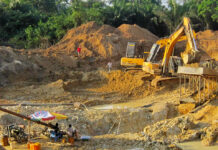
The move comes amid concerns over persistent illegal mining in the reserve, where more than 1,000 armed illegal miners are reportedly operating.
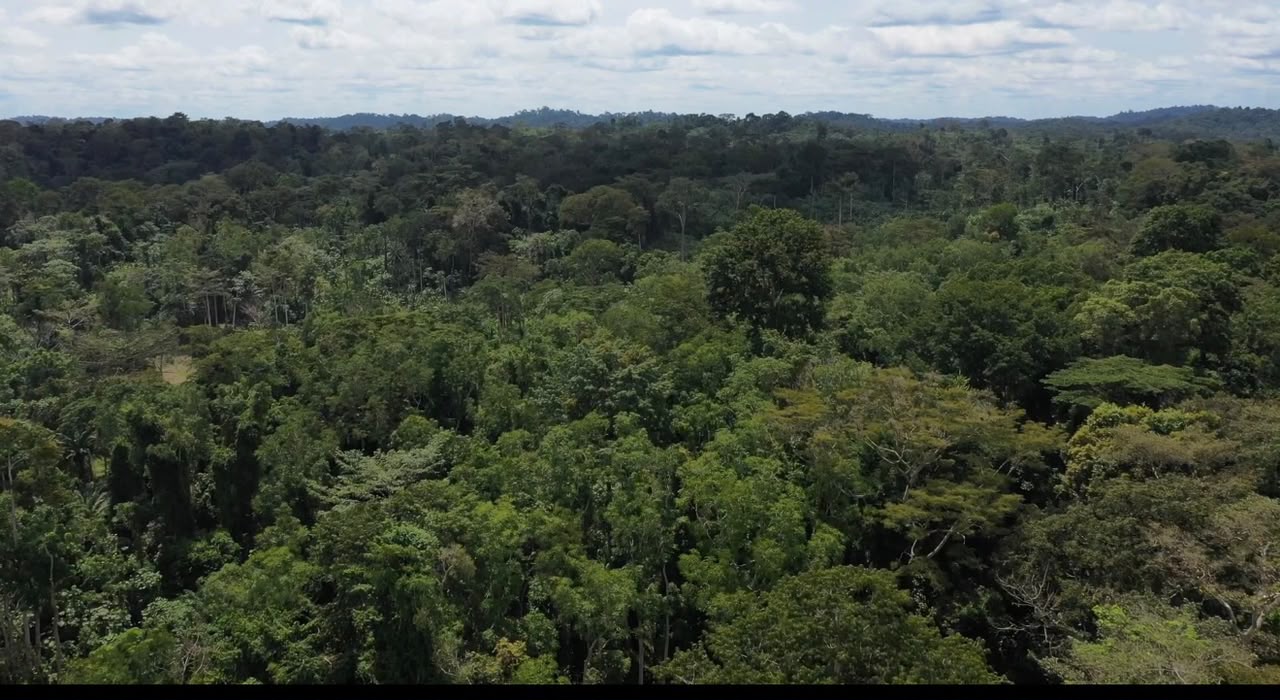
Spanning more than 58,000 hectares, the Subri River Forest Reserve is one of the Western Region’s major ecological assets and among Ghana’s largest forest reserves. It accounts for about 30 per cent of the region’s total forest reserve area.
Mr Bosompim says repeated enforcement operations have yielded results but have failed to provide a lasting solution, as illegal miners frequently return to previously cleared areas once security personnel move elsewhere.
“We should not allow the Subri River Forest Reserve to fall into that category of a red zone. It would be a failure of epic proportions on the part of all of us if we allow the situation in Subri River to degenerate,” he said.
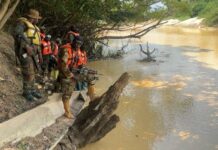
Under the proposed arrangement, teams of about 13 armed rapid-response officers will be stationed at identified illegal mining hotspots after clearance operations to deter miners from returning.
The camps will be equipped with motorbikes, vehicles, CCTV cameras and Starlink internet connectivity to improve surveillance, facilitate communication and enable rapid reinforcement when threats arise.
The officers have also undergone specialised training to prepare them for operations in forest terrain.
Mr Bosompim said the strategy was intended to address a major weakness in the existing approach, where illegal miners often reoccupy cleared areas after enforcement teams withdraw.
“After we’ve cleaned the forest reserve, we want to ensure that the miners do not return. If they return and see our forest guards and our armed team there, will they come back?” he asked.
The Forestry Commission says its enforcement efforts across the Western Region have resulted in the destruction of illegal mining equipment, arrests and prosecutions.
According to Mr Bosompim, the effective area of degraded forestland has declined from approximately 680 hectares to 282 hectares, representing a reduction of nearly 60 per cent.
He, however, cautioned that the gains remained fragile, with illegal miners continuing to return to previously cleared locations whenever security teams are redeployed to other areas.
The challenge is compounded by the scale of the region’s forest estate. The Western Region has 19 forest reserves covering approximately 209,333 hectares, making it difficult to maintain a continuous security presence across all affected locations.
“Something has been done, but I can also say we are nowhere near winning the fight. There is still more work to be done. That tells us we need to sustain the fight,” he said.
Meanwhile, the Western Regional Minister, Joseph Nelson, has called for a coordinated approach involving the Forestry Commission, the military, the Navy, the Air Force, the National Anti-Illegal Mining Operations Secretariat (NAIMOS) and other relevant agencies.
He said joint planning, intelligence-sharing and coordinated deployments were necessary to tackle armed illegal mining groups and prevent them from regaining control of cleared areas.
Mr Nelson expressed concern about what he described as gaps in collaboration among institutions working to address the same problem, arguing that isolated operations would not deliver a lasting solution.
“The Forestry Commission is doing something on its own. On the same challenge, we have NAIMOS. How is the collaboration like? And interestingly, the two institutions are under the same ministry,” he said.
He urged the relevant agencies to strengthen cooperation and pool their resources and expertise to prevent the reserve from deteriorating into a red zone.
“Working in silos won’t help anybody,” he stressed, calling for a collective effort to address illegal mining and protect the region’s forest reserves.
The proposed security camp system is expected to help sustain enforcement gains by ensuring that cleared mining hotspots remain under surveillance and security protection, rather than being left vulnerable to renewed illegal mining activities.
By Ebenezer Atiemo