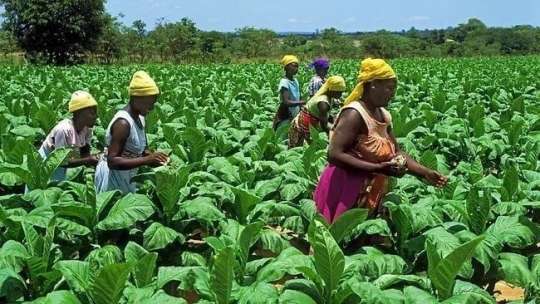

NexGen Deutsche-Afrik (NEDEA), a policy-driven organization that promotes youth collaboration between Africa and Germany to advance sustainability and inclusive development, has released a new evidence-based policy brief cautioning that Africa’s climate adaptation goals could be undermined if systemic barriers facing women in agribusiness are not urgently addressed.
The report, titled “The Gender Lens in Climate-Resilient Agribusiness,” highlights the disproportionate vulnerability of women within Africa’s agrifood systems despite their dominant presence in the sector.
According to the publication, women make up approximately 76 percent of the agrifood workforce in Sub-Saharan Africa, yet remain the most exposed to climate shocks due to long-standing structural inequalities.
Using Tanzania as a case study, the report points to disparities in land ownership.
“While women account for 69 percent of the agricultural workforce in the country, they own just 2 percent of registered land.”
The report notes that limited land ownership significantly restricts women’s access to critical resources such as irrigation systems, agricultural technology, extension services, and climate adaptation training.
As a result, women-led agribusinesses often lack the financial buffers, productive assets, and institutional support needed to withstand climate-related shocks.
The publication emphasizes that resilience in agribusiness is not solely an environmental issue but also a deeply social one.
“The gendered nature of climate vulnerability is not incidental; it is systemic,” said Michael Osei, Research Assistant at NEDEA and a PhD student in Climate Change and Agriculture.

Among its major findings, the report identifies; a US$96 billion financing gap affecting Africa’s agricultural small and medium-sized enterprises (SMEs), with women-led businesses facing the highest loan rejection rates.
Also, digital exclusion with women in Sub-Saharan Africa nearly 30 percent less likely to use mobile internet services, limiting their access to early-warning weather alerts and market information.
Again, increased unpaid labor burdens, particularly during climate-induced droughts, which reduce the time women can dedicate to agribusiness management and adaptation training.
As Ghana and Germany continue to strengthen agricultural cooperation through initiatives spearheaded by Deutsche Gesellschaft für Internationale Zusammenarbeit (GIZ) and Federal Ministry for Economic Cooperation and Development (BMZ), NEDEA is urging policymakers to prioritize gender-responsive climate finance.
The organization is calling for de-risked credit facilities for women agripreneurs, reforms to secure women’s land rights, and greater female representation in high-level climate governance structures.
“Empowering women agripreneurs is not just a matter of fairness,” the report concludes. “It is a strategic investment in the continent’s future and the foundation of a food-secure Africa.”
By Ibrahim Abubakar