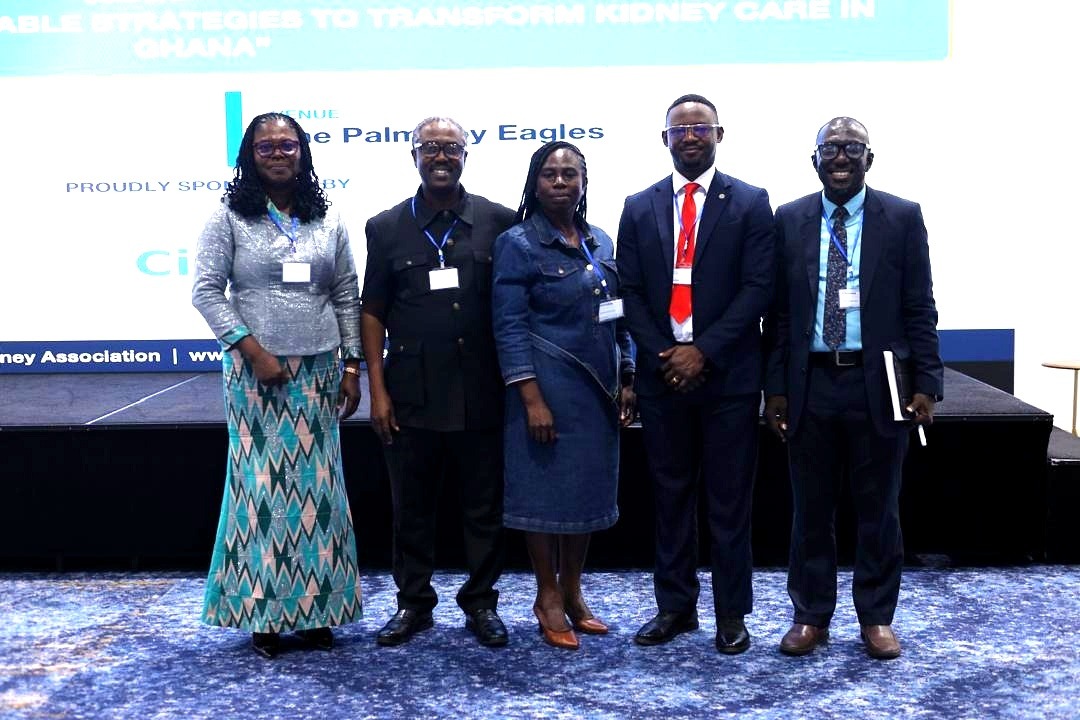

The Ghana Kidney Association (GKA) is calling on government to prioritise funding for dialysis and kidney transplant medicines, integrate kidney screening into primary healthcare and establish a national kidney disease registry to improve access to kidney care across the country.
President of the Ghana Kidney Association, Dr Charlotte Osafo, says urgent and coordinated interventions are needed to address the growing burden of kidney disease and prevent patients from being denied life-saving treatment because of financial difficulties.
Speaking at the Association’s 2026 Annual General and Scientific Meeting, held under the theme “Innovative and Sustainable Strategies to Transform Kidney Care in Ghana,” Dr Osafo identified the Government’s Free Primary Health Care Programme, MahamaCares and the proposed National Human Tissue and Organ Transplantation Policy as significant opportunities to transform kidney care in Ghana.
She called for kidney health screening to be incorporated into primary healthcare, particularly for people living with hypertension and diabetes, which remain the leading causes of chronic kidney disease.
Dr Osafo also urged government to use MahamaCares to support patients requiring long-term dialysis and those dependent on lifelong medication following kidney transplantation, citing the high cost of treatment as a major barrier to access.
She further called for a comprehensive national kidney disease registry, a dedicated chronic kidney disease strategy and a stronger legal and regulatory framework to support safe and ethical organ donation and transplantation.
“Kidney disease remains a significant public health challenge, with profound consequences for individuals, families, healthcare systems and national development. Addressing this challenge requires more than expanding specialist services. It demands a comprehensive approach that prioritises prevention, promotes early detection, strengthens treatment capacity, ensures sustainable financing and establishes the policy and institutional frameworks necessary for long-term progress,” she said.
The GKA President, however, cautioned that despite an increase in dialysis centres and nephrologists, Ghana continues to face shortages of kidney specialists, dialysis nurses, technicians and other essential healthcare professionals.
She stressed the need for increased investment in specialist training, improved workforce retention and the expansion of kidney services beyond major urban centres.
Dr Osafo emphasised that expanding screening programmes without strengthening treatment capacity could leave newly diagnosed patients struggling to access the specialist care they need.
Meanwhile, Dr Senanu Kwesi Djokoto, Deputy Chief Executive in charge of Operations at the National Health Insurance Authority (NHIA), speaking at the Ghana Kidney Association’s Annual General and Scientific Meeting, said the Free Primary Healthcare Programme would also support early detection through diabetes and hypertension screening.
He revealed that the programme is currently being implemented in 135 districts, with plans to extend coverage to all 261 districts by the end of 2027.
Dr Djokoto said the expanded interventions would improve access to kidney care while reducing out-of-pocket payments, which remain a major barrier to healthcare access.
He added that the Ministry of Health is targeting a reduction in out-of-pocket health expenditure to 15 per cent over the next five to ten years.
By Richard Bright Addo