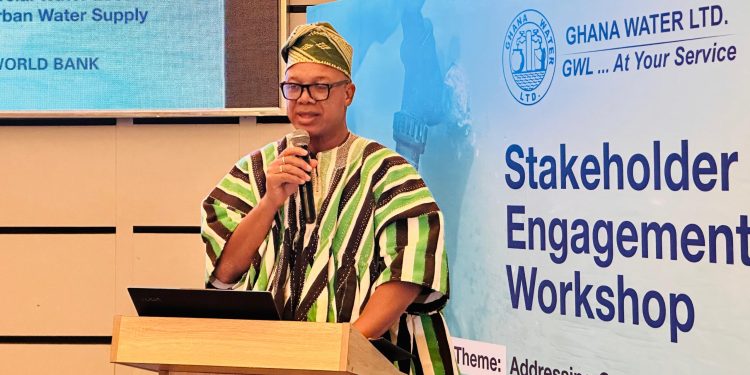

Ghana Water Limited (GWL) says mounting unpaid water bills running into billions of cedis are severely constraining its ability to supply reliable potable water, prompting the company to inaugurate ten Revenue Enhancement Teams to aggressively plug revenue leakages and recover lost income nationwide.
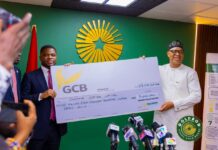
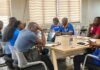
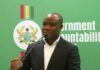
At the inauguration ceremony on Wednesday, February 4, the Managing Director, Adam Mutawakilu warned that persistent customer indebtedness, coupled with illegal connections and widespread commercial losses, has pushed the state utility to a critical financial state.
The Managing Director further revealed that outstanding arrears across customer categories have risen to alarming levels, weakening the company’s cash flow and limiting its capacity to repair burst pipelines, replace aging infrastructure, and expand services to new communities.
“Outstanding arrears across customer categories now run into billions of cedis nationwide. These unpaid bills weaken our cash flow and limit our ability to procure inputs, maintain infrastructure, and expand services.
“When bills are not paid, Ghana Water Limited struggles to purchase chemicals, pay electricity, repair pumps, replace pipes, and extend water to new communities,” he stated.
He disclosed that Ghana Water as of December 2024, recorded non-revenue water levels of 52 percent, meaning more than half of all treated water produced does not generate income.
Nationally, about 114 million gallons out of 220 million gallons supplied daily are unaccounted for, largely due to illegal connections, meter bypassing, billing anomalies, and water theft.
In the Accra region, weekly demand is estimated at 210 million gallons, but a shortfall of 73 million gallons persists. GWCL attributes this gap largely to customer arrears and losses from unaccounted-for water.
According to him, these losses occur in two main forms:
- Technical losses is about – 22%, due to leakages and bursts
- Commercial losses is about – 78%, resulting from illegal connections, meter bypassing, billing anomalies, and water theft.
The MD disclosed that a pilot deployment of three Revenue Enhancement Teams between August 2024 and December 2025 uncovered over 230 illegal connections and led to charges amounting to GH¢8.6 million, with GH¢2.1 million already recovered.
Impressed by the results, Ghana Water has expanded the initiative by adding seven more teams, bringing the total of the Revenue Enhancement Teams to ten.
The teams will focus on debt recovery, meter audits, regularisation of illegal connections, and enforcement of billing compliance, working alongside the company’s commercial, technical, and legal units.
The Managing Director emphasized that the initiative is corrective rather than punitive, urging indebted customers to engage the company and take advantage of flexible payment arrangements now available through digital platforms.
He appealed to customers to settle their bills promptly, warning that unpaid bills directly translate into reduced water production and unreliable supply.