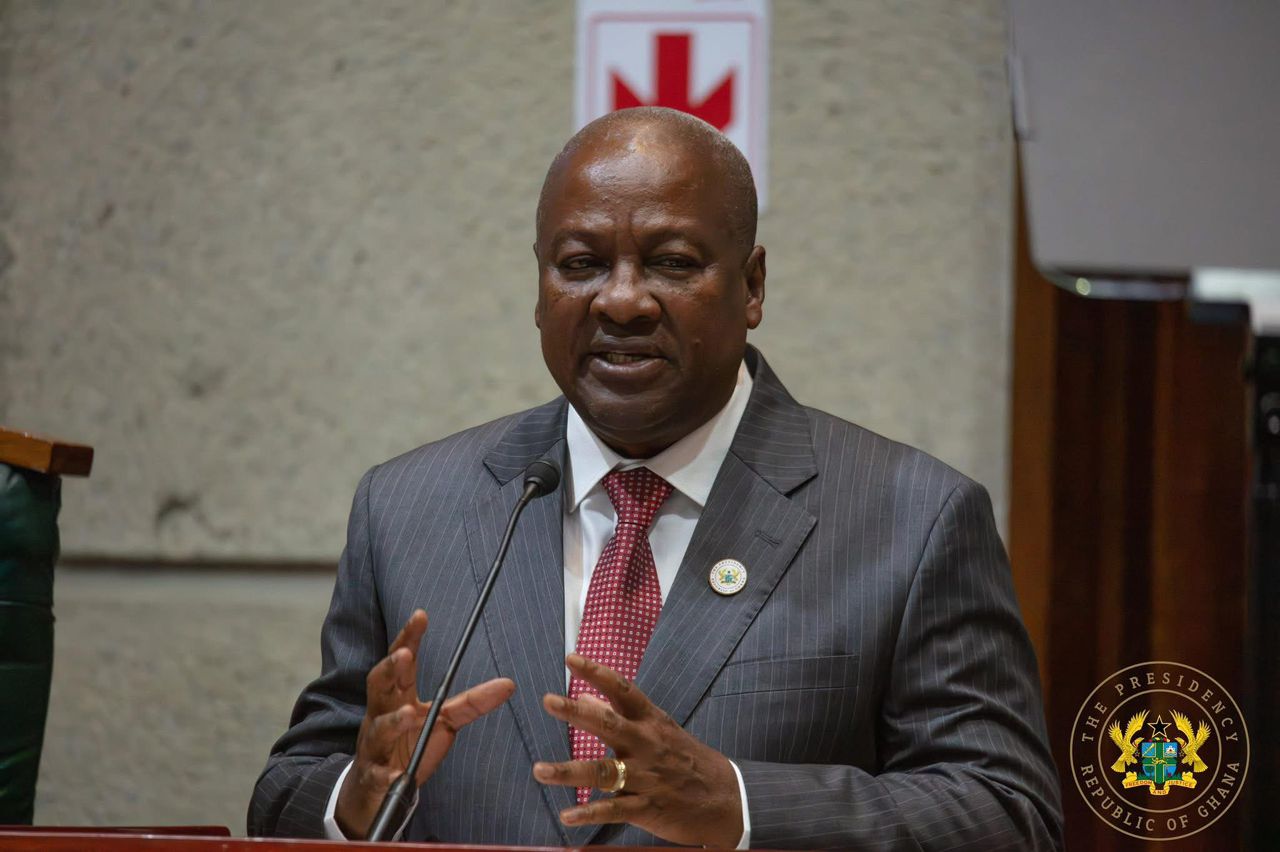

President John Dramani Mahama will soon announce a newly constituted Council for the University of Engineering and Agricultural Sciences (UEAS) after Parliament passed a law to establish the institution, with clear governance arrangements and management of the University.
The Council’s functions will include strategic planning, policy oversight, financial management and high-level appointments.
It is also tasked with fostering collaborations with other universities and promoting income-generating activities, in addition to general powers to set out standard provisions for the tenure, meetings and conflict-of-interest disclosures of Council members.
The University of Engineering and Agricultural Sciences will have its main campus at Bunso in the Eastern Region, with other campuses at Kenyasi in the Ashanti Region and Acherensua in the Ahafo Region.
Already, government says it has concluded a $92 million financing arrangement with a Korean contractor to start and complete the University project.
Mandate and aims of the University
The University, which will function as an autonomous institution, will be expected to provide higher education to qualified individuals, conduct engineering and agricultural research, and foster the application of knowledge to address the needs of societies in the country.
Agriculture remains a critical sector of Ghana’s economy, contributing between 20% to 26% of the country’s Gross Domestic Product (GDP) in recent years while employing nearly half of the country’s workforce.
Despite these huge contributions, farmers along the agricultural value chain continue to rely heavily on outdated farming methods, a situation that has adversely affected the production of high-yield crops for the local market, resulting in low agricultural output across the country.
This University will help by providing real-time solutions to these setbacks by producing modern technologies and innovative approaches to enhancing agric in the country.
In the age of frontier technologies and even the rising use of Artificial Intelligence (AI) tools to improve crop yields, and reduce operational costs through data-driven insights, the University of Engineering and Agricultural Sciences’ (UEAS) establishment is timely to address existing gaps.
In 2023, the Akufo-Addo government initiated the construction of the University to address these challenges, but the project stalled due to issues involving payments to the Korean contractor.
At a press encounter on April 3, 2026 in Accra, the Education Minister, Haruna Iddrisu, announced that the current government has secured a 92-million-dollar financing arrangement to ensure the completion of the facility.
He said the University will play a key role in equipping students with modern agricultural and engineering skills.
Background of UEAS
In May 2022, former President Nana Akufo-Addo cut the sod for the commencement of work on the University of Engineering and Agricultural Sciences (UEAS), and it was expected that the project would be completed in 24 months.
The focus of the institution at the time still resonates with the current aims to satisfy human resource demands from domestic industries and become a centre of excellence in engineering, agricultural sciences, applied sciences and built environment.
Funding was received from the Export-Import Bank of Korea and the Economic Development Cooperation Fund of the Republic of Korea.
The establishment of the University is part of government’s response to the national issues like food security, even as technology continuously drives impact and development across the world.
Ghana takes from some of these shining examples to understand, adapt, produce and commercialise scientific and technological knowledge in ways appropriate to its culture, aspirations and development.
Without a shred of doubt, energy, industry, agriculture, medicine and health, clean air and water, transportation, sanitation as well as the use, management and conservation of natural resources are all reliant on science and technology.
The expectation is that the University of Engineering and Agricultural Sciences will meet these growing needs and demands of Ghana’s ever-evolving landscape.