
Government has laid before Parliament the Minerals and Mining Royalty Regulations, 2025, aimed at introducing variable royalty bands for gold, lithium and other minerals.
The Legislative Instrument establishes a sliding scale framework that allows royalty rates to be adjusted in line with fluctuations in global commodity prices.
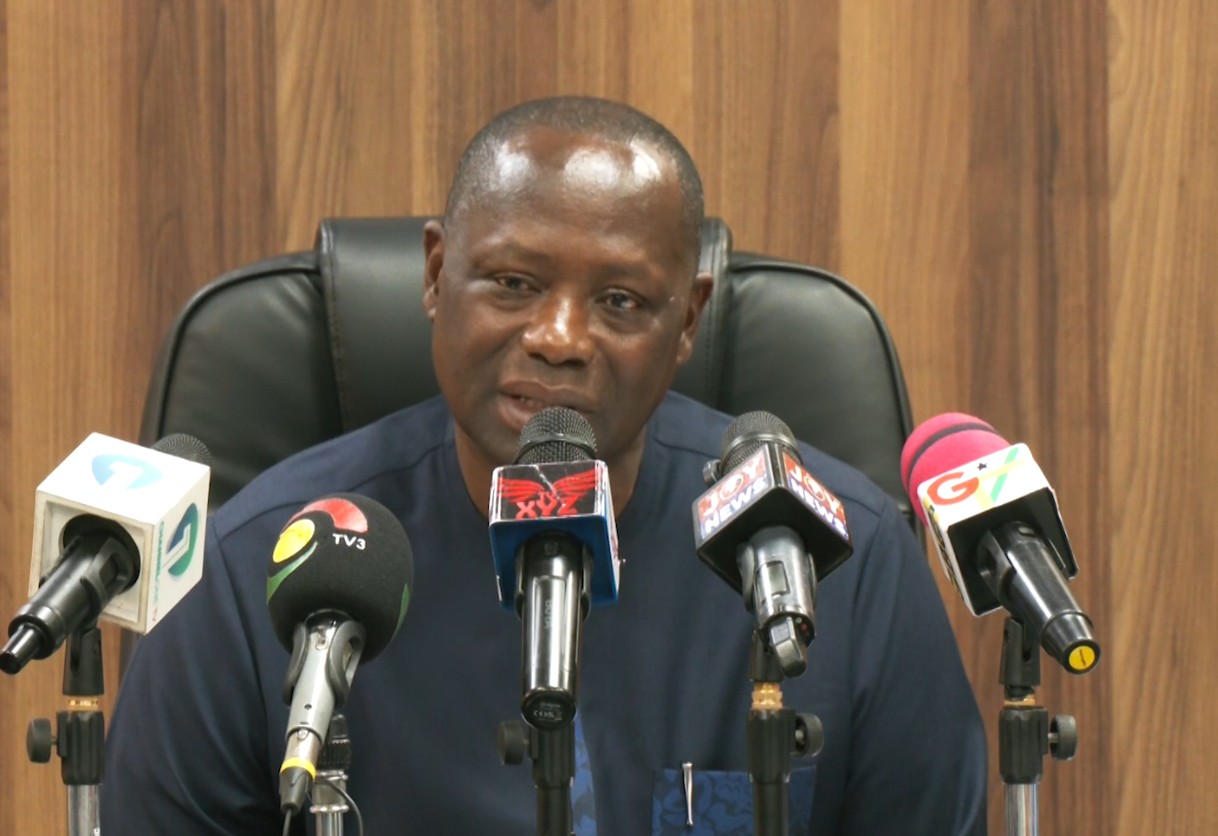
Acting Environment Minister, Emmanuel Armah-Kofi Buah, explained that based on current market prices, lithium attracts a royalty rate of 7 percent, which could rise to as much as 12 percent should prices increase.
He addressed the press after laying the new instrument on Friday, December 19, 2025.
“Today, I am proud to say that I have brought an elaborate regulation that gives us a sliding scale agreement. What is the advantage in that? The advantage is that it allows the state to capture the benefit in good times like in the gold sector. And I have to tell you we have done it across the mineral sector.
“For example, in the lithium agreement when the price of lithium was negotiated at that time, lithium was $3000, they achieved 10%. But today, with the sliding scale we brought even when we get to $2500, we achieve 10% royalty. When we get to $3000 to $3000 plus because of the sliding scale, we achieve 12%. In fact, if you do the calculation, it means that at that point government is saving almost over $500 million,” he stated.
That is not all – the new deal also introduces a one percent Community Development Fund dedicated to financing infrastructural projects in the Mfantseman Municipality.
The Lands and Natural Resources Minister noted that the deal applies to all mining agreements, offers greater certainty and predictability for both government and investors.
“Let me also say that this sliding scale also gives companies consideration when process stumble in difficult times then the adjustment will automatically favour lower royalties.
“What is important for investors? It gives them certainty. They are very sure that in Ghana when the price stumble, we will not be in trouble because the government automatically will reduce royalties. when the prices go up, the government will also take advantage and capture the benefit,” the Minister added.
Meanwhile, the Minority has rejected the new deal, stating that Barari DV Ghana Limited had agreed to accept an agreement of 10 percent royalty rate even when lithium prices collapsed on the market.
Ranking Member on the Lands and Natural Resources Committee, Kwaku Ampratwum-Sarpong, argues that the deal undermines the public interest and weakens confidence in the country’s resource governance framework.
“With lithium prices having recovered to around $1200 per tonne, the justification for reducing Ghana’s effective benefit to 5% become less defensible.
“One cannot reject a higher negotiated outcome in opposition and later defend a lower outcome in government using the same legal framework. That is not policy coherence but policy regression.
“And it is clear that key inputs from stakeholders, traditional authorities, mining communities and the Minority have not been reflected in the final proposal,” he said.