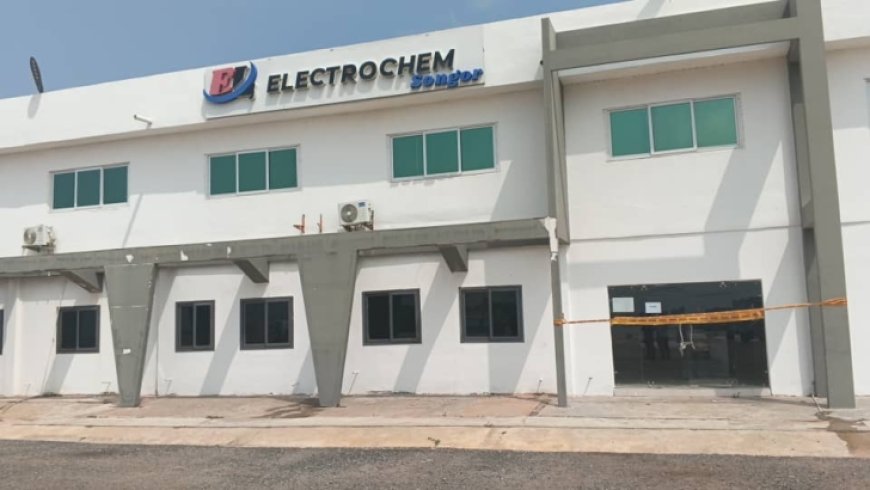

The Ghana Revenue Authority (GRA) has shut down the administrative block of Electrochem Ghana Limited over an outstanding tax debt totaling 8.6 million cedis, which has been accruing since 2021.
The enforcement action follows a series of unheeded official warnings. According to Assistant Commissioner of Enforcement for the Accra Central Area, Joseph Adjeikwei Annan, the company was served an Immediate Demand Notice on January 7, followed by a Final Demand Notice on February 13.
Having exhausted all friendly regulatory avenues, the authority moved to restrain access to the facility.
While the GRA initially intended to seal off the main gates of the compound, officials opted for a strategic concession to protect local jobs and operational continuity.
“This is an indigenous Ghanaian company, and we need to protect them, but we still need our money,” Annan stated. “To get all the workers and indigenes off the premises will be a challenge. So we’re always friendly to our taxpayers, but then we keep our eyes on the ball.”
During the closure of the administrative block, Electrochem’s Mmanagement made an immediate payment of 200,000 cedis. Although Annan characterised the downpayment as “woefully inadequate,” the Authority accepted the sum under a strict seven-day grace period.
The company has been given one week to either fully settle its indebtedness or engage directly with top GRA officials to establish an approved payment structure.
Failure to comply within the seven-day window will trigger full enforcement, which will include locking down the main gate and halting all access for workers, vehicles, and customers.
Electrochem’s Management attributed their current financial distress to liquidity challenges, noting that recent environmental floods heavily impacted their production ponds.
The high-profile enforcement exercise served as a broader staging ground for the GRA to issue a stern warning to businesses nationwide exploitation of digital filing system.
Annan expressed deep concern over a rising trend labelled “payment returns without remittance,” where companies declare their tax liabilities online from home to avoid automatic penalties but deliberately fail to clear the actual balance.
The GRA warns that its enforcement teams are actively auditing digital ledgers, and other records and will continue deploying unannounced field exercises alongside media teams to recover outstanding state funds.
Businesses lagging on payments have been strongly advised to proactively clear their balances or face severe statutory interests and public enforcement actions.
Eben Agyekum-Boateng, 3Business