
A significant number of businesses in Ghana are reportedly evading and avoiding taxes, depriving the government of vital revenue for public services and infrastructure development.
This illicit practice not only undermines the country’s economic growth but also exacerbates the widening fiscal deficit and rising debt burden.
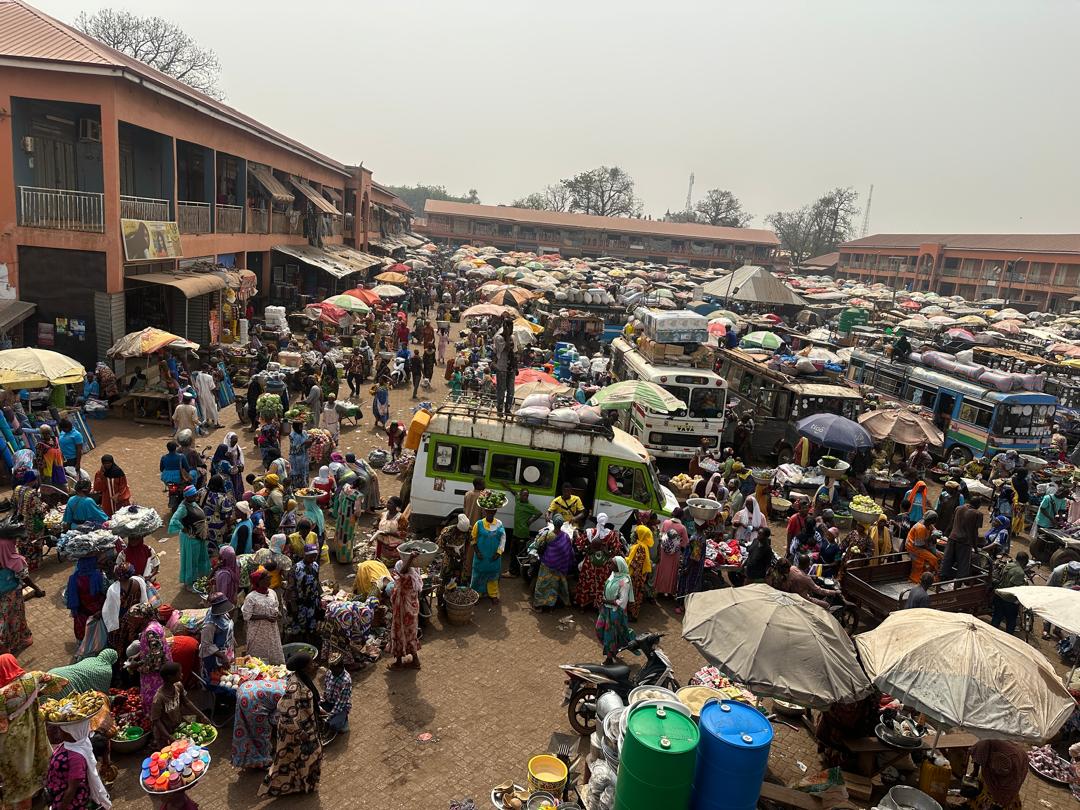
The evasion and avoidance of taxes by businesses in Tamale for instance and other parts of the country have severe consequences for domestic revenue mobilization.
The lost revenue could have funded essential public services, infrastructure development, and social programs. Instead, the government is forced to rely on borrowing, which increases the debt burden and limits the country’s fiscal space.
Abudu Issahaku not his real name, owns a supermarket at Choggu Yapalsi which he has been operating for the past nine years.
His daily cash inflows exceed GHC2,000 with five salespersons offering a helping hand.
Yet, since starting his business, Abudu, has never paid a dime in taxes to government apart from what he describes as tips he gives to the police whenever his goods are being transported to Tamale.
“My business used to be small but now it has grown to a bigger level. I have never paid any tax to GRA. They don’t come and I don’t also go there.”
“Anytime I hear that they are moving round to arrest people who don’t pay taxes, I close my shop until when their operations are over.” He said.
Like Abudu, Salma Amini, not her real name, has been operating a popular food joint in Tamale with over 50 workers.
Her daily income sometimes exceeds GHC10,000 yet has never paid a dime in taxes.
“I do my business and why should I pay taxes? She quizzed.
“I’m not sure those monies they (GRA) take from people go to government and so I don’t pay.” She justified.
A business owner who spoke to our team on condition of anonymity explained why she does not pay taxes, citing the lack of development projects in her community.
She added that she is willing to pay only when she begins to see real development; otherwise, she will continue to evade taxes.
Ghana’s tax collection is low compared to other lower-middle-income countries, with a tax-to-GDP ratio of 13.8% in 2022, below the government’s target of 18-20% by 2027.
Widespread tax exemptions and waivers, poorly administered property rates, and weaknesses in revenue administration have contributed to this shortfall.
According to the International Monetary Fund (IMF), Ghana’s tax policy design suffers from extensive tax expenditures, especially in Value Added Tax (VAT), and underexploited taxes like property tax and excises.
Former Finance Minister Dr. Amin Anta Adam, speaking on the floor of Parliament, said Ghana loses significant revenue through illicit financial flows and urged government to do everything possible to close loopholes that enable such practices.
According to Dr. Amin Adam, Ghana currently has weak systems for addressing illicit financial flows.
“Illicit financial flows deprive us of our resources that we could apply to education, the provision of health services and the general development of our country.” He said.
Recently, government has taken steps to address tax evasion and improve domestic revenue mobilization.
The Finance Minister, Cassiel Ato Forson, ahead of the 2026 budget presentation, engaged key agencies, including the Ghana Revenue Authority (GRA), to intensify efforts to meet fiscal targets.
The GRA has been urged to exceed its revenue targets and find innovative ways to achieve additional tax revenue equivalent to 0.6% of GDP as part of the IMF program.
Chief Revenue Officer and Head of Enforcement-Northern Zone of GRA, Sam Laabi Appiah, is calling for intensified public sensitization on why every citizen must pay tax.
“One of the tools that we use is move from shop to shop to make sure that whoever is not in the net is pushed in and mostly our focus is on registration, filing of returns, payment of taxes and keeping of records. How many of our youth understand the tax regime? So left to me alone, our education should start at the basic level just as we have for ICT.” He suggested.
Despite the introduction of a digital platform designed to make tax payment more convenient, the GRA says some businesses still refuse to comply.
He outlined the measures the GRA is rolling out to broaden the national tax net.

The NGO/CSO Perspective
Norsaac over the years with funding from Oxfam under the tax justice regime, has been raising concerns about accountability for the taxes people pay, urging revenue collectors to be transparent about how public resources are used.
Head of Programmes and Policy Influencing at Norsaac, Hajia Hafisa Sey Sumani, criticized MMDAs for poor information sharing on revenue mobilization, arguing that district assemblies have fallen short in this regard.
“Within the areas we stay, those of us who pay the tax don’t see the needed development because our roads and schools still look bad. For information sharing on resource mobilization, I think the assemblies are not doing well and so if citizens don’t see what the resources are used for, they won’t see the needed development to pay.” She stated.
On the need for citizens to honor their tax obligations, Norsaac is advocating for progressive taxation and enhanced public education from government to motivate people to pay.
Norsaac also urged law enforcement agencies to be firm in ensuring tax compliance.
Tax evasion and avoidance are significant challenges facing Ghana’s domestic revenue mobilization efforts.
The government must strengthen tax laws, improve revenue administration, and enhance taxpayer compliance to address these issues.
By doing so, Ghana can increase its tax revenue, reduce its reliance on borrowing, and fund essential public services and infrastructure development.
Through these suggestions, Ghana can improve its domestic revenue mobilization and achieve its economic development goals.