
In the vibrant food culture of Ghana, few dishes capture the spirit of everyday life quite like Gɔbɛ. Known locally as “Gɔbɛ” and sometimes called “Yor kɛ Gari” or “Red-Red,” this simple yet satisfying meal of beans and fried riped plantain has grown from a humble street dish into one of the country’s most cherished comfort foods.
Across busy streets, markets, campuses and neighbourhoods, especially in cities like Accra, Kumasi, Takoradi, Ho, Sunyani, and Obuasi, vendors can be seen serving steaming portions of gɔbɛ to eager customers.
Whether it is breakfast, lunch or dinner, the dish has become a reliable go-to meal for many Ghanaians.
For many people, gɔbɛ is more than just food, it is a cultural symbol, a comforting meal, and for some, a dependable lifesaver during tough times.
From humble origins to a national favourite
The name Gɔbɛ is believed to be a playful fusion of the words “gari” and “beans,” the two main ingredients that define the dish. Over time, the meal also became widely known as “Red-Red,” a nickname inspired by the rich red colour created by palm oil used in cooking the beans stew.
Although gɔbɛ is now enjoyed across Ghana, it is often associated with communities in the Volta Region and the Ewe people.
Some accounts credit its popularisation to a woman named Victoria Anyediventor, who is believed to have prepared and sold the meal many decades ago.
The dish gained widespread popularity during Ghana’s challenging economic period in the 1980s, when families, students and workers needed meals that were both affordable and filling. Gɔbɛ answered that need perfectly. Made with simple ingredients that were widely available, it quickly became a dependable everyday meal.
Over the years, the dish earned a reputation as the “real MVP” of Ghanaian meals; a plate that could satisfy hunger without placing pressure on the pocket.
A perfect blend of simplicity and flavor
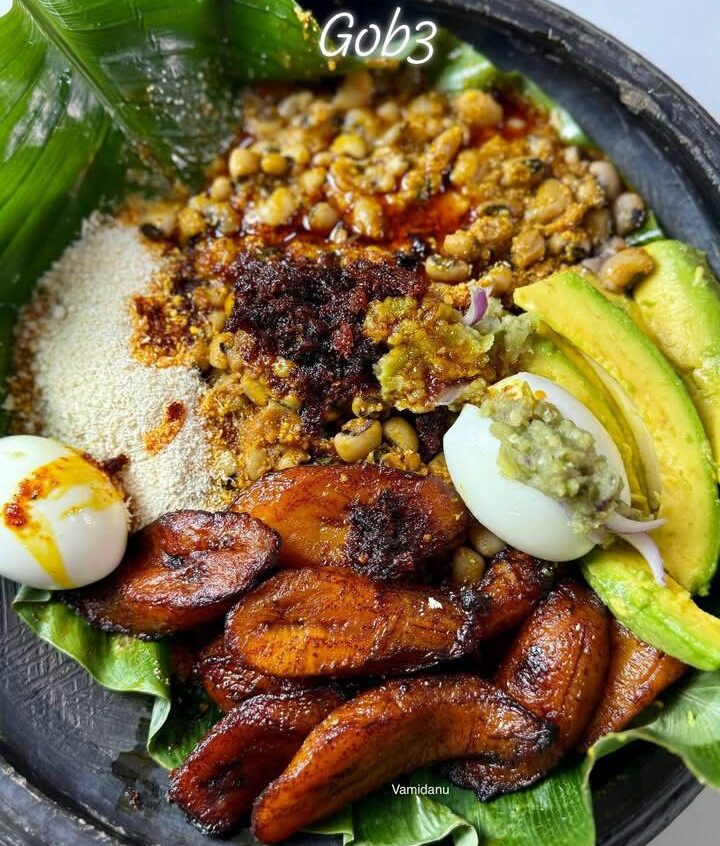
At its core, gɔbɛ is made with softly cooked beans, fried riped plantain, and palm oil stew.
No plate of gɔbɛ is complete without fried riped plantain, locally known as kɔkɔɔ or ablajo, whose natural sweetness perfectly complements the savoury beans.
What makes the meal even more exciting, however, is the variety of toppings that can be added.
Many vendors serve gɔbɛ with extras such as gari, spaghetti, avocado, fried eggs, or wele (cow skin), giving customers the freedom to customise their plates. The combination of flavours; sweet plantain, savoury beans, crunchy gari and rich palm oil, creates a balance that is both comforting and deeply satisfying.
For many people, the beauty of gob3 lies in its simplicity. Despite being prepared with basic ingredients, the dish delivers a rich and memorable taste that keeps people coming back.
Why Ghanaians love Gɔbɛ
Part of gɔbɛ’s enduring appeal lies in its accessibility. It can be found on almost every street corner, making it one of the most readily available meals in the country.
For students rushing between lectures, traders working long hours in the market, or office workers searching for a quick lunch, gɔbɛ offers a convenient and affordable option.
But affordability alone does not explain its popularity.
Gɔbɛ is also deeply satisfying. The beans provide plant-based protein, while plantain and gari supply carbohydrates that keep the body energized for hours. A single plate can easily serve as a full meal.
For many people, the dish carries a strong sense of nostalgia. It reminds them of school days, late-night meals with friends, or childhood visits to their favourite street vendors.
In recent years, gɔbɛ has also gained renewed attention online, with social media users celebrating it as one of Ghana’s most underrated comfort foods. Photos of colourful plates topped with avocado, eggs and perfectly fried plantain frequently circulate online, turning the humble street meal into a trending culinary favourite.
Nutritional benefits of Gɔbɛ
Aside from its delicious taste, gɔbɛ also offers several nutritional benefits.
Beans are rich in plant-based protein, fibre and essential minerals, which support muscle health and digestion while helping the body feel full for longer periods.
Plantains provide energy, potassium and important vitamins, all of which contribute to maintaining healthy body functions.
The addition of ingredients such as avocado further enhances the dish by introducing healthy fats that support heart health.
When combined, these ingredients create a balanced and nourishing meal capable of fueling both body and mind.
A dish that connects people
Today, gɔbɛ stands as one of the most recognizable meals in Ghana’s vibrant street food scene.
Perhaps the most remarkable thing about gɔbɛ is its ability to bring people together.
In Ghana, the dish serves as an equalizer. Whether served from a roadside stall or enjoyed in a modern restaurant, gɔbɛ is loved by people from every social class. Students, professionals, traders and travellers all share the same appreciation for its comforting taste.
At many street corners, it is common to see strangers standing side by side, enjoying plates of gɔbɛ while exchanging stories, laughter and conversation.
Even as ingredient prices rise and some households choose to prepare the dish at home to maintain affordability, gɔbɛ continues to hold its place as one of the nation’s most beloved meals.
More than just a food
In Ghana, gɔbɛ is far more than just a meal, it is a culinary icon cherished by generations.
Its story is one of resilience, simplicity and the ingenuity of Ghanaian cuisine, showing how basic ingredients can be transformed into something deeply satisfying and culturally meaningful.
Because in Ghana, gɔbɛ is not just a meal.
It is a comfort food, a cultural symbol, and a reflection of everyday life, served one steaming plate at a time.
‘Gɔbɛ’ sellers threaten indefinite strike over high cost of ingredients
By Joseph Owusu Worae