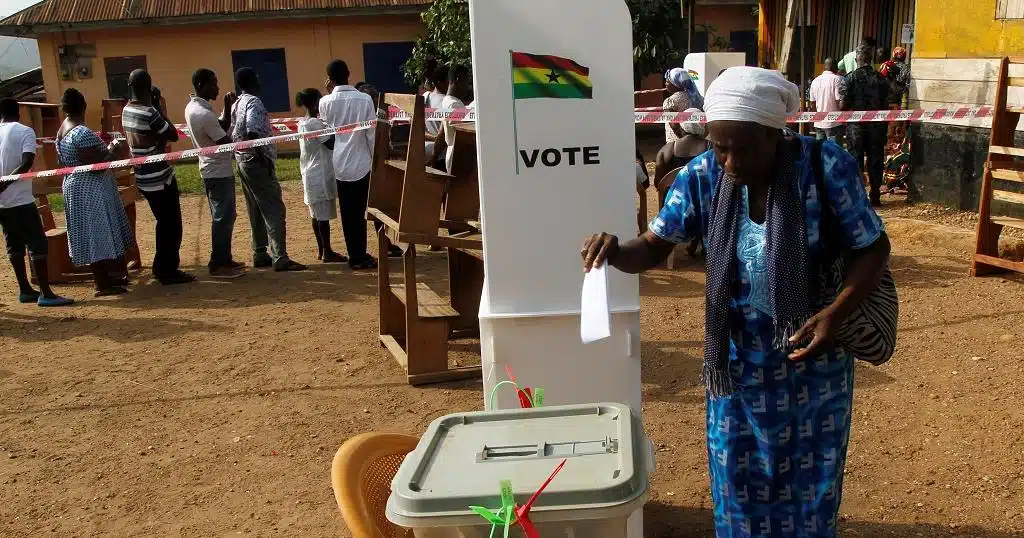

A recent study sheds light on the factors influencing electoral choices in Ghana, revealing that political party brand image and personality play significant roles in shaping voter behavior.
The research, which surveyed 359 Ghanaian voters, found that a strong political party brand image and personality can positively impact voting decisions.
Interestingly, subjective norms, or social pressures, had a negative effect on material inducements, suggesting that voters are less likely to be swayed by incentives when social norms are strong.
Material inducements, such as gifts or rewards, were found to moderate the relationship between political party brand image, personality, and voter behavior. This implies that parties with strong political brands can leverage material incentives to influence voters.
The Big Picture: What Drives Ghana’s Voters
The study’s key findings are as follows:
- Political party brand image and personality significantly influence voter behavior.
- Subjective norms can reduce the effectiveness of material inducements.
- Material inducements can amplify the impact of strong political party brands on voting decisions.
What It Means for Ghana’s Politics
The study’s findings suggest that political parties in Ghana should focus on building strong brand identities that resonate with voters. This can be achieved by developing clear policy positions, communicating effectively through social media and other channels, and demonstrating a commitment to transparency and accountability.
The negative effect of subjective norms on material inducements highlights the importance of social influence in shaping voter behavior. Parties should therefore focus on building strong relationships with community leaders, opinion influencers, and other stakeholders to promote their brand and policies.
Winning Strategies for Political Parties
Developing a strong political brand identity is crucial for political parties. This can be achieved by conducting comprehensive market research to understand voter preferences, values, and aspirations. Crafting a unique value proposition (UVP) that resonates with target audiences and differentiates the party from competitors is essential.
Ensuring consistency in messaging, visual identity, and candidate behavior across all touchpoints is also vital. Parties should focus on policy-based messaging, developing clear, concise, and compelling policy positions on key issues affecting Ghana’s development.
Leveraging social media effectively is also important, and parties can build a robust online presence through websites, Facebook, Twitter, WhatsApp, and other platforms. Sharing engaging content, such as videos, infographics, and stories, can showcase party achievements, policies, and candidate profiles.
The EC’s Role: Ensuring Fair Play
Implementing voter education programs is essential for the Electoral Commission. This can be achieved by collaborating with civil society organizations, media, and educational institutions to enhance voter education and outreach.
Strengthening regulations and enforcement against vote buying, electoral malpractices, and campaign finance irregularities are also necessary. The Electoral Commission should ensure transparency in campaign financing, electoral processes, and results announcement.
Policymakers’ Guide: Empowering Ghana’s Voters
Supporting civic engagement is crucial for policymakers. This can be achieved by fostering initiatives promoting critical thinking, media literacy, and civic participation among Ghanaian citizens.
Encouraging parties to prioritize policy substance over material inducements can promote a culture of issue-based politics. Policymakers should also consider reforms prioritizing transparency, accountability, and voter empowerment.
Civil Society’s Role: Holding Leaders Accountable
Collaborating with the Electoral Commission can enhance voter education, outreach, and registration efforts. Mobilizing citizens to demand accountability, transparency, and responsiveness from elected officials is also important.
Monitoring electoral processes, campaign financing, and governance practices can promote transparency and accountability in public life. Civil society organizations should report irregularities, advocate for electoral reforms, and promote transparency and accountability in public life.
Shaping Ghana’s Future: Insights for a Better Democracy
Ghana’s electoral landscape is shaped by a complex interplay of psychological factors, political branding, and material inducements. By understanding these dynamics and implementing recommendations, stakeholders can promote a more informed and engaged electorate, eventually strengthening Ghana’s democracy.
As the country approaches future elections, these insights will be crucial for parties seeking to connect with voters and for policymakers aiming to promote informed decision-making and good governance.
By Dr. Ebenezer Arthur Duncan
The writer is a lecturer at University of Professional Studies, Marketing Department
Journal Article Information
Duncan, E. A., Affran, S., & Quao, B. (2025). Moderating role of material inducements on the relationship between psychological factors and the vote in Ghana. International Review on Public and Nonprofit Marketing, 22(4), 1023-1045.