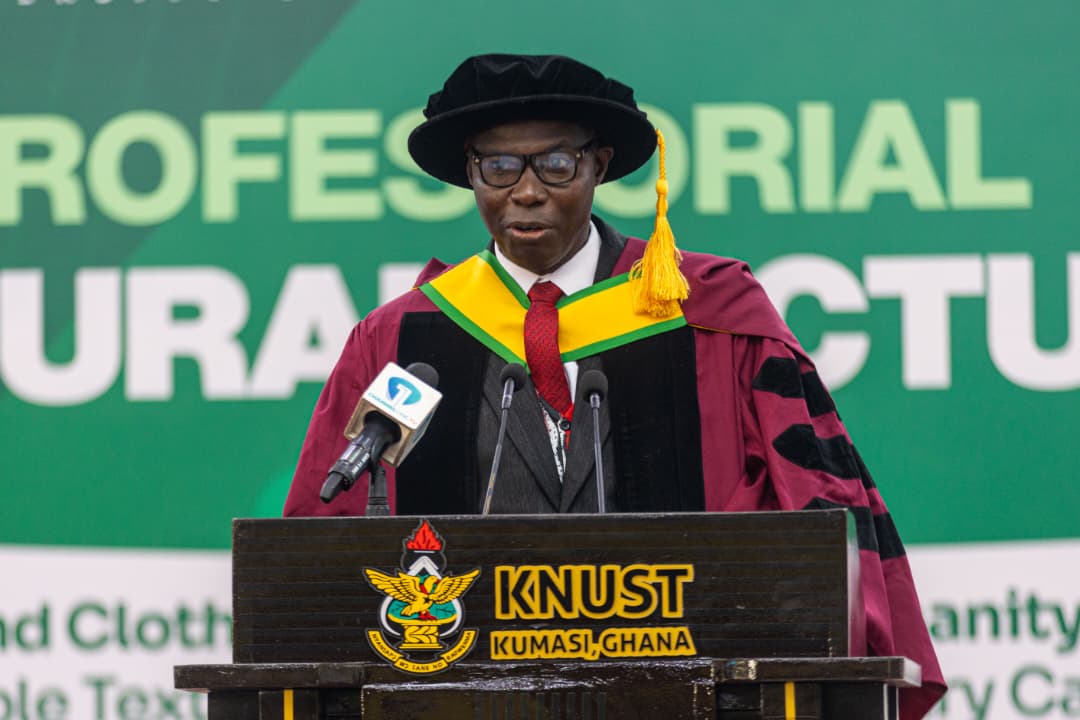

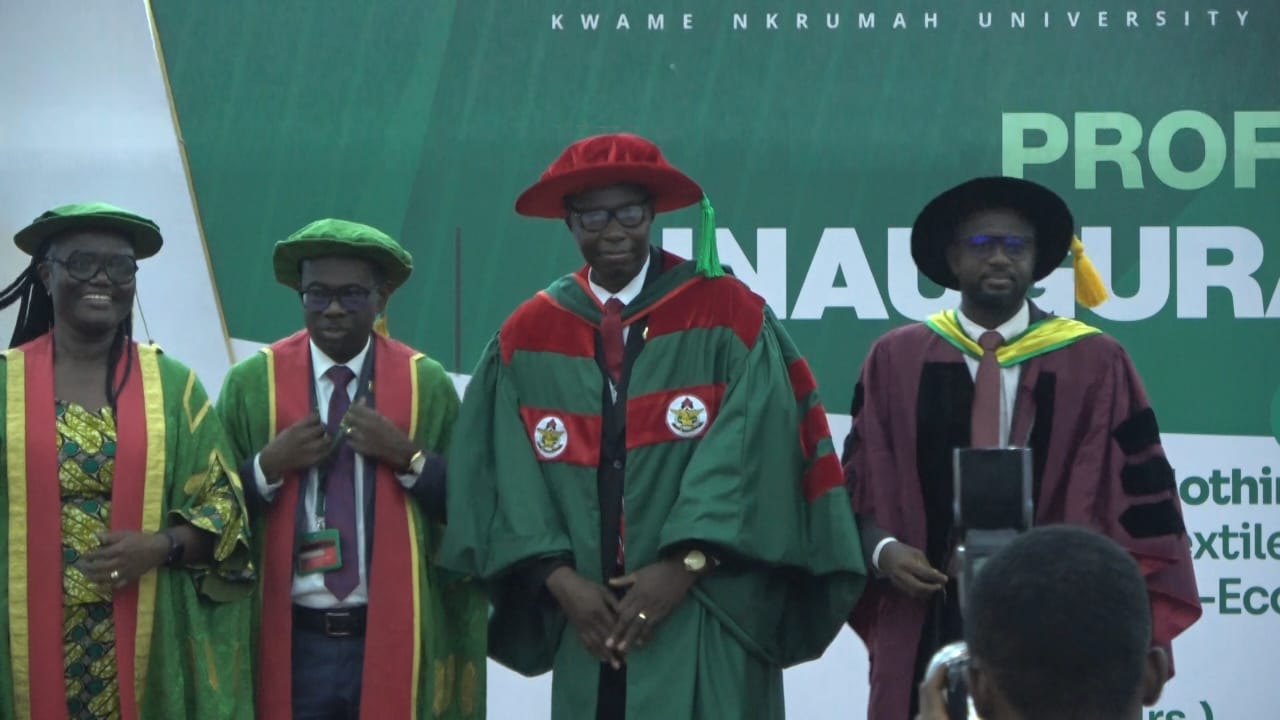
A Professor of Textile Design and Technology at the Kwame Nkrumah University of Science and Technology (KNUST), Professor Ebenezer Kofi Howard, has called for urgent investment in Ghana’s textile and apparel industry, arguing that reviving the sector could reduce unemployment, boost industrialisation and address environmental challenges.
Delivering his professorial inaugural lecture on the theme “Beyond Clothing the Nudity of Humanity: How Sustainable Textiles and Apparel Industry Can Rescue Ghana from its Socio-economic and Environmental Quagmire,” Professor Howard described the textile and apparel (T&A) industry as one of the country’s most underutilised economic assets.
“While the global textile and apparel industry employs more than 300 million people and is valued at trillions of dollars, Ghana has failed to maximise its enormous potential,” he noted.
According to him, Ghana’s once-thriving textile sector has deteriorated due to trade liberalisation, excessive dependence on imports, smuggling, obsolete machinery, inadequate raw materials and the influx of second-hand clothing.
Professor Howard observed that the country now imports more than 70 percent of its textiles and garments while exporting less than 10 percent, leaving only a handful of large-scale textile companies in operation.
“The continued collapse of the industry has contributed to graduate unemployment, weakened local manufacturing and increased dependence on imported products,” he warned.
The professor further expressed concern about the environmental consequences of second-hand clothing imports, saying large volumes of discarded garments have become a growing source of pollution in drains, water bodies and landfill sites across the country.
He also lamented what he described as the gradual erosion of Ghana’s rich textile heritage, arguing that “foreign fashion trends are replacing traditional symbolic fabrics and diminishing the country’s cultural identity.”
“Everyone is buying and selling. Sadly, Ghana imports and sells volumes of second-hand clothes, including handkerchiefs, underwear, bedsheets, towels and socks. This is not just an environmental problem; it is an economic leak and a social fracture.”
Drawing on years of research, Professor Howard proposed practical interventions to revive the sector, including revitalising cotton production, strengthening local textile manufacturing, promoting sustainable apparel production and encouraging circular economy practices such as reducing, reusing and recycling textile waste.
He also urged government to leverage the textile and apparel industry as a major pillar of its 24-hour economy policy through the establishment of textile manufacturing hubs across all 16 regions.
“I strongly recommend the textile and apparel industry as a pragmatic driver towards the realisation of the 24-hour economy policy. The industry has been tried and tested by major economies and even Ghana in the 1960s. It is one of the most feasible sectors for operating shift systems, employing thousands of workers while increasing productivity and driving economic growth,” he suggested.
Professor Howard further recommended restructuring the Cotton Development Authority, implementing a comprehensive national textile policy, expanding local raw material production and converting idle textile factories into industrial training and innovation centres.
“With the right policies, investment and collaboration among government, industry and academia, Ghana could replicate the success achieved by countries such as Bangladesh, Vietnam, China and India, where the textile sector has become a major source of employment and economic growth,” he stressed.
Professor Howard concluded by urging Ghanaians to patronise locally made textiles beyond the Friday Wear campaign, insisting that rebuilding the textile industry would preserve the country’s cultural identity while creating sustainable jobs and driving national development.