

The Ashanti Regional Directorate of Health Services has raised concern over increasing drug abuse in the region, warning that addiction is becoming a growing public health challenge that demands urgent collective action.
The health authorities identified marijuana and the abuse of strong alcoholic beverages as the most prevalent substance abuse challenges in the Ashanti Region, disclosing that six out of every ten substance abuse cases are linked to cannabis and alcohol.
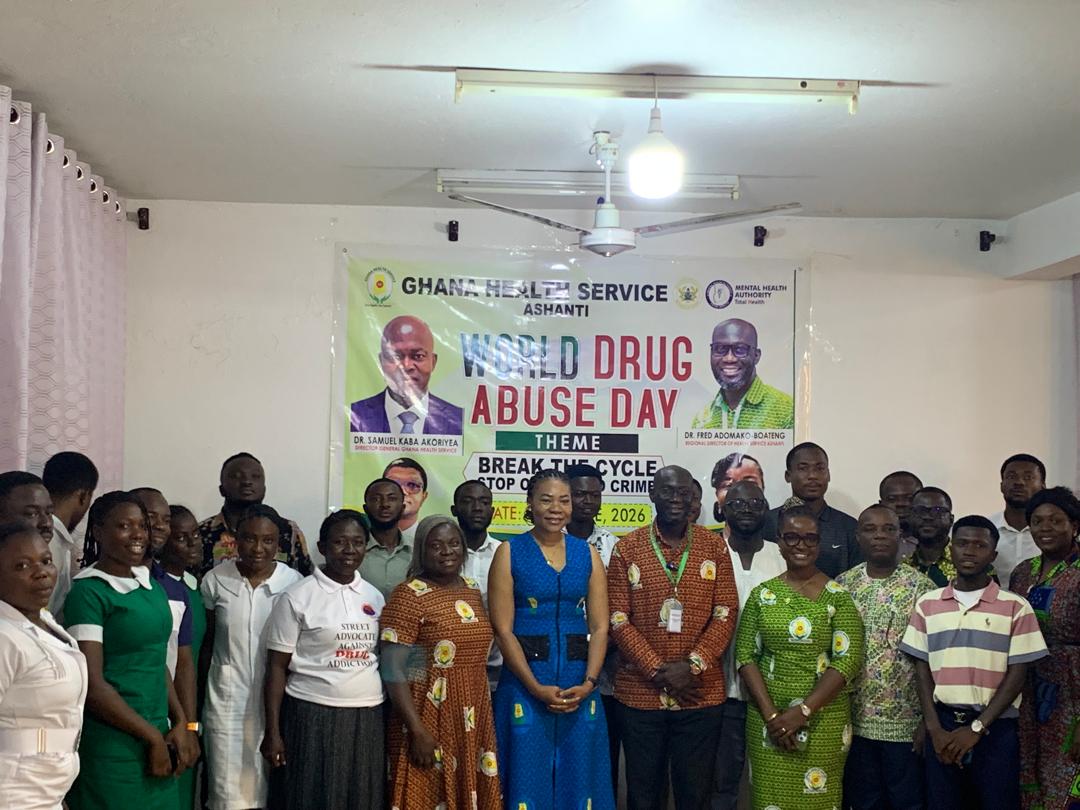
Briefing the media to commemorate World Drug Day in Kumasi, the Regional Director, Dr Fred Adomako-Boateng urged communities to stop stigmatizing people battling addiction and instead support them to seek treatment and recovery.
“Over the past 12 months, our emergency rooms have seen a 30% increase in acute psychosis cases linked to new cheap synthetic mixtures popularly called Kush. The incidence of drug experimentation among the age group of 12 to 17 years has risen by 15% over the last two years. This is driven heavily by peer influence and digital supply networks,” Dr Adomako Boateng disclosed.
Health officials warned of the growing use of tramadol and “shisha,” describing them as dangerous opioids capable of causing rapid addiction and fatal overdoses.
“We are seeing a troubling rise among commercial drivers and artisans. The rapid emergence of highly potent synthetic drugs like fentanyl, tramadol, and kush poses a deadlier less traceable risk. The use of chemically adulterated ‘shisha’ among tertiary students is rising rapidly,” Dr Adomako-Boateng stressed.
Health officials called for the effective use of technology to strengthen surveillance and improve community reporting to help curb drug trafficking.
“Despite regulatory crackdowns, the improper use of high dose tramadol still remains a critical issue. The digital illicit market makes it easier for the youth to access unregulated drugs. There is the need to equip law enforcement agencies with advanced passenger-cargo control programs and forensic technologies to quickly detect synthetic drugs.”
Dr. Adomako-Boateng described addiction as a chronic disease rather than a moral failing, stressing that those affected deserve compassion, care and access to treatment.
The health director stressed that eliminating drug abuse would require sustained public education, stronger community partnerships and a collective commitment from all stakeholders.
The event, held under the theme “The Persistent Issues, New Challenges and Innovative Responses,” brought together health professionals, security agencies, educators and community leaders to discuss strategies for tackling substance abuse and illicit drug trafficking.
By Kwaku Acheampong