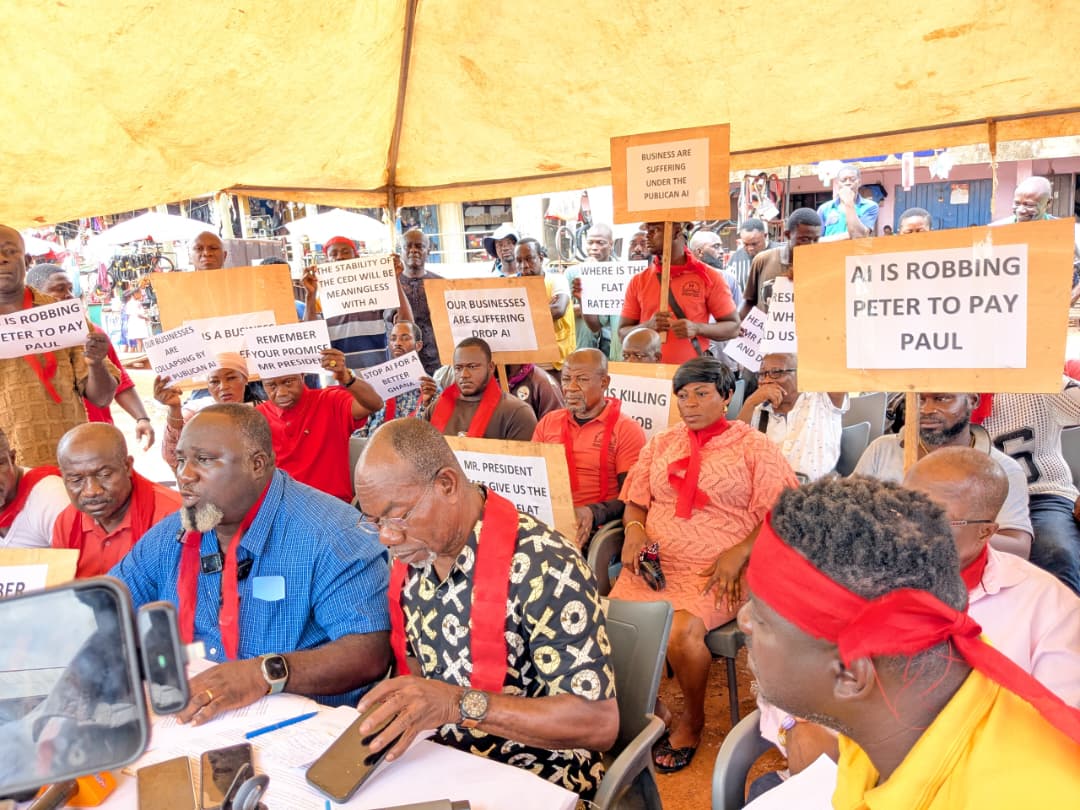

Spare parts dealers in Kumasi have kicked against the AI system introduced by the Ghana Revenue Authority at the country’s ports.
Led by the Ashanti Regional leadership of the Ghana Spare Parts Dealers Association, they have mounted strong resistance against the introduction of the AI powered valuation system at the ports, describing it as a major threat to their survival.
At a press conference on Thursday, April 16,2026, marked by chants and visible frustration, the dealers rejected the system and called on government to immediately abolish it.
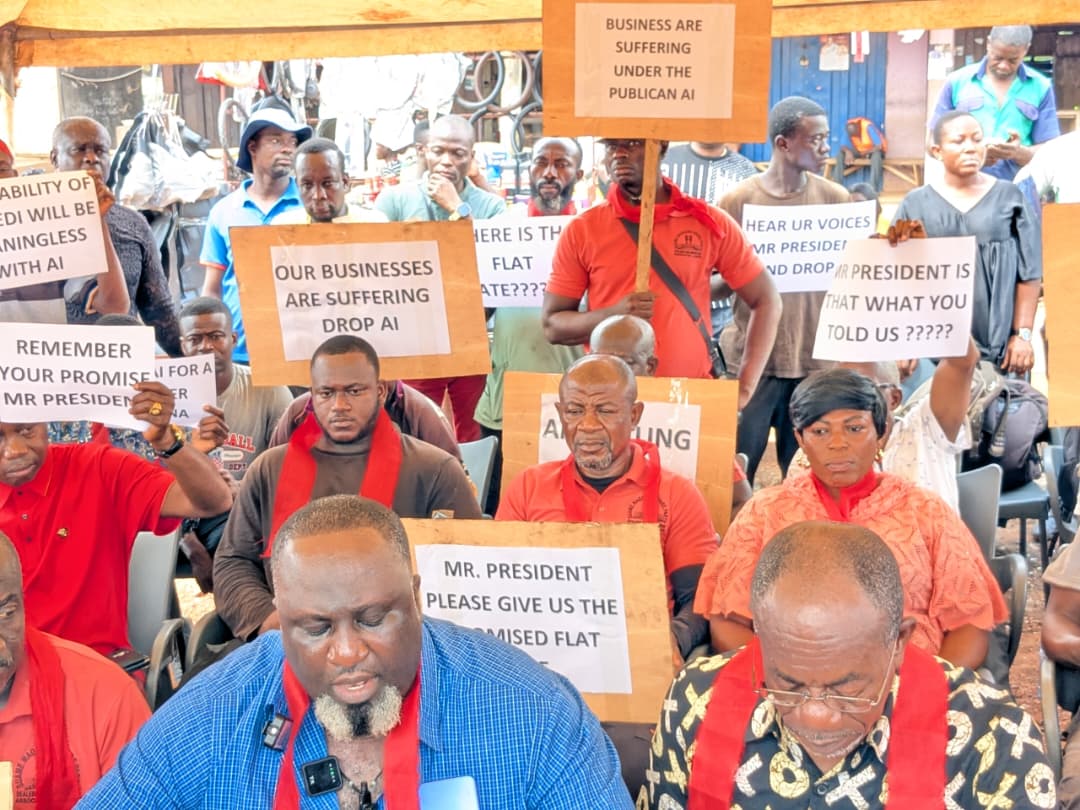
Speaking to the media, the Suame Magazine Chairman, Adu Godfred, expressed deep concern over the impact of the policy, stating that it is gradually collapsing their operations.
According to him, the Artificial Intelligence system used by the Ghana Revenue Authority to determine the value of imported goods has significantly increased import duties, making it difficult for dealers to stay in business.
He noted that the high and unpredictable valuations imposed by the system are pushing many traders into losses, with some already on the verge of shutting down.
The aggrieved dealers, holding placards with inscriptions such as “Stop the AI Hardship,” “We Are Losing Our Businesses,” and “Review the System Now,” insisted that the system must be scrapped.
Mr. Godfred further warned that failure by government to abolish the AI system at the ports will compel dealers to increase spare parts prices by 50 to 70 percent in order to survive.
Traders across the country found themselves simultaneously battling unpredictable and excessive high duty assessment bearing little relation to the actual value of their goods, prolong delays in cargo clearance that left containers accumulating costs at the port, mounting demurrage and rent charges eating into already thin margins and the near-total absence of a credible mechanism for challenging valuations they considered unjust.
The traders say they raised these concerns with government through repeated engagements. However, each round of discussions ended without resolution.
Beyond the AI concerns, the traders also raised alarm over the stalled Suame Interchange project, which they say is worsening their business conditions.
They explained that the abandoned nature of the project has left the area excessively dusty, with dust settling on spare parts and making them appear old and unattractive to customers, leading to low patronage.
The traders are therefore appealing to government to fast-track the completion of the project.
They warned that failure to address their concerns could lead to intensified resistance and further action.
By Benjamin Aidoo