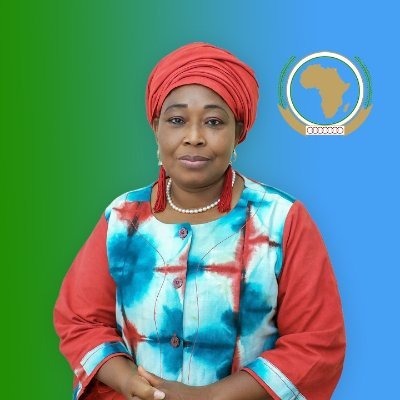

The African Union Commissioner for Health, Humanitarian Affairs and Social Development, Minata Samate Cessouma, has urged African governments to increase domestic investment in health, warning that the continent cannot continue to depend on unpredictable external funding to achieve universal health coverage and improve health outcomes.
Speaking at the Extraordinary Ministerial Meeting of the African Union in Accra on July 21, Commissioner Cessouma said Africa has made significant progress in tackling HIV, tuberculosis, malaria and maternal mortality, but millions of people continue to suffer from preventable diseases due to weak health systems, inadequate financing and limited access to quality healthcare.
Addressing ministers under the theme “Advancing Justice, Equity, and Universal Health Coverage: Ending AIDS and Tuberculosis, Improving Maternal Health, and Addressing Endemic, Non-Communicable and Neglected Tropical Diseases and Conditions in Africa,” she described the meeting as a defining moment in Africa’s journey towards achieving Agenda 2063 and the Sustainable Development Goals.
The Commissioner noted that while millions of Africans living with HIV are now accessing life-saving treatment and maternal and child survival has improved over the years, the continent still bears the greatest burden of many infectious diseases.
‘‘Nearly two-thirds of all people living with HIV globally live in sub-Saharan Africa, while the continent accounts for about 94 percent of malaria cases and 95 percent of malaria deaths worldwide. Tuberculosis, continues to affect millions of people, driven by poverty, malnutrition, overcrowding, displacement and delayed diagnosis.’’
Commissioner Cessouma also highlighted the persistent challenge of maternal mortality, revealing that sub-Saharan Africa accounted for approximately 70 percent of global maternal deaths in 2023, with an estimated 182,000 women losing their lives during pregnancy and childbirth. Most of these deaths, she stressed, are preventable.
She further warned that Africa carries nearly 40 percent of the global burden of neglected tropical diseases, while non-communicable diseases such as cardiovascular diseases, diabetes, cancer and chronic respiratory illnesses are rising rapidly across the continent.
The AU Commissioner said addressing these challenges requires integrated, people-centred health systems rather than disease-specific interventions.
She urged member states to implement the African Union Roadmap to 2030 and beyond, which seeks to end AIDS as a public health threat, control tuberculosis, malaria and neglected tropical diseases, reduce maternal, newborn and child deaths, strengthen health security and accelerate universal health coverage through resilient primary healthcare systems.
‘‘The road to 2030 is now very short. Our task is not to produce more commitments, but to honor those already made. Not merely to speak about African ownership, but to demonstrate it through our budgets, institutions, and decisions.
Let us remember the wisdom of the Baobab Tree. No one can embrace this task alone, but together we can build health systems whose roots are strong, whose reach is wide, and whose protection extends to generations yet unborn. Let us move from declarations to delivery, from dependence to greater self-reliance, from fragmented programs to integrated systems, and from preventable suffering to health, dignity, and opportunity for every African.’’
KEY PRIORITY AREAS REQUIRING URGENT ACTION.
First, she called for increased domestic financing for health, reminding governments of the Abuja Declaration commitment to allocate at least 15 percent of national budgets to the health sector.
She emphasized that health spending should be viewed as an investment in economic growth and human capital rather than consumption.
Second, she advocated stronger health security through local production of vaccines, medicines and diagnostics. According to her, Africa must expand pharmaceutical manufacturing, strengthen research and development, improve regional procurement systems and accelerate regulatory harmonisation through the African Medicines Agency to reduce dependence on imported medical products.
Third, she appealed for greater investment in the health workforce, noting the contradiction of severe shortages of health professionals alongside unemployment among trained personnel.
She called on governments to recruit, adequately remunerate and retain doctors, nurses, midwives, pharmacists, laboratory scientists and community health workers while improving working conditions to reduce migration of skilled professionals.
She also underscored the importance of water, sanitation and hygiene, stressing that safe water and sanitation are fundamental to infection prevention, maternal and newborn health, nutrition and dignified healthcare delivery.
By Sarah Apenkroh