
Ghana has joined 16 other African nations to endorse the National Energy Compacts under the World Bank and African Development Bank-led Mission 300 initiative, promising to achieve universal electricity by 2030.
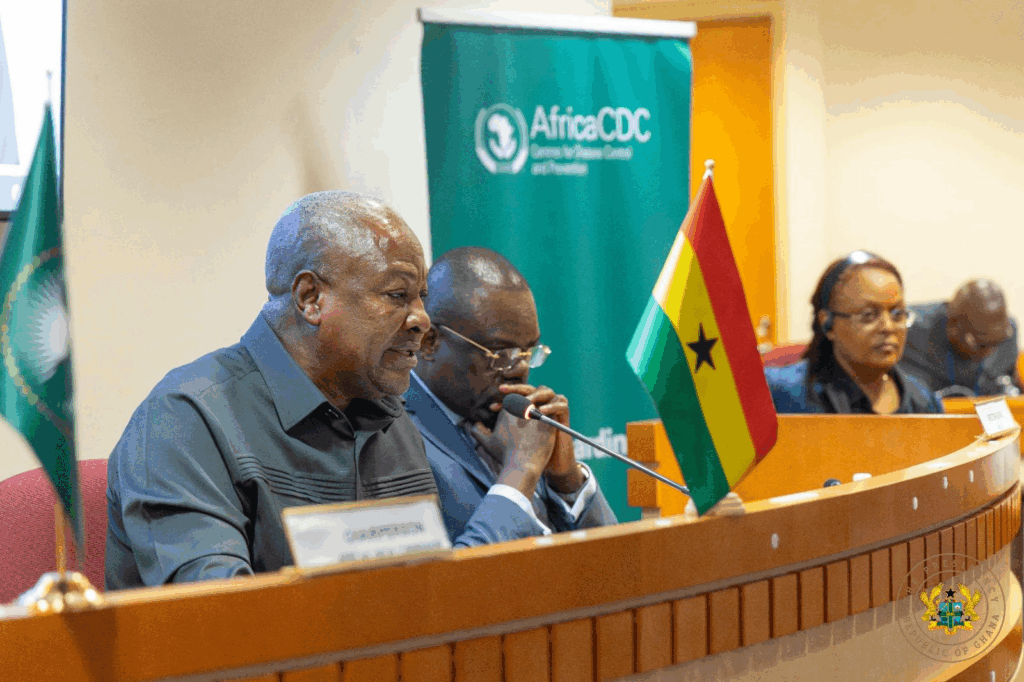
President John Dramani Mahama, speaking at the Bloomberg Philanthropies Global Forum, expressed how crucial energy is, in achieving Ghana’s development goals.
He stated that the vision can be achieved through government-private sector partnerships, with a conducive environment to thrive.
“Ghana believes universal energy access is key to empowering businesses, reducing poverty, and creating equal opportunities. This goal can only be achieved through strong government–private sector partnerships, supported by an enabling environment for sustainable investment,” he stated.
The Mission 300 is aimed at connecting 300 million Africans to electricity by 2030.
So far, 30 million people have already gained access since its launch, with another 100 million connections in the pipeline. The Energy Compacts provide practical blueprints for investment, reform, and policy innovation.
Ghana’s commitment mirrors a wave of ambitious pledges across the continent.
Speaking at the meeting, President of Botswana, Duma Boko, said their compact would ensure “accessible, reliable and affordable energy as a basic human need” to drive job creation and economic transformation.
On his part, Cameroon’s President Paul Biya, promised reforms to promote renewable energy and build a low-carbon future.
Dennis Sassou Nguesso of The Republic of Congo highlighted his country’s vast hydro potential of 27,000 MW, saying it could not only achieve universal access but also export surplus power to cover more than one-third of Africa’s electricity needs.
Ethiopia’s President Taye Atske Selassie underscored a push to unlock renewable resources and expand regional power integration.
The Gambia’s President Adama Barrow described electricity access as central to scaling renewables, improving infrastructure, and transforming governance in the sector.
Other countries pledged bold reforms. Kenya’s President William Ruto said clean power access was a cornerstone of his Bottom-Up Economic Transformation Agenda.
Mozambique’s President Daniel Chapo spoke of positioning his country as a regional energy powerhouse.
Sierra Leone’s President Julius Maada Bio called their compact “the most ambitious energy infrastructure initiative ever developed” for the country.
World Bank President Ajay Banga framed Mission 300 as a historic opportunity.
“Electricity is the bedrock of jobs, opportunity, and economic growth. That’s why Mission 300 is more than a target—it is forging enduring reforms that slash costs, strengthen utilities, and draw in private investment.”
African Development Bank President Dr Sidi Ould Tah added: “Reliable, affordable power is the fastest multiplier for small and medium enterprises, agro-processing, digital work, and industrial value-addition. Give a young entrepreneur power, and you’ve given them a paycheck.”
With Ghana and its peers backing the Energy Compacts, the World Bank and AfDB say Africa is advancing on the most ambitious electricity expansion drive in history.
Prez Mahama assigns MiDA as focal institution for philanthropic and grant-based partnerships