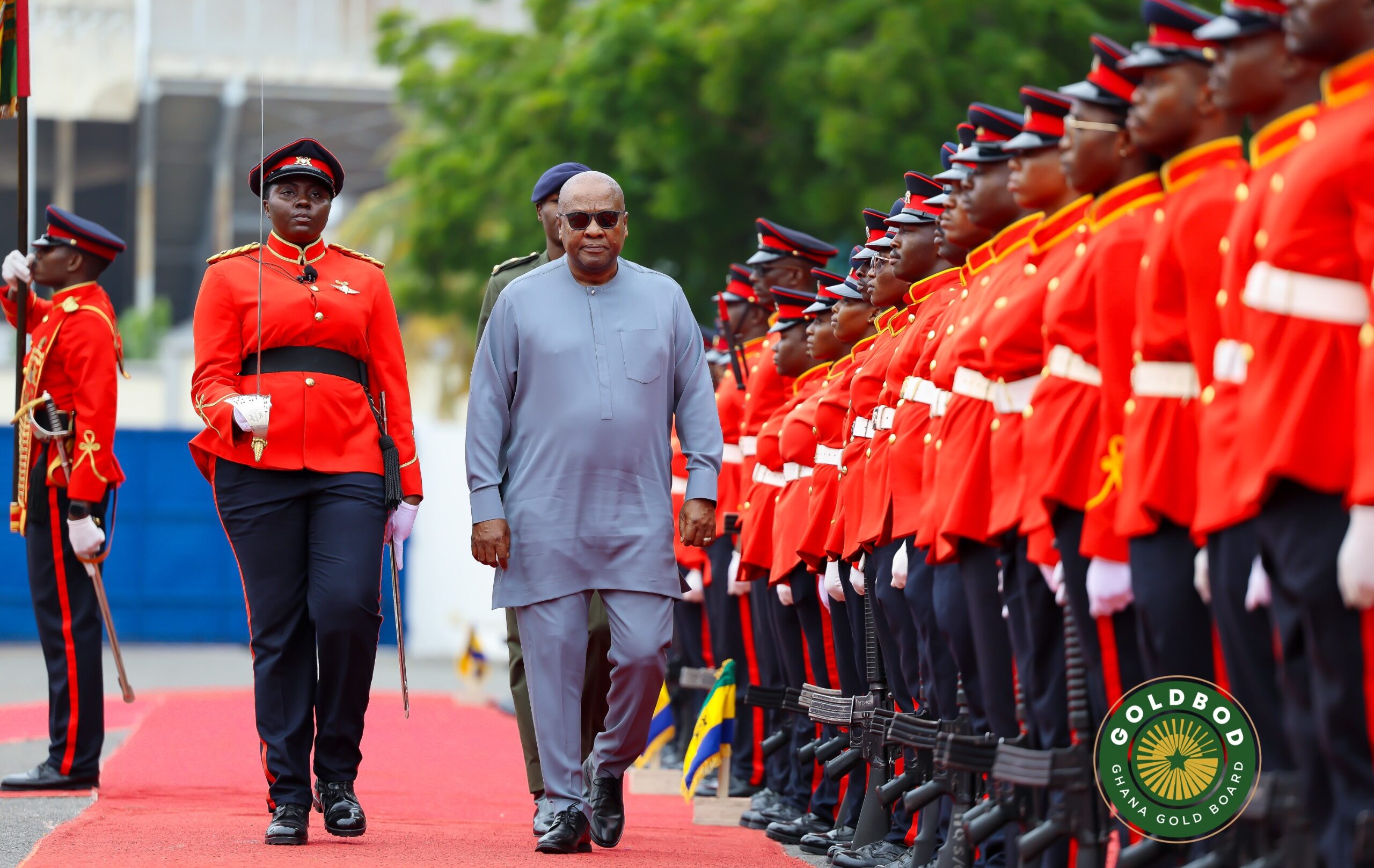

President John Dramani Mahama has commissioned the Ghana Gold Board (GoldBod) Task Force to help tackle the illegal gold trade in the country as part of the government’s effort to consolidate the nation’s gold.
The Task Force, which, according to the President, comprises “personnel from National Security, the military, and other security agencies,” will help clamp down on black market dealers in the gold industry.
Speaking during the launch of the team at the Jubilee House Tuesday, July 8, 2025, President Mahama said the Task Force “have undergone rigorous vetting, polygraph testing, and orientation on Act 1140. They have also completed intensive team-building and anti-corruption training.”

He listed the strict oversight under which the Task Force will be operating as follows:
- All officers will wear body cameras.
- Vehicles will be GPS-tracked and monitored in real time.
- A written warrant from the CEO is required before any field operation.
- Whistleblower channels are in place, with informants eligible to receive 10% of the seized gold or cash value.
The President warned that misconduct from any member of the Task Force will not be taken lightly, announcing that sanctions will be meted out to such persons.
“Let me be clear: abuse of authority will not be tolerated. Any officer found engaging in misconduct will face immediate sanctions, including dismissal, prosecution, and forfeiture of all entitlements,” he stated.
The Ghana Gold Board Act, 2025 (Act 1140), was passed by Parliament on March 28, 2025, and subsequently signed into law by President Mahama on April 2, 2025. This new legislation mandates GoldBod as the sole entity responsible for the buying, selling, and export of gold from Ghana’s artisanal and small-scale mining (ASM) sector.

It is designed to oversee, regulate, and participate directly in the gold value chain—from small-scale mining to assaying, trading, and export. The Board now holds exclusive rights to purchase and export all gold produced in Ghana, except that from large-scale mining firms, where it still holds preemptive rights.
Like cocoa, gold is now consolidated, traded, and exported through a centralised, transparent system, which President Mahama has said has proven itself since the law was passed to cater for the sector. “The results speak for themselves,” he stated.