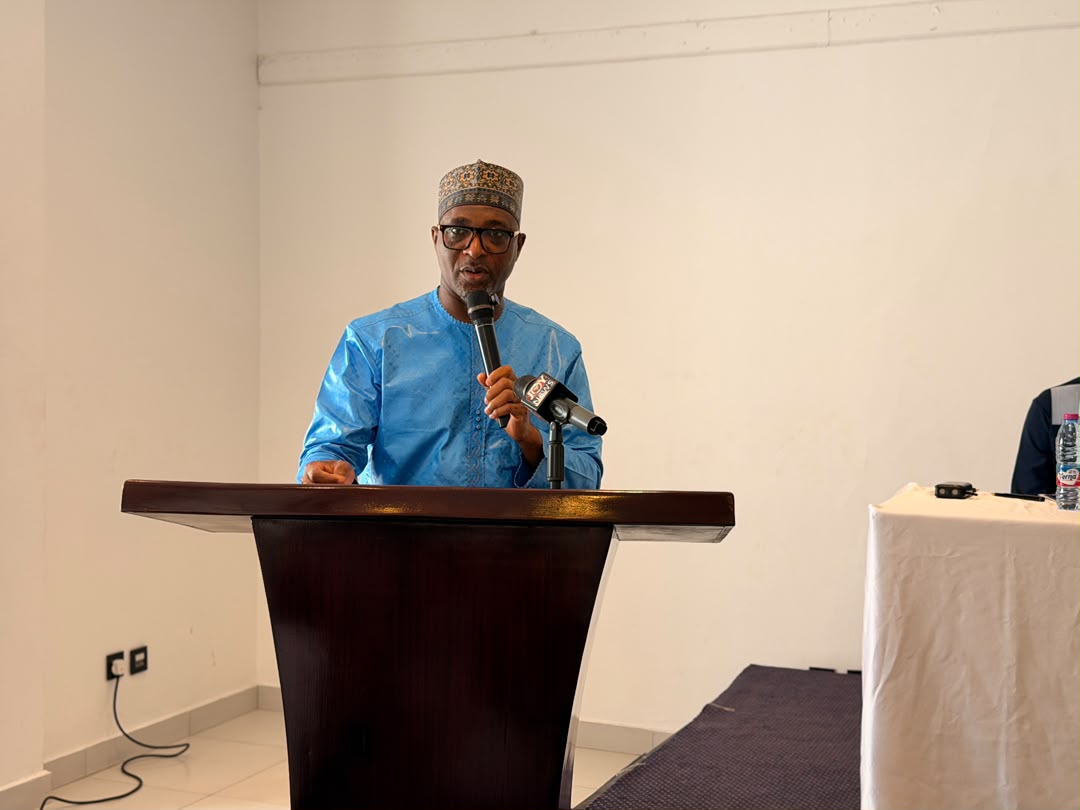

The Minister for the Interior and National Security, Muntaka Mohammed-Mubarak, has issued a warning to Metropolitan, Municipal and District Chief Executives (MMDCEs), stating that National Security will not hesitate to launch operations without prior notice if local authorities fail to act on emerging threats.
Speaking at a high-level training programme on the Security and Intelligence Agencies Act, 2026 (Act 1168) in Sekondi-Takoradi, Mr Mubarak emphasised that district authorities must demonstrate commitment to tackling illegal mining and other security concerns rather than waiting for interventions from Accra.
The training, organised by the National Security Council Secretariat, brought together Regional Ministers, members of the Regional Security Councils (REGSEC), and MMDCEs from the Western and Western North regions.
The government is pushing for a more coordinated approach to national security, with regional and district leaders expected to fully understand their responsibilities under Act 1168. According to Mr Mubarak, the new law provides a framework for coordinating and overseeing security and intelligence institutions, making it imperative for local authorities to grasp their mandates, reporting arrangements, and the limits of their authority.
“This is not simply another workshop to fulfil an institutional requirement. It is a critical intervention designed to equip you with the knowledge and understanding needed to discharge your security responsibilities effectively under the new law,” he said.
The Interior Minister was blunt about the consequences of inaction. He warned that National Security would intervene without informing district authorities where local inaction threatens national stability.
“For us, if there’s a threat in your district, you have not told us, we’ve not seen you acting, and we think that it can destabilise this country, we’ll step in and we won’t tell you. Because we don’t even trust that if we tell you, you will not mess us up. So, we’ll step in without telling you,” he stated.
He added that the only time National Security would work hand-in-hand with local authorities is when the district demonstrates initiative.
“The only time you’ll see us not coming from Accra is when we see you acting, and you tell us, ‘Look, can you give us backup because there’s this challenge that we need to deal with?’ If I’m being backed up, I’ll come and we’ll do it together.”
But he cautioned that if a problem is left to fester without being reported, National Security will act unilaterally.
“If I see the problem is festering, and you don’t even report it as a problem, you don’t see it as a challenge, and I’m going to design an operation to come in to deal with it, you said I should tell you — we won’t tell you. That one I won’t lie. We will not tell you today, we won’t tell you tomorrow. We’ll step in, we’ll carry out the operations and we’ll go back to Accra because then you have failed. But we won’t sit down for you to fail the state.”
Mr Mubarak identified illegal mining (galamsey) as a major security concern, blaming poor community cooperation for making enforcement difficult. He urged MMDCEs to mobilise traditional authorities and residents to support security agencies, warning that some communities continue to provide illegal miners with places to hide.
“Can you genuinely step in as MMDCEs engaging the communities? I know you have your own party executives and others every day insulting you anytime you try to make effort. All of us receive the same insults. But you see, we have a responsibility and we promised to reset. You cannot claim reset and then you want to let the status quo remain,” he said.
He added that community members often fail to understand the long-term effects of illegal mining.
“Sometimes, when even the security people go into the communities, you’ll see that it is the community members that are rather giving the illegal miners places to hide. They don’t know the effect of what the people are doing on them.”
The Minister also touched on the issue of street begging, describing it as a potential security threat often overlooked. He urged MMDCEs to work with Immigration, the Police, and religious leaders to address the phenomenon, warning that some beggars are organised by criminal networks and could serve as informants.
Welcoming participants earlier, the Western Regional Minister, Joseph Nelson, acknowledged the distinct security challenges facing the Western and Western North regions, including illegal mining, chieftaincy disputes, drug trafficking, cybercrime, and cross-border criminal activities.
“I’m particularly conscious of the security responsibilities confronting us in the Western Region. Our strategic location, economic activities, natural resource endowment, and border communities present opportunities as well as security concerns that require constant vigilance and effective coordination,” he said.
He noted that these challenges have implications not only for public safety but also for livelihoods, local economic activities, and the overall development of communities.
“Addressing them requires more than the efforts of individual security agencies; it calls for effective collaboration, timely intelligence sharing, sound coordination, and a common understanding of the respective mandates and responsibilities of all institutions involved.”
Mr Nelson expressed confidence that the training would strengthen cooperation between the two regions and improve early warning systems to prevent security threats from escalating.
The training, organised by the National Security Council Secretariat, is expected to improve understanding of Act 1168, strengthen inter-agency coordination, and equip regional and district authorities to respond more effectively to emerging security threats.
Participants are expected to leave with a clearer understanding of their statutory responsibilities, stronger channels for intelligence sharing, and greater capacity to identify emerging threats before they escalate.
By Ebenezer Atiemo