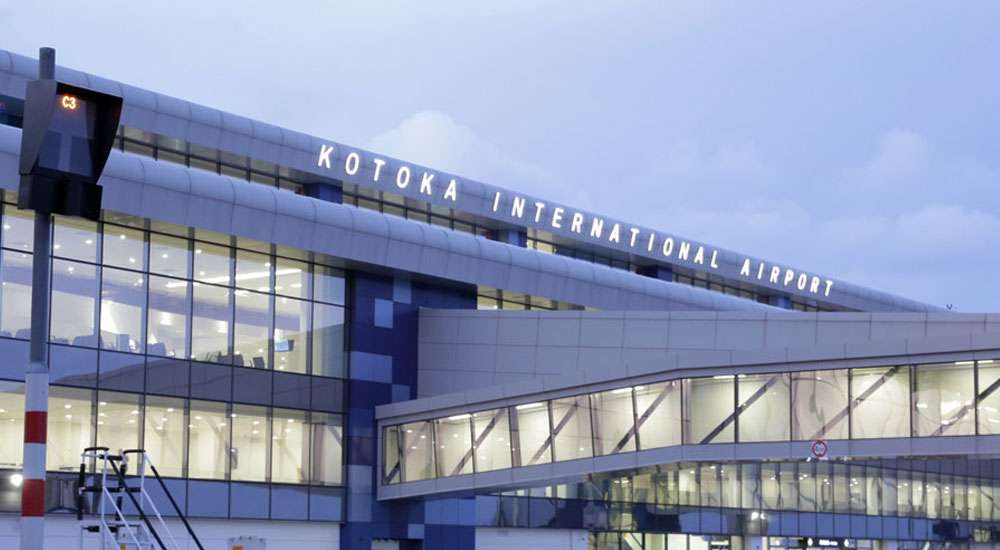

Dr Elikplim Kwabla Apetorgbor, the Volta Regional Representative of the National Development Planning Commission (NDPC) has strongly opposed reported plans by the government to rename Kotoka International Airport (KIA), describing the move as a misplaced priority that offers no economic or operational benefit to the country.
In a press statement dated February 2, 2026, the NDPC official said he had taken note of reports suggesting that the Majority Leader, through the Ministry of Transport, intends to introduce a bill in Parliament to rename Kotoka International Airport as Accra International Airport.
He argued that at a time of fiscal strain, rising public debt, and competing development needs, the proposed renaming does not address any pressing national problem and lacks clear economic, operational, or financial justification.
Drawing on his experience travelling through major international airports across the world, he noted that naming airports after statesmen, reformers, and national heroes is a common global practice that has not undermined efficiency, competitiveness, or international recognition.
“International airports are strategic economic assets whose value is determined by efficiency, safety, connectivity, cost competitiveness, and cargo capacity—not by their names,” the statement said, adding that a change in name would not reduce costs, improve performance, or increase passenger and cargo volumes.
The statement further warned that renaming a major international airport would come with significant administrative and rebranding costs, including updates across global aviation, logistics, and digital systems.
According to Elikplim Kwabla Apetorgbor, such expenditures would divert more urgent priorities such as safety improvements, passenger experience, cargo handling, and positioning Accra as a competitive regional aviation hub.
“Renaming a major international airport is not cost-free. It requires parliamentary time, administrative capacity, and rebranding and system update expenses across global aviation, logistics, and digital platforms. Every cedi and every unit of institutional focus devoted to symbolic change is capacity diverted from urgent priorities, improving safety systems, passenger experience, cargo handling, and positioning Accra as a competitive regional aviation hub,” portions of the statement read.
He also stressed that Kotoka International Airport is already firmly embedded in international aviation systems, noting that stability and predictability are critical assets in global air transport.
Many countries, he said, retain long-established airport names while channeling reform efforts toward efficiency, service quality, and commercial competitiveness.
Beyond aviation, the statement raised broader governance concerns, arguing that public confidence is strengthened when government actions are clearly aligned with national development priorities and sequenced according to urgency and impact.
“Ghana’s aviation sector requires reforms that matter—lower operating costs, improved efficiency, expanded cargo and logistics capacity, and a coherent strategy to position Accra as a true West African hub,” the statement concluded. “These are the interventions that generate growth, jobs, and foreign exchange, not cosmetic renaming exercises.”