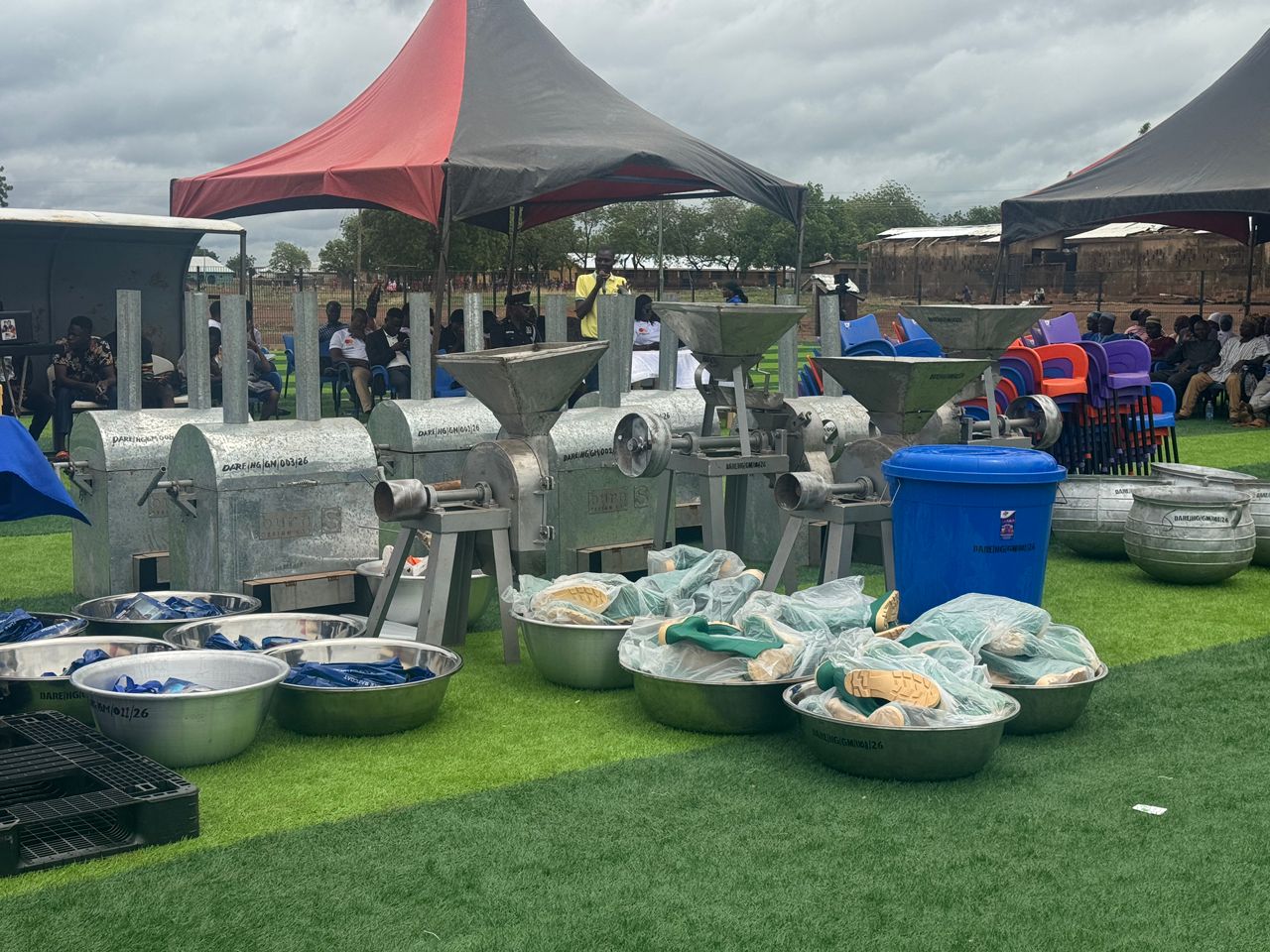

The Digital Access for Rural Empowerment (DARE) Programme has launched three innovative digital platforms in Gusheigu in the Northern Region while equipping women and youth beneficiaries with startup kits and vocational tools aimed at strengthening livelihoods and promoting economic independence.
The initiative focuses on empowering young women between the ages of 15 and 35, particularly young mothers and school dropouts, through digital literacy, vocational training, and entrepreneurship support.
Speaking during the programme, Priscilla Hope, Programme Manager at GI-KACE Consult, said the initiative seeks to help beneficiaries use mobile phones, internet services, and digital platforms to expand their businesses and improve their incomes.
According to her, many participants are already engaged in small-scale trading and vocational work but lack the digital and financial management skills needed to grow their businesses and access wider markets.
The programme is currently being piloted in Somanya, Kwahu East, and Gusheigu, with the possibility of expansion to other districts depending on its success.
Funded by the Mastercard Foundation, the initiative is expected to benefit about 3,000 young people, including persons living with disabilities.
As part of the intervention, beneficiaries are receiving vocational tools including industrial sewing and knitting machines, hairdryers, catering equipment, MoMo stalls, and other startup support to strengthen their businesses.
Organisers also introduced three digital platforms to support beneficiaries. The Enterprise Market Information (EMI) platform allows users to advertise and sell products online, while the Caregivers Hub connects trained caregivers with clients. Another financial management platform helps users track income, expenditure, profits, and savings.
Participants are also being trained in financial literacy through the Village Savings and Loans Association (VSLA) model to improve savings and business management.
A beneficiary, Abdulia Rafia, said the programme has transformed her understanding of savings and entrepreneurship.
She explained that after joining the training, participants were taught how to save money, support one another in business, and access financial assistance through the VSLA system.
According to her, the programme also trained her in soap and pomade production, enabling her to start earning income within her community.
She expressed gratitude to the DARE Programme, Hope Givers, and the Mastercard Foundation for helping improve the lives of young women and mothers in the area.
So far, more than 1,000 beneficiaries in Gusheigu have received training under the initiative.
Project coordinators acknowledged that one of the initial challenges was convincing participants to commit to the programme due to previous experiences with unsuccessful interventions.
However, they noted that support from traditional authorities, local assemblies, husbands, and community members contributed significantly to the programme’s success.
The Municipal Chief Executive of Gushegu, Abdul Hafiz Adam, also commended the initiative for equipping young women with practical digital and entrepreneurial skills, describing it as a pathway to economic empowerment and self-reliance.
He encouraged beneficiaries to sustain the skills acquired, establish businesses, and create jobs for others, stressing that government alone cannot provide employment for every young person.
He further expressed gratitude to the Mastercard Foundation, UNESCO, the University of Ghana, and other partners for supporting the programme.
By Nadra Mohammed