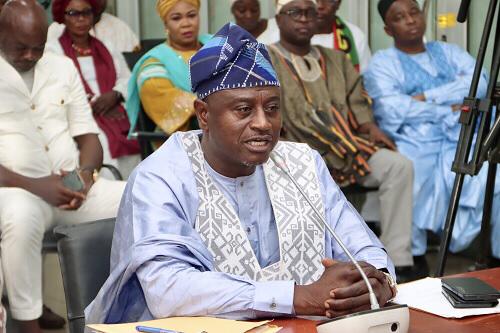

The North East Regional Minister, Ibrahim Atia, has expressed concern over the absence of a regional hospital in the North East Region, describing the situation as a major challenge to the delivery of quality healthcare to residents.
The Minister made the revelation during an interview on Onua Maakye on August 28, while discussing the state of development and the challenges facing the region.
According to Mr Atia, the region currently lacks a fully functioning regional hospital to serve as a major referral facility for the area’s population.
The situation has renewed concerns about what some residents and development observers describe as the long-standing marginalisation and inadequate development of northern Ghana, particularly in the North East Region.
The absence of a regional hospital, stakeholders argue, should not merely be viewed as a lack of infrastructure or a missed opportunity for employment creation. More importantly, access to a well-equipped regional referral facility is critical to improving living conditions and ensuring quality healthcare for the people.
Healthcare is not a luxury but a fundamental necessity, as the wellbeing and productivity of a population largely depend on how effectively its health needs are addressed.
The concern is particularly significant in the context of maternal and other health challenges in the region, with reports indicating a high maternal mortality burden. The region is responsible for 341 deaths per 100,000 births, pointing to the hypothesis that the provision of a properly equipped referral hospital and other investments in the health sector are urgently needed.
The North East Region is made up of six administrative areas, including East Mamprusi Municipal, West Mamprusi Municipal, Bunkpurugu-Nakpanduri District, Chereponi District, Mamprugu Moagduri District and Yunyoo-Nasuan District.
Beyond healthcare, the region continues to face several development challenges, including poor road networks, inadequate educational infrastructure, limited government support for agriculture and widespread poverty.
Agriculture remains the primary source of livelihood for many residents, yet concerns persist over the level of investment and support available to farmers and rural communities.
Residents and development advocates argue that denying the region access to improved health facilities and a major referral hospital could further worsen the challenges faced by communities, particularly those in remote areas who must travel long distances to access specialised medical care.
They are therefore calling for urgent government intervention to improve healthcare infrastructure and ensure that the people of the North East Region have equitable access to quality health services.
Background
The North East Region was created in 2019 following the division of the former Northern Region as part of Ghana’s regional reorganisation exercise. The creation of the new region raised expectations of accelerated development and improved access to essential public services.
However, several communities in the region continue to grapple with deficits in critical infrastructure, including roads, healthcare facilities, schools and other social services.
The absence of a regional hospital has remained a significant concern, given the need for an advanced referral facility to handle complex medical cases within the region. Many residents have had to rely on lower-level health facilities or travel outside the region for specialised treatment.
The comments by the Regional Minister have once again brought attention to the need for sustained investment in healthcare and other critical sectors to address the development gap and improve the quality of life for residents of the North East Region.