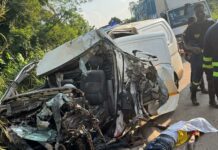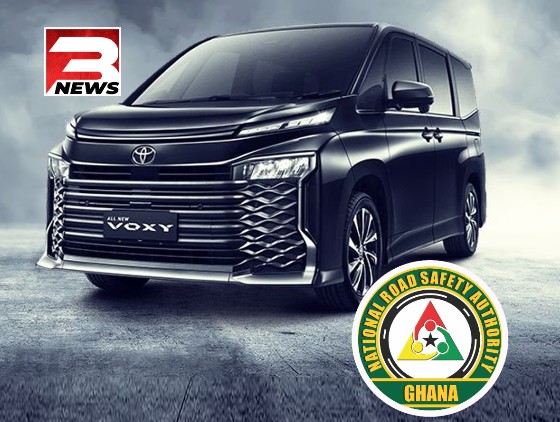

The recent call by the National Road Safety Authority (NRSA) urging motorists and travelers to exercise caution when using Toyota Voxy vehicles has sparked widespread conversation and, in some cases, unnecessary fear.
While road safety alerts are always important, the approach taken in this instance raises a fundamental question: are we addressing the real cause of the problem, or merely treating the symptoms?
I am being told, and with some degree of consistency, that the excessive speeding often associated with Toyota Voxy drivers on journeys has little to do with the vehicle itself. Rather, it stems from the work-and-pay system under which many of these vehicles operate.
Drivers are expected to meet high, and in some cases unreasonable, weekly sales targets. Faced with these pressures, many resort to overspeeding, aggressive driving, and taking unnecessary risks just to break even or avoid sanctions from vehicle owners.
Yet, almost overnight, the Toyota Voxy itself has been branded a bad vehicle. The shift in public perception has been swift and telling. I was genuinely surprised when a relative of mine refused to use a Toyota Voxy, insisting it was “not a good car.” This reaction, while emotional, reflects how quickly institutional messaging can shape public opinion and sometimes unfairly.
It is important to state clearly: vehicles do not speed themselves. Vehicles do not ignore traffic regulations. Vehicles do not decide to endanger lives. Drivers do. And more importantly, systems that reward or tolerate reckless behaviour must bear responsibility when things go wrong.
If the NRSA’s concern is overspeeding and there is ample justification for that concern, then the focus should be on the behaviour of drivers and the operating systems that encourage such behaviour. Singling out a particular vehicle model risks oversimplifying a complex problem and may even divert attention from the deeper, more uncomfortable issues that need addressing.
To be fair, the NRSA’s caution did not emerge in a vacuum. Many Toyota Voxy vehicles are frequently observed overspeeding, and a number have unfortunately been involved in serious road traffic accidents.
But correlation must not be mistaken for causation. The Toyota Voxy is a popular vehicle for commercial transport because it is spacious, fuel-efficient, and relatively affordable.
Naturally, the more a vehicle is used on our roads, especially under commercial pressure, the more likely it is to appear in accident statistics. That does not automatically make it unsafe.
What would have been more appropriate, in my view, is a targeted call directed at drivers of commercial vehicles, supported by strong collaboration between the NRSA and the Motor Traffic and Transport Unit (MTTU) of the Ghana Police Service. Enforcement of speed limits, routine checks, sanctions for repeat offenders, and public education campaigns aimed specifically at commercial drivers would yield far better results than cautioning against the use of a particular vehicle type.
This is not how road safety issues of this nature are handled in many other jurisdictions. In countries where certain vehicle categories are disproportionately involved in accidents, authorities tend to examine driver fatigue, working hours, incentive structures, and fleet management practices.
They introduce speed governors, digital monitoring systems, speed cameras, and stricter licensing requirements. Rarely is a specific vehicle model publicly flagged unless there is a proven mechanical or manufacturing defect. Even then, the response is usually a recall or technical advisory, not public stigmatisation.
Ghana should aspire to the same evidence-based approach. If the work-and-pay model is creating perverse incentives that put lives at risk, then that model deserves serious scrutiny. If enforcement on our roads is inconsistent, then enforcement must be strengthened. If drivers feel compelled to break the law to survive economically, then that reality must be confronted honestly.
Road safety is too important to be reduced to convenient narratives. Turning a vehicle into the villain may satisfy public anxiety in the short term, but it does little to make our roads safer in the long run.
In fact, it risks giving a false sense of security, one that suggests avoiding a particular car is the solution, rather than demanding discipline, accountability, and effective enforcement across the board.
Ultimately, safer roads will not be achieved by cautioning against Toyota Voxy vehicles or any other model. They will be achieved when laws are enforced without fear or favour, when commercial transport systems are regulated responsibly, and when drivers understand that no target, no matter how demanding, is worth a human life.
The problem is not the car. The problem is how we allow it to be used and how reluctant we sometimes are to confront that truth.