
In a bid to cut post-harvest losses for vegetables, especially tomatoes, up to eight days and more, Zero Energy Cooling Chambers for vegetables have been introduced to farmers in the Upper East Region.
The pilot project currently ongoing in Bolgatanga East District.
This initiative by World Vegetable Center, supported by West Africa Food System Resilient Project, FRSP and the Ministry of Agriculture, is also aimed at reducing the importation of tomatoes from Burkina Faso when implemented on a large scale.
Officials of World Vegetable Center has visited Gambibgo farming community to promote the Zero Energy Cooling Chamber technology for vegetable farmers to adopt. This technology helps extend the shelf life of perishables, such as tomatoes, pepper, garden eggs and many vegetables.
The objective is to extend the shelf life of tomatoes to an additional 10 days before the farmers can take them to the market for sale.
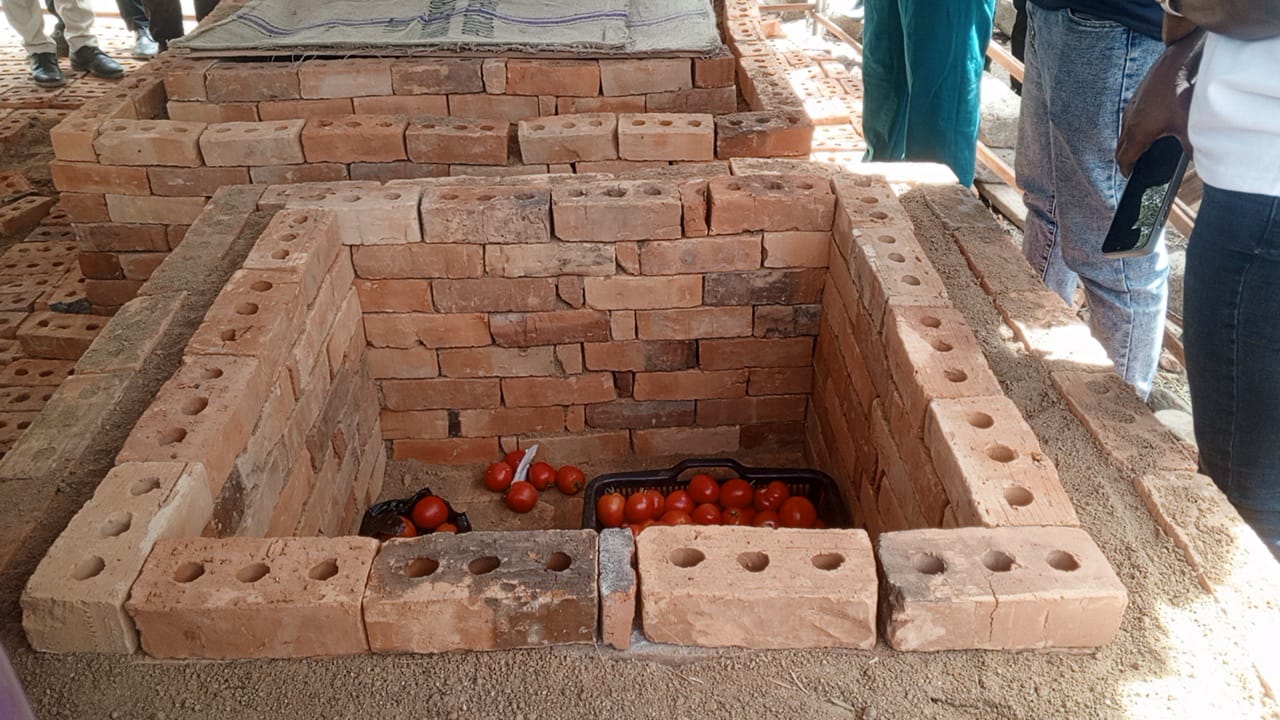
The technology works on the principle of an evaporative cooling system, where it uses moist air. watering the bricks takes the moist air into the system and cools the system automatically and it’s very less expensive and affordable.

“And what we are promoting is that the farmer-based organizations can come together and put up resources to construct this, where they can have about three or four or five of the systems under one shade to minimize cost. So basically, this is the reason why we are in this community. So, this is just the starting point, and this can only take about 100 kilograms of tomato. So, it’s not on a large-scale basis. So, this is basically, for a trader that sells maybe by the roadside, you can store your tomatoes there and take it to the market”, Dr Paul Alhassan Zato of the World Vegetable Center said.
He further stated “But if you want to go for maybe large-scale, then you have to go for bigger cooling systems. So, this is just like a pilot, like I mentioned, and basically, we are introducing them into these kinds of systems that will really help them. But this can be used also by the farmer, also by small-scale traders, but not for large-scale production in towns, no, because the system is small. Like I mentioned, it can only take about 100 kilograms of tomatoes”.

The Upper East Regional Director of Agriculture, Alhaji Zakari Fusheini applauded the efforts of World Vegetable Center and FRSP for this technology which he said will go a long way in reducing post-harvest losses, especially in tomato production.
“This project has come to support production of high-quality, low-carb vegetables. In a very tough time like that, we are very poor and having produced the tomatoes, there is a need for us to put in place measures, So, that at least we can be able to prolong its shelf life and to do that, we complained to the World Vegetable Center, and they are in partnership with the Food System Resiliency Project, that’s the FSRP.
Our mission here in Gambibgo is to introduce the technology to our vegetable farmers especially tomato farmers, so that after production, they will be able to prolong the shelf life of their tomatoes”, he said.

One of the lead farmers, expressed appreciation to the World Vegetable Center and FRSP for coming to their aid with this cost saving technology which will go a long way in solving the post-harvest losses that usually affect their investments.
The technology is aimed at addressing post-harvest losses up to 50% of fruits and vegetables which spoil before reaching consumers, causing food waste and income loss for farmers. The technology is also to give access to cooling technologies to farmers in the rural areas who lack electricity and affordable cooling methods, making food presentation challenging.
By Tanko Mohammed Rabiu